"Even 97-Year-Olds Can Undergo Precision Surgery"—Robotic Surgery for Gastric Cancer in a Very Elderly Patient
- Input
- 2026-09-18 10:14:55
- Updated
- 2026-09-18 10:14:55
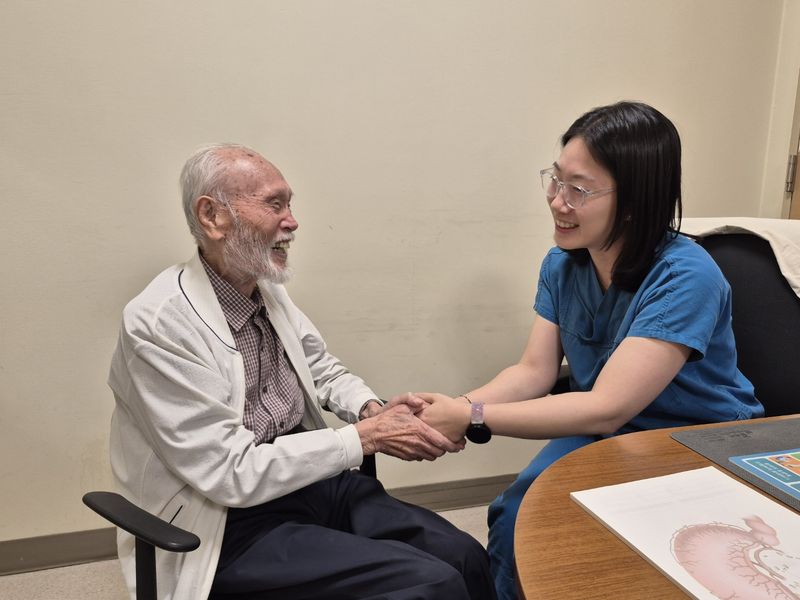
[Financial News] A clinical case has demonstrated that even patients in their late 90s can overcome gastric cancer through precision robotic surgery. The Catholic University of Korea Seoul St. Mary's Hospital announced on the 18th that it had successfully completed a robotic total gastrectomy on a 97-year-old patient.
Professor Sojung Kim of the Gastric Cancer Center and Department of Gastrointestinal Surgery, who performed the operation, chose robotic surgery because it enables precise manipulation even in narrow, deep areas. She determined that the approach could improve surgical precision and reduce bleeding in elderly patients.
Patient Y, born in 1929, was diagnosed with early gastric cancer in the lower part of the stomach about 10 years ago. After undergoing endoscopic resection twice, the patient continued to receive regular follow-up examinations. This year, a new tumor was discovered in the upper stomach near the esophagus. Although it was stage I and relatively early, the tumor was large and had unclear margins, making endoscopic resection impossible. Because previous procedures had left no room to preserve the lower stomach, surgery to remove the entire stomach was unavoidable. Fortunately, detailed examinations showed no signs of metastasis to other organs. The patient also had good physical and cognitive function, living without a cane or hearing aid, which allowed the medical team to proceed with surgery.
After comprehensively considering the patient's condition, the medical team decided to perform robotic surgery last August.
Patient Y, who had worked in education, had maintained good health through regular walking and strength training. The patient also reportedly continued to read the Bible and pray at church. After being discharged on September 15, the patient made a first outpatient visit and told the medical staff and family, "I feel like I am a very fortunate person," expressing gratitude. The patient also said that plans were in place to spend Chuseok with family members, including grandchildren who had followed in the patient's footsteps and work in education.
Professor Kim, who had watched a family member undergo cancer treatment while serving as a caregiver during medical school, said that experience forms the foundation of her treatment philosophy. She said, "When treating patients, I try not only to look at the disease but also to consider what the patient and family are feeling as they go through the treatment process." She emphasized that treating patients like family is important for easing the anxiety of patients and caregivers.
Professor Kim stated that age alone should not determine whether an elderly patient receives cancer treatment. Rather than limiting treatment options simply because a patient is old, doctors should comprehensively assess the patient's overall health, physical function, underlying conditions, cognitive function, and potential for recovery after surgery. She said, "For elderly patients, postoperative care is just as important as the surgery itself," urging medical teams to carefully monitor nutrition, exercise, underlying conditions, and the prevention of complications so patients can safely return to their daily lives.
What Are Total and Partial Gastrectomy in Gastric Cancer Surgery?
Depending on the location and extent of the cancer, gastric cancer surgery is divided into partial gastrectomy, which removes only part of the stomach, and total gastrectomy, which removes the entire stomach. The two procedures differ significantly not only in the extent of resection but also in their difficulty, reconstruction processes, and burden on the patient.
Total gastrectomy involves a wider resection and lymph node dissection than partial gastrectomy, as well as a much more complex process for reconnecting the digestive tract. In partial gastrectomy, the remaining stomach is connected to the small intestine. In total gastrectomy, the entire stomach is removed, and the esophagus is directly connected to the small intestine deep inside the abdominal cavity. Because the esophagus and small intestine differ in location, size, and tissue characteristics, achieving a precise and stable anastomosis requires a high level of surgical skill. Leakage or narrowing at the anastomosis can lead to serious complications, making meticulous manipulation essential.
The recovery process also differs. After partial gastrectomy, part of the stomach remains, allowing it to retain some storage and digestive functions. After total gastrectomy, however, the stomach is completely removed, which can result in more pronounced reductions in food intake, weight loss, and nutritional deficiencies. Therefore, careful recovery management—including dietary adaptation and nutritional care—is just as important as the success of the surgery.
[email protected] Jung Myung-jin, Medical Specialist Reporter