World's No. 1 Domestic Route, Gimpo–Jeju, Wobbles as Japan's Sapporo–Haneda Closes In
- Input
- 2026-09-18 10:14:48
- Updated
- 2026-09-18 10:14:48
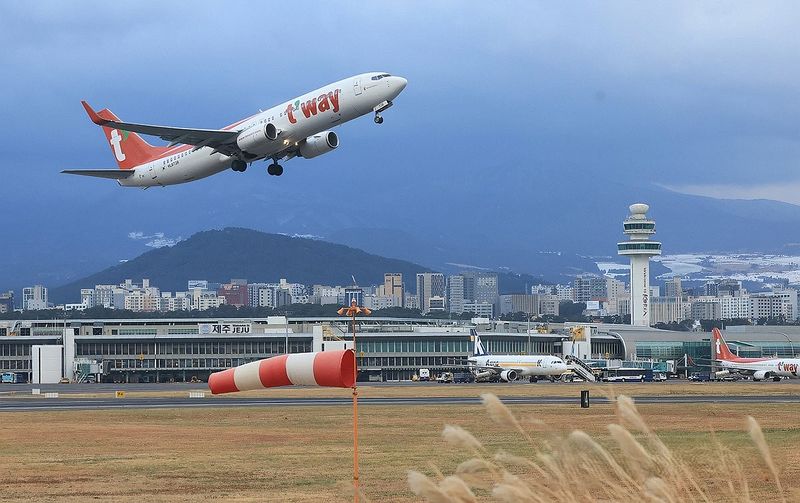
【Financial News, Jeju — Reporter Jeong Yong-bok】 The Gimpo–Jeju route, the world's largest domestic route by scheduled seat capacity, saw its September seats fall 16% from a year earlier. This narrowed its lead over Japan's second-ranked Sapporo–Tokyo Haneda route to just 15,416 seats. Over the same period, the Incheon–Tokyo Narita route grew 41%, becoming the world's largest international route by scheduled seat capacity.
According to an analysis of global air routes for September released on the 18th by OAG, the Jeju International Airport–Gimpo International Airport route has 1,084,920 scheduled seats in both directions this month. That is a 16% decrease from September last year.
It recorded the largest decline among the world's 10 busiest domestic routes compiled by OAG. The second-ranked Sapporo New Chitose–Tokyo Haneda route has 1,069,504 seats, up 6% from last year. The gap with Gimpo–Jeju was just 15,416 seats.
Gimpo–Jeju remains the world's No. 1 domestic route in September, but the gap has narrowed significantly as capacity on the route fell over the past year while the second-ranked route expanded.
International routes linking Japan showed the opposite trend, with capacity expanding. The Incheon–Tokyo Narita route has 557,881 scheduled seats in September, up 41% from the same month last year. It posted the highest growth rate among the world's 10 largest international routes and ranked No. 1 globally by scheduled seats.
Expanded capacity by low-cost carriers (LCCs) drove the increase. According to OAG, LCCs added approximately 140,000 seats on the Incheon–Narita route, a 57% increase from last year. Korean Air also added one flight per day, bringing its total to five daily flights.
The Incheon–Osaka Kansai route also rose 24% year on year to 463,863 seats, ranking fourth among the world's international routes.
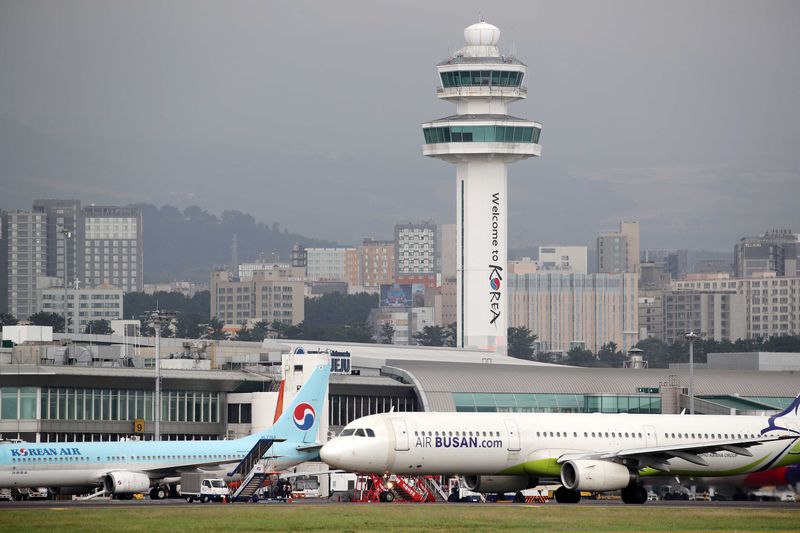
Looking only at September, capacity on the main domestic routes connecting Jeju fell in the Korean aviation market, while international capacity linking Japan's major cities increased rapidly. However, there is no basis to conclude that the seats removed from Gimpo–Jeju shifted directly to Japanese routes. Multiple factors, including each airline's aircraft deployment and profitability, available slots, and booking demand, affect route planning.
The decline in domestic capacity to Jeju was not limited to the Gimpo–Jeju route in September.
From March 29 to October 24, this year's summer flight season, the planned domestic seat capacity at Jeju International Airport is 17,153,208. That is 651,394 seats, or 4%, fewer than the 17,804,602 seats actually supplied during last year's summer flight season.
The number of flights this year is 91,234, down 516 flights, or 1%, from the 91,750 flights operated last year. Since the decline in seats is greater than the decrease in flights, changes in the seating capacity of the aircraft deployed are also playing a role.
The differences among airlines are also significant. Korean Air's planned domestic capacity to Jeju during this year's summer flight season is 2,907,736 seats, down 17% from 3,489,307 last year. Asiana Airlines' capacity fell 26%, from 2,840,800 to 2,091,562 seats.
By contrast, Jeju Air increased capacity by 10% from last year, Air Busan by 16%, and Air Seoul by 11%. In other words, full-service carriers are cutting capacity while some low-cost carriers are expanding it.
Jeju's domestic tourism market is also showing weakness amid the changes in air capacity.
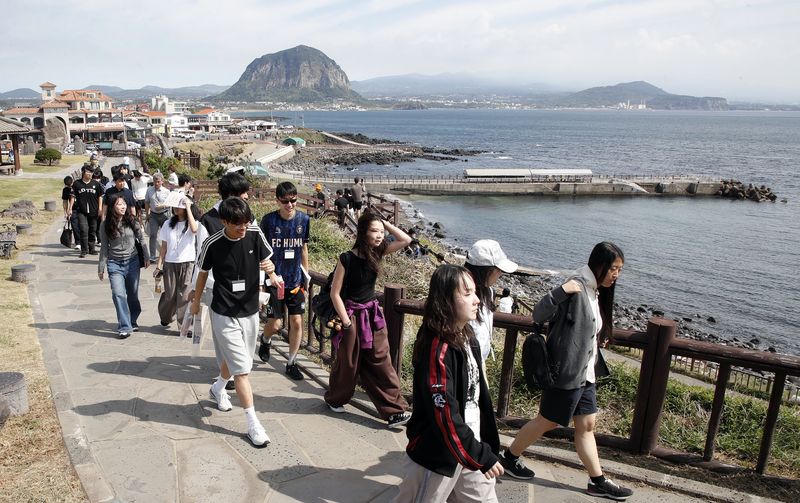
According to the Jeju Tourism Association, 554,200 tourists visited Jeju from September 1 to 15, down 7.4% from 598,600 during the same period last year.
The number of Korean visitors fell 10.3% to 434,500, a decrease of 51,000. The number of foreign visitors rose 5% to 119,700, an increase of 5,700. The simultaneous decline in Korean visitors and increase in foreign visitors is changing the composition of Jeju's tourist arrivals.
However, it is difficult to establish a one-to-one causal relationship between the decline in domestic seats and the decrease in Korean visitors. The Gimpo–Jeju figure represents scheduled seats on a specific route, while the tourism statistics cover all visitors arriving in Jeju by air and sea. Other factors, including airfares, fuel surcharges, accommodation costs, and travel sentiment, also play a role.
For Jeju, the decline in capacity is not merely a tourism issue. Because it is an island, air services are a key means of transportation supporting residents' mobility.
In August, Jeju Province launched a task force dedicated to stabilizing air-seat supply, with airlines, Korea Airports Corporation (KAC), and tourism-related organizations taking part. The task force is reviewing domestic seats and airfares, Jeju International Airport's capacity, and winter flight plans, while asking airlines to add flights, deploy special flights, and increase the use of larger aircraft.
That is also why capacity in the next quarter is important. When the winter flight season begins in late October, how many seats airlines allocate to Jeju's domestic routes could affect both residents' mobility and the winter tourism market.
The changes shown by the September figures are clear. Gimpo–Jeju retained its position as the world's No. 1 domestic route, but its seats fell 16%, narrowing the gap with the second-ranked route to the 15,000-seat range. During the same period, Incheon–Narita grew 41% to become the world's largest international route. The key indicators for Jeju going forward will be the scale of airlines' domestic capacity during the winter season, actual load factors, and changes in airfares.
[email protected] Jeong Yong-bok Reporter