Korea Fair Trade Commission to Review Alleged Bid Rigging in KRW 65 Billion Digital Textbook Tablet Procurement... Jeju Special Self-Governing Provincial Office of Education’s 2024 Contract Also Overlaps
- Input
- 2026-09-18 09:29:18
- Updated
- 2026-09-18 09:29:18
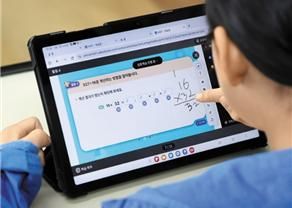
【Financial News Jeju = Reporter Jung Yong-bok】 The alleged bid rigging involving tablet computers for digital textbooks, worth KRW 65 billion, is now before the KFTC. It has been confirmed that the Jeju Special Self-Governing Provincial Office of Education also signed a supply contract for tablets for elementary school students during the period identified by the KFTC examiner as the period of the alleged conduct.
According to the KFTC and the Public Procurement Service (PPS) on the 18th, the KFTC secretariat submitted to the commission an examiner’s report on alleged bid rigging by four tablet computer manufacturers and sellers—I-BRIDGE.COM, ATEC Computer, Uniwide, and Foryou Digital—and began the deliberation process.
The KFTC examiner determined that the companies allegedly agreed in advance on the intended winner, a sham bidder that would participate as a nominal competitor, and bid prices in tenders for tablet computers for digital textbooks commissioned by 15 education offices, including district education support offices, from September 2022 to January 2025.
The tender volume the examiner determined had been affected by the alleged collusion was approximately KRW 65 billion. More than 200,000 tablet computers were supplied through those tenders.
On the grounds that the conduct constituted a very serious violation amounting to bid rigging under the Fair Trade Act, the examiner recommended corrective measures, the imposition of fines, and referrals for complaints against the companies and their relevant current and former executives and employees.
It has not reached the stage at which a violation of the law has been finalized. The examiner’s report is a document containing the investigation findings and proposed sanctions of the examiner, who belongs to the KFTC’s investigative department. After receiving the report, the respondents have six weeks to submit written opinions and inspect and copy the evidence. The commission will then determine whether the law was violated and the level of sanctions.
In Jeju Province, a large-scale tablet purchase contract overlapping the alleged period has been identified.
When drawing up its 2024 education special account budget, the Jeju Special Self-Governing Provincial Office of Education allocated KRW 8.408 billion for a tablet computer project to supply devices to third- and fourth-grade elementary school students in the 2025 school year. The project was intended to secure smart devices for classroom use in preparation for the 2022 revised curriculum and the introduction of digital textbooks.
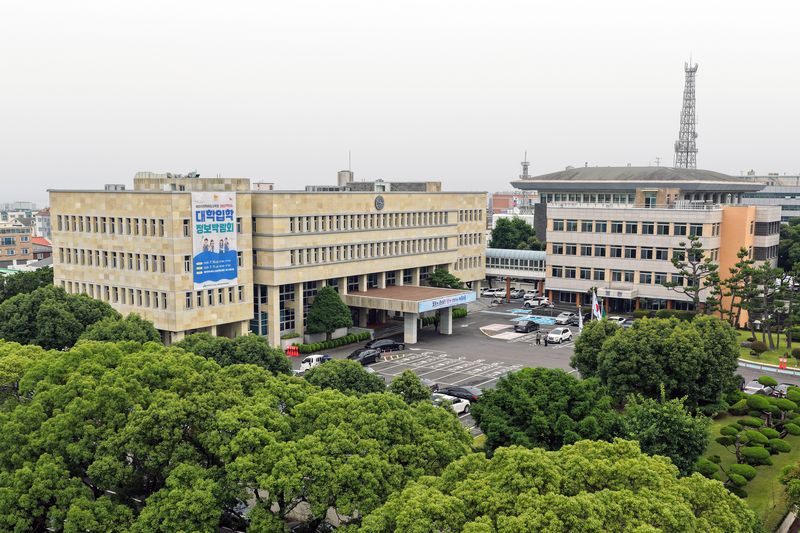
In November 2023, the head of the then Creative Information Division at the Jeju Special Self-Governing Provincial Office of Education told the Education Committee of the Jeju Special Self-Governing Provincial Council that about 12,900 third- and fourth-grade elementary students were enrolled and that, excluding devices already owned by schools and other existing supplies, about 10,000 additional units were needed. The official said the office was considering contracting for about 9,000 units through a joint purchase, with the price expected to be around KRW 700,000 per device, including a keyboard.
The project proceeded to the actual contracting stage the following year. At a meeting of the Education Committee of the Jeju Special Self-Governing Provincial Council on November 19, 2024, the then head of the Planning and Coordination Office at the Jeju Special Self-Governing Provincial Office of Education explained that, because the issue of explicit carryovers had recurred in previous smart-device projects, the office had signed a contract requiring the products to be manufactured by December of that year and stored at a designated location before being distributed to students the following year. The official added that the relevant requirements had also been included in the specifications so that maintenance, management, and after-sales service would be available for six years.
Since the contract was concluded in 2024, its timing alone places it within the alleged period of September 2022 to January 2025 presented by the KFTC examiner.
A business connection between one of the respondent sales companies and the Jeju Special Self-Governing Provincial Office of Education has also been identified.
The sales company lists "Selection for the Jeju Special Self-Governing Provincial Office of Education’s smart-device distribution project" in 2025 as a major business achievement in its official corporate history. Its 2024 history also states, "Selected for a joint purchase of tablet computers by four education offices nationwide," but does not disclose the names of those offices.
It is also necessary to distinguish this from another Jeju Special Self-Governing Provincial Office of Education project worth approximately KRW 8.4 billion that was carried out in 2025.
On April 30 last year, the PPS included the Jeju Special Self-Governing Provincial Office of Education’s "2025 Elementary School Smart Device Distribution Project" in its bidding plan for large-scale projects scheduled for May. The allocated budget was KRW 8,421,879,670, and Company C won the bid at KRW 8,382,480,000 on May 27 of the same year. The publicly released bid-opening results show that two companies participated. This project was announced and opened for bids after the alleged period presented by the KFTC had ended in January 2025.
The key to determining whether this case was actually connected to Jeju Province’s education budget is the 2024 contract. Because the timing of the contracts questioned by the KFTC overlaps with the alleged period, it remains necessary to confirm whether the Jeju Special Self-Governing Provincial Office of Education’s contract was included among the 15 procurements.
[email protected] Jung Yong-bok Reporter