“Shortness of Breath and Swelling That Were Never There Before” ... Small Signals from the Body [Health Talk]
- Input
- 2026-09-18 09:44:53
- Updated
- 2026-09-18 09:44:53

[Financial News] If shortness of breath or leg swelling that was not present before suddenly develops, valvular regurgitation should be suspected.
The heart beats approximately 100,000 times a day and supplies blood throughout the body. The heart valve acts like a swinging door, opening and closing to ensure that blood flows in only one direction.
Professor Kwak Soon-gu of the Division of Cardiology at Seoul National University Hospital explained, "If a valve does not close properly, some of the blood that has already passed through leaks backward, causing valvular regurgitation."
It Can Result from Various Causes, from Aging to Heart Failure
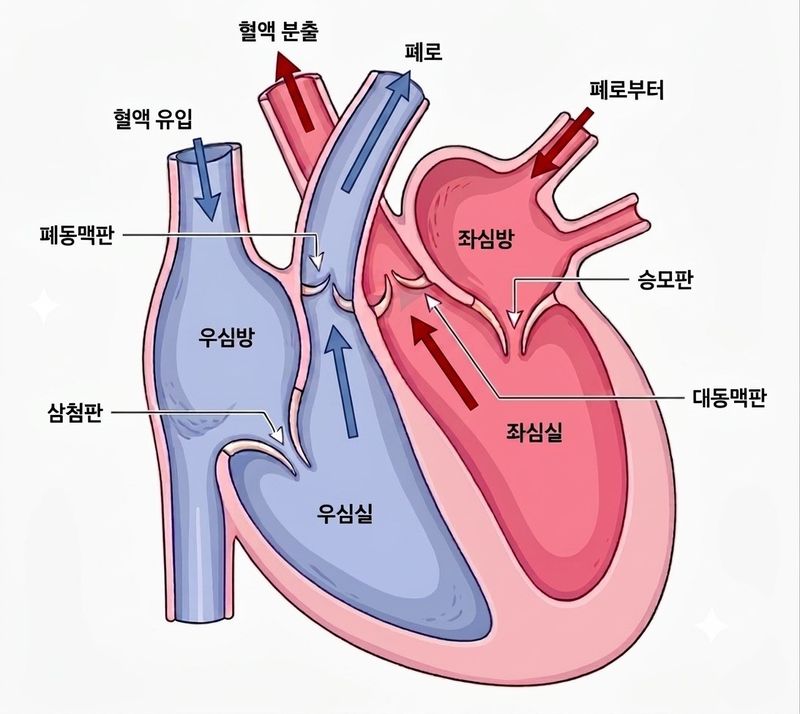
The heart has four valves. They open and close as the heart contracts and relaxes, helping blood flow in one direction. However, when a valve fails to close properly and blood flows backward, the heart has to work harder than usual to supply the body with the necessary amount of blood.
Valvular regurgitation most commonly occurs in the mitral, tricuspid, and aortic valves. If moderate or greater regurgitation persists, the strain on the heart can increase, potentially leading to reduced cardiac function and heart failure.
The causes are classified as primary, resulting from abnormalities in the valves themselves, and secondary, occurring when the structure of the heart changes due to conditions such as heart failure, myocardial infarction, or atrial fibrillation.
No Symptoms in the Early Stages ... Echocardiography Enables an Accurate Diagnosis
Valvular regurgitation is classified as mild, moderate, or severe. Mild cases often cause no symptoms and are frequently discovered by chance during health screenings. However, as the condition progresses to a severe stage, heart failure may develop, causing shortness of breath, fatigue, swelling, chest pain, and, in severe cases, fainting. If shortness of breath or leg swelling that was not present before newly develops, the possibility of valvular disease should be checked.
Valvular regurgitation can initially be suspected based on a patient's symptoms and medical history, as well as a heart murmur detected during auscultation. An accurate diagnosis is made through echocardiography, which is the most important test for comprehensively evaluating whether regurgitation is present, its severity, and overall heart function.
If an abnormality is identified on an electrocardiogram or chest X-ray during a health screening and symptoms related to valvular regurgitation appear, echocardiography is performed. When necessary, additional tests such as an exercise stress test, Cardiac CT, or Cardiac MRI may be conducted to determine whether other heart conditions are present.
In mild cases, patients are generally monitored without special medication, with echocardiography performed every two to three years. Even in moderate cases, if symptoms are mild and cardiac function is preserved, symptoms can be managed with diuretics while the condition is monitored.
However, medication alone cannot fundamentally treat severe valvular regurgitation. Surgery or an intervention should be considered if related symptoms develop or structural changes, such as reduced cardiac function or an enlarged heart, are identified. Even when there are no symptoms, performing an appropriate valve intervention when cardiac function begins to decline is crucial to determining the long-term prognosis.
In recent years, minimally invasive procedures such as transcatheter mitral valve repair (TEER) have been performed primarily in elderly patients or those in poor overall health. The procedure involves inserting a catheter through a blood vessel and securing the damaged valve with a clip. Whether it is appropriate is determined based on the patient's condition.
No medication or lifestyle modification has yet been clearly established to directly improve valvular regurgitation. Therefore, if the condition is mild or causes no symptoms, it is important to maintain overall cardiovascular health through regular exercise, maintaining an appropriate weight, and managing blood pressure and cholesterol levels.
However, if unusual shortness of breath or dizziness occurs during exercise, stop exercising immediately and seek medical attention from a specialist. A low-sodium diet may help when swelling or shortness of breath is present.
Professor Kwak said, "Because valvular regurgitation often causes few symptoms in its early stages, it may be detected late, making regular checkups and follow-up monitoring important. If you have been diagnosed with moderate or greater valvular regurgitation, you should continue to monitor changes in heart function through echocardiography and consultations with a specialist, even if you have no symptoms, and avoid missing the appropriate time for treatment."
[email protected] Jung Myung-jin, medical specialist Reporter