From Class Assignment to Startup: ‘Tape-Free IV Needle’ Device Attracts Investment
- Input
- 2026-09-18 09:16:56
- Updated
- 2026-09-18 09:16:56
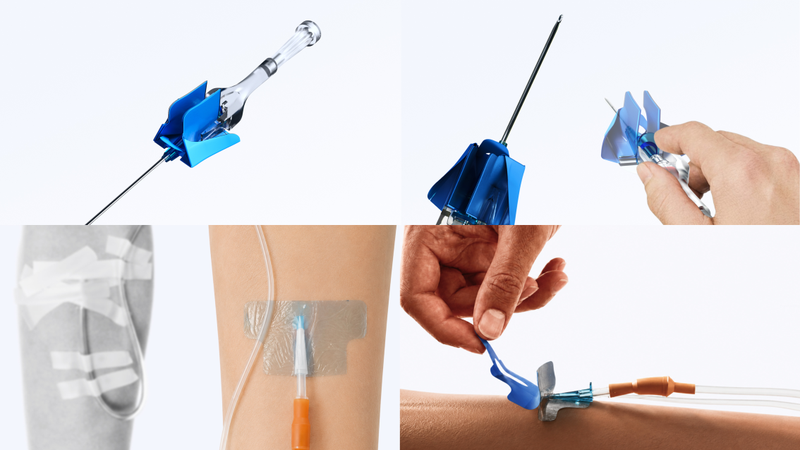
[Financial News] University students have developed a new IV needle securement device that can be attached to the skin in one step without the need for cumbersome adhesive bandage tape. The device has earned recognition for its technological capabilities on the international stage and has also attracted actual investment.
Hanyang University ERICA announced on the 18th that Fixwing, an integrated IV catheter securement device developed by fourth-year students Dongmin Shin, Joo Seong-min, Park Yeon-woo and Son Hye-mi from the Department of Industrial Design, had been selected as one of the top three Korean entries in the 2026 James Dyson Award, an international engineering competition. The student team recently secured private investment and has begun full-scale startup formation and product mass production.
Until now, hospitals have had to insert a plastic tube into a blood vessel when administering an IV or injectable medication, then cut medical tape piece by piece and apply several layers to secure it. This labor-intensive process can delay responses in emergencies. If the patient moves, the needle may also easily shift or come out.
Fixwing, developed by the students, addresses all of these steps in one continuous motion. After the blood vessel is punctured, removing the guide needle automatically exposes a special adhesive surface inside the device, which adheres closely to the skin. The wing-shaped securing flaps can then be unfolded to firmly hold both the catheter needle and the IV tubing in place.
The idea began as an assignment in Design Engineering Studio, a regular university course, and was refined through rigorous field testing. The students built dozens of test models themselves and continuously incorporated feedback from practicing doctors, nurses and emergency medical technicians. They carefully improved the structure for preventing infection and the method for ensuring close contact with the skin.
Dongmin Shin, the team leader, said, "We made dozens of prototypes to ease the inconveniences faced in medical settings and improved the product by incorporating feedback from medical professionals." Shin added, "Beyond being selected domestically, we will responsibly pursue commercialization so that the product can be widely used by patients and medical professionals in actual hospitals."
Choi Jong-woo, a professor in Hanyang University ERICA’s Department of Industrial Design who advised the team, described it as "a leading example of industry-academia collaboration that did not remain a simple class assignment, but underwent extensive field validation before leading to actual investment and market entry."
Fixwing previously won Platinum at the Spark Design Award and the Grand Prize at the Pin Up Design Awards, earning recognition for its design competitiveness. The student team will advance to the international James Dyson Award competition, where it will compete against leading entries from around the world and seek a place among the world’s top 20 works, which will be announced in October.
[email protected] Man-gi Kim Reporter