Rieder, a Rival to Warsh for Federal Reserve Chair, Sees Little Benefit from Rate Hikes
- Input
- 2026-09-18 09:16:05
- Updated
- 2026-09-18 09:16:05
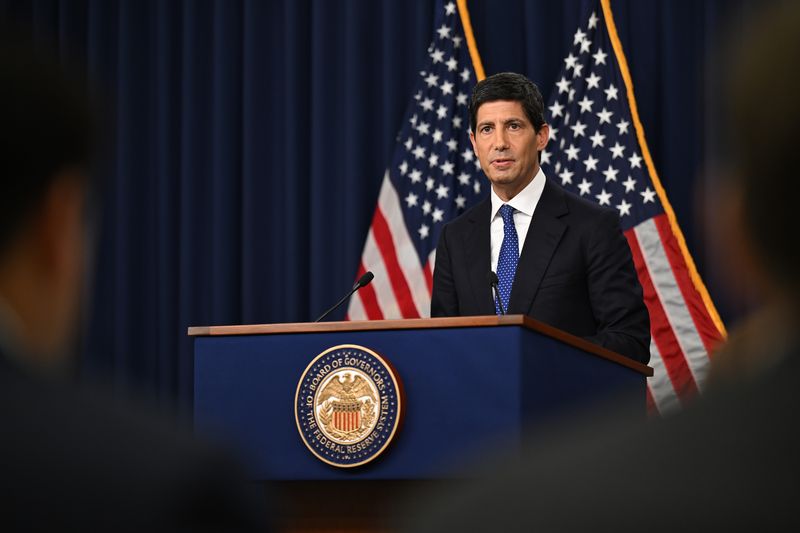
[Financial News] To counter persistent inflation and rising energy prices, the Fed raised its benchmark interest rate on March 16 (local time), marking the first hike since July 2023. However, market experts have voiced skepticism that the latest tightening move will materially ease the inflation burden on U.S. households.
Yahoo Finance reported on March 17 that the rate hike's failure to ease the burden on U.S. households would pose a challenge to Fed Chair Kevin Warsh.
Wall Street experts reacted skeptically to the first rate hike since Kevin Warsh took office as Fed chair. Rick Rieder, BlackRock's chief investment officer for fixed income, who had been mentioned alongside Warsh as a candidate for Fed chair, said in a recent report, "The problem with inflation today is that while cyclical prices, which are sensitive to economic fluctuations, remain stable, noncyclical prices, which do not respond to changes in interest rates, are driving the increase."
He analyzed that cost pressures are mounting in areas unaffected by rate hikes, including energy, insurance, health care and education, making them difficult to address through the Fed's traditional tool of raising interest rates.
Stephanie Guild, chief investment officer at Robinhood Markets, likewise said, "The current problem is a structural friction caused by high demand for money and energy while supply is shrinking. Even if the Fed raises rates by 0.25 percentage points or 0.5 percentage points, this problem will not be fundamentally resolved, and investors should establish separate hedging instruments in their portfolios."
Markets reacted immediately after the Fed raised rates and released a dot plot leaving open the possibility of one additional hike this year. With Chair Warsh adding hawkish comments favoring monetary tightening, the Dow Jones Industrial Average (DJIA) on the New York stock market plunged 631.21 points from the previous trading day.
Historical data, however, suggest that stocks may recover after the short-term shock. According to financial analysis firm The Kobeissi Letter, across seven rate-hike cycles since 1988, the S&P 500 Index fell an average of 4% in the six weeks following the first hike.
The market then recovered all of those losses over the following five to six weeks. It posted an average return of 4% six months after the first hike and 9% after 12 months. Excluding 2022, stocks were higher one year later in every other cycle.
[email protected] Yoon Jae-jun Reporter