"Ovarian tumors can happen to teenagers too?" ... I thought it was menstrual cramps, but it was an 8-cm tumor [Health Talk]
- Input
- 2026-09-18 08:47:28
- Updated
- 2026-09-18 08:47:28

[Financial News] Ovarian diseases are often considered a problem affecting adult women. However, ovarian tumors can also develop in teenagers once they go through puberty and begin ovulating, making it important to remain vigilant.
Song Min-kyung, head of obstetrics and gynecology at Incheon Sejong Hospital, said, "It is easy to think of ovarian diseases as a problem affecting adult women. However, once puberty has passed and ovulation begins, various lesions can develop in the ovaries, and ovarian tumors can also occur in teenagers."
She added, "Recently, a teenager in her mid-teens visited Incheon Sejong Hospital, where a tumor measuring about 8 cm was found on her left ovary and treated with single-port robotic surgery. Recurrent abdominal pain or menstrual irregularities should not be taken lightly."
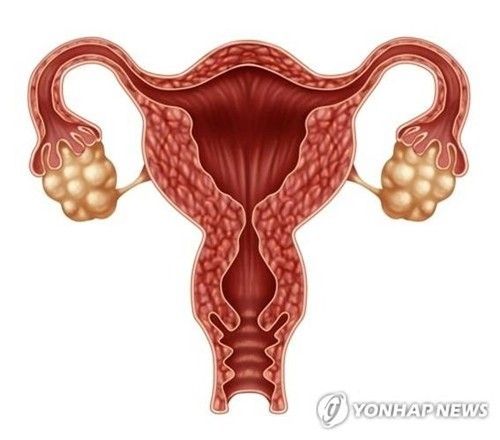
Ovarian masses, including ovarian tumors, can also develop in teenagers in connection with ovulation. Functional tumors related to ovulation may disappear naturally without special treatment.
Symptoms may be subtle, making it easy to delay medical care
The problem is that symptoms are not always obvious. As a tumor grows or puts pressure on surrounding tissues, it may cause discomfort or pain in the lower abdomen, abdominal bloating, or changes in menstrual patterns. Even when symptoms are present, they may be dismissed as minor. Teenagers often delay seeking medical care because they consider abdominal pain or menstrual cramps relatively common. They may also endure the discomfort when they are busy with school and academic work.
Dr. Song emphasized, "The most important thing is to see whether changes that differ from your usual condition keep recurring. If unusual pain continues to recur, or if pain during every menstrual period persists to the point that it makes daily life difficult, you should not assume it is simply menstrual cramps. It is important to identify the cause."
The symptom requiring particular attention in cases of ovarian tumors is sudden, severe abdominal pain. When a tumor or cyst is present in the ovary, the ovary can twist around the surrounding tissues, causing ovarian torsion. This can lead to sudden, severe pain in one side of the lower abdomen. Nausea and vomiting may also occur. Ovarian torsion can reduce or block blood flow to the ovary, making prompt diagnosis and treatment essential. The risk of ovarian torsion should be considered more carefully when a tumor is large, but the risk cannot be determined based solely on a specific size. Therefore, anyone experiencing symptoms such as sudden pain should promptly seek medical care for an accurate evaluation.
The decision to operate is based on symptoms, size and other factors
The discovery of an ovarian mass or lesion does not necessarily mean that surgery is required. In teenagers, the treatment approach for an ovarian tumor is determined by considering the tumor's size and shape, internal characteristics, the presence or absence of symptoms, and changes over time. In cases involving a simple functional tumor, doctors may monitor the condition for a period of time to see whether it disappears naturally. However, surgical treatment may be considered if the tumor is large or continues to grow, if symptoms such as pain recur, or if complications such as ovarian torsion or rupture are a concern.
In adolescent ovarian surgery, it is important to treat the lesion while also considering future ovarian function. Even when surgery is necessary, doctors determine the treatment method after considering whether normal ovarian tissue can be preserved as much as possible.
Ovarian tumors are not the only condition requiring attention during adolescence. Severe menstrual cramps do not necessarily indicate a disease, but if the pain worsens over time or makes school or daily life difficult even after taking painkillers, other conditions should be ruled out. However, menstrual cycles can temporarily become irregular during puberty, so teenagers should not be assessed by the same standards used for adults. A comprehensive evaluation of symptom patterns and changes in the menstrual cycle is important.
Dr. Song said, "Adolescence is a time of major physical changes. Once you begin menstruating, simply knowing and recording your usual cycle and pain level can help you monitor changes in your body. If even a small change keeps recurring or interferes with daily life, do not dismiss it by thinking, 'I'm young, so it must be fine.' Visiting a hospital and working with a specialist to identify the exact cause is the first step toward protecting your health."
[email protected] Jung Myung-jin, medical correspondent Reporter