Hyundai Motor Chung Mong-Koo Foundation Emphasizes "Bridging the Gray Zone Is the Foundation's Role" at Kobe Impact Forum
- Input
- 2026-09-18 08:38:19
- Updated
- 2026-09-18 08:38:19
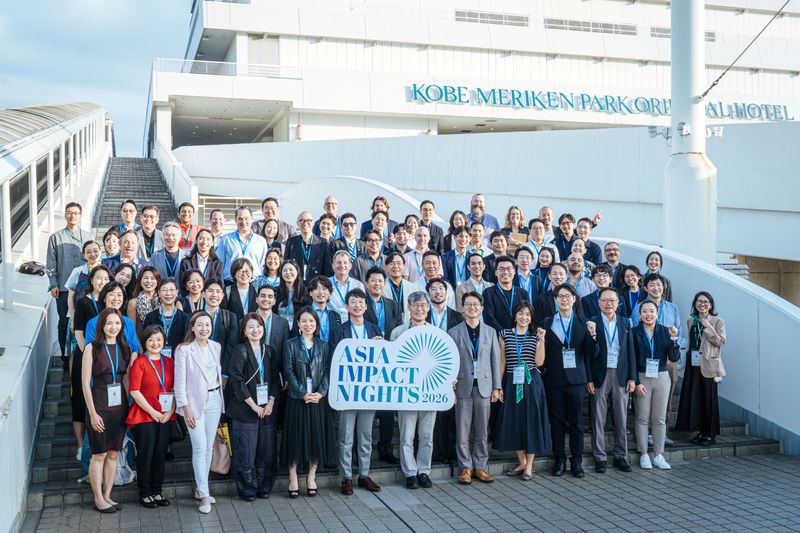
Hyundai Motor Chung Mong-Koo Foundation said on the 18th that it held a main session at the 2026 Asia Impact Nights (AIN 2026), held in Kobe, Japan, from the 16th to the 18th. The session explored the role of capital and ways to cooperate in advancing sustainable social innovation. This year's forum, themed "Asia's Triple Transition: From Crisis to Opportunity," examined how Asia can turn shared challenges—including demographic shifts, the climate crisis and the transition to artificial intelligence—into new opportunities.
The event was launched in 2016 by D3 Jubilee Partners to introduce the concept of impact investing to South Korea, and marked its 10th anniversary this year. It has since expanded its reach to Japan, Hong Kong, Singapore and Southeast Asia, establishing itself as a platform for investors, foundations, companies, social innovators and ecosystem builders to develop long-term relationships. This year's event was jointly hosted by South Korea's D3 Jubilee Partners and Japan's Social Innovation Investment Foundation (SIIF), with 100 impact-sector leaders from across Asia—including South Korea and Japan—as well as the United States, Europe and Australia.
At a session on catalytic capital held on the 17th, Choi Jae-ho, secretary-general of Hyundai Motor Chung Mong-Koo Foundation, served as a speaker. He explained the difference between capital and wealth, saying, "If capital is the means to reach a destination, wealth is the destination we ultimately seek to reach."
He stressed that the social role of public-interest foundations is to convert their assets into human and social capital and build sustainable social wealth for future generations.
Choi referred to the "Gray Zone" faced by social enterprises after public support ends and before private investment begins in earnest. He explained that private philanthropic foundations should play a catalytic role by sharing the risk of early-stage failures during this period. He also proposed a "public-philanthropic partnership," in which the government and private foundations share risks and promote social innovation to address complex social problems such as low birth rates, population aging, regional extinction and the climate crisis.
The foundation's impact startup development program was introduced as a leading example of catalytic capital. Since 2012, the foundation has identified and nurtured impact startups that address social problems through innovative business models and technology. Over 14 years, it has supported 374 companies, created 7,481 jobs and attracted a cumulative 377.9 billion won in investment. Beginning this year, it has shifted the focus of its support from organizations to individual entrepreneurs, building fellowships and an ecosystem that enable social innovators to continue growing and tackling new challenges.
Building on this experience, the foundation is also expanding its support overseas. Since this year, it has been working with the United Nations Development Programme (UNDP) on a global program to foster promising social innovators in the Asia-Pacific region. By connecting its domestic expertise in nurturing innovators with its global network, the foundation is supporting them as they grow and collaborate across borders.
An official from Hyundai Motor Chung Mong-Koo Foundation said, "We plan to continue expanding exchanges and cooperation with foundations, impact investors, companies and public institutions across Asia. We will work to build an Asian social innovation ecosystem where social innovators can continue to take on new challenges."
[email protected] Kim Dong-chan Reporter