Did Jensen Huang, Mark Zuckerberg and Elon Musk Block a U.S. AI Regulatory Body?
- Input
- 2026-09-18 07:59:30
- Updated
- 2026-09-18 07:59:30
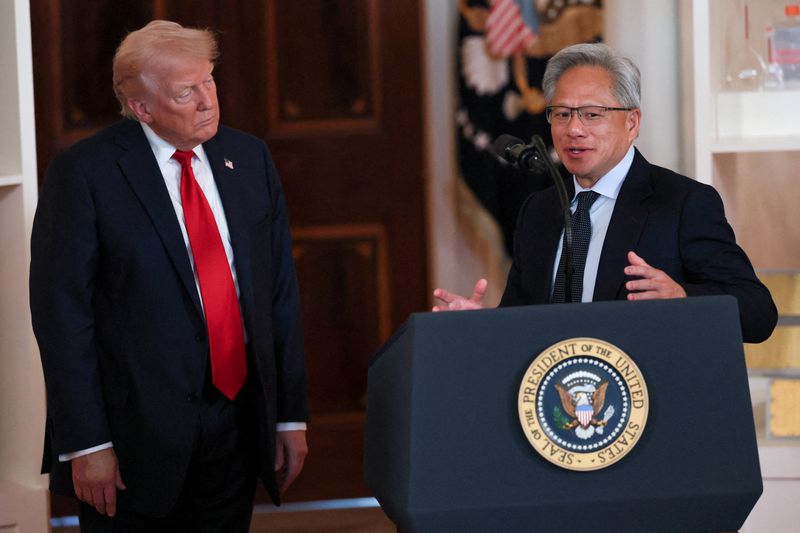
[Financial News] As debate over slowing the pace of artificial intelligence (AI) development has recently come to the fore in the United States, claims have emerged that the heads of NVIDIA, Meta Platforms and SpaceX blocked the establishment of an AI regulatory body. They appealed to President Donald Trump, arguing that a private-sector-led body would skew the competitive landscape in favor of one side.
The Wall Street Journal (WSJ) reported this on the 17th, local time, citing people familiar with the matter. The newspaper said Jensen Huang, CEO of NVIDIA, Mark Zuckerberg, CEO of Meta Platforms, and Elon Musk, CEO of SpaceX, had recently conveyed their concerns about establishing the regulatory body to Trump, thereby scuttling the plan.
Last July, Demis Hassabis, chairman of Google's AI subsidiary DeepMind, argued that private companies should take the lead in operating a body to regulate the pace of AI development and how it is used. He proposed establishing a private-sector-led AI regulatory and standards-setting body modeled on the Financial Industry Regulatory Authority (FINRA).
According to people familiar with the matter, the three CEOs, including Jensen Huang, argued that if Hassabis's proposal were implemented, Google, OpenAI and Anthropic could gain oligopolistic control over the AI industry. They also expressed concerns about who would be selected as officers and other members of the body. Each reportedly met with Trump recently and said they favored the light-touch regulatory approach currently being pursued by the Trump administration.
The WSJ explained that opinions on AI regulation remain divided within the White House. White House Chief of Staff Susie Wiles, Treasury Secretary Scott Bessent and National Cyber Director Sean Cairncross have pushed for stronger AI oversight and guidelines, while David Sacks, chairman of the White House's science and technology advisory committee, has urged Trump to take a minimal-regulation approach. This month, Trump posted on Truth Social, "A pathological conspiracy against AI and data centers is taking place" and "China is the only one welcoming it." He went on to claim that calls to slow AI development and impose regulations were political attacks by the Democrats.
[email protected] Park Jong-won Reporter