U.S. Likely to Delay Section 301 “Overproduction” Tariffs... Waiting for Xi Jinping
- Input
- 2026-09-18 06:37:04
- Updated
- 2026-09-18 06:37:04
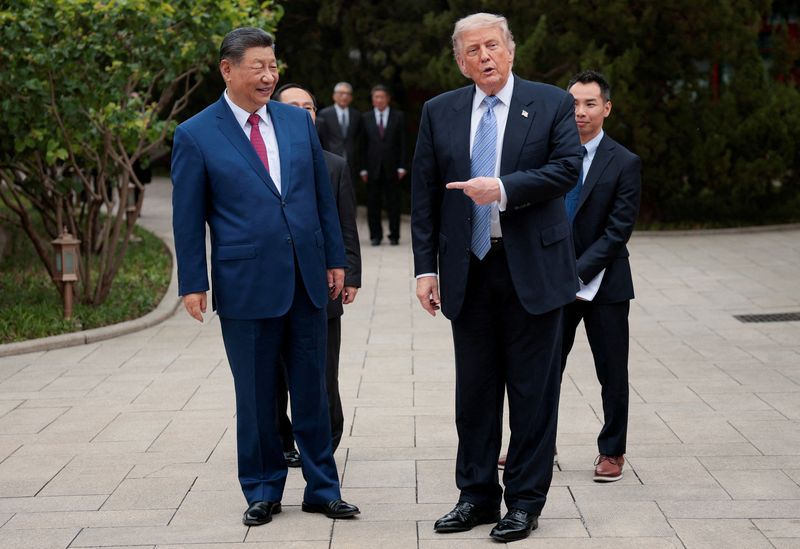
[Financial News] The United States, which has launched a tariff offensive based on Section 301 of the Trade Act of 1974 against major trading partners such as South Korea and China, is reportedly delaying its second offensive. The U.S. is currently preparing tariffs over alleged overproduction and is said to be postponing their announcement until after Chinese President Xi Jinping visits the United States and holds a summit with his U.S. counterpart on the 24th, local time.
U.S. media outlets, including transportation news publication Transport Topics, reported this on the 17th, citing officials. One official said the U.S. government had planned to release a trade report on overproduction before the U.S.-China summit scheduled for the 24th, but now plans to delay its release. The report is expected to include a proposal to impose an additional 7.5% tariff on Chinese products.
It is unclear why the announcement was delayed, and the reported additional tariff rate of 7.5% has not been finalized. The Office of the United States Trade Representative (USTR) and the White House did not respond to U.S. media requests for comment.
Donald Trump, who began his second term as U.S. president last year, imposed a total of 20% in additional tariffs on China under the pretexts of penalizing the distribution of the opioid Fentanyl (10%) and imposing reciprocal tariffs (10%). In a ruling last February, the U.S. Supreme Court said that the Fentanyl and reciprocal tariffs based on the International Emergency Economic Powers Act (IEEPA) were invalid. The Trump administration is therefore seeking a new legal basis for imposing tariffs instead of relying on IEEPA. U.S. media outlets explained that even if the United States introduces new tariffs, both the U.S. and China view the previously applied combined rate of 20% as the ceiling.
Enacted in 1974, Section 301 of the Trade Act of 1974 allows the United States to retaliate through measures such as import bans or tariffs when a trading partner harms U.S. companies through unfair systems or discrimination. Retaliatory measures require an investigation into unfair practices by USTR, and such investigations generally conclude within a year.
USTR announced on March 12 that it would launch an investigation under Section 301 of the Trade Act of 1974 into acts, policies and practices related to forced labor. The allegation is that U.S. trading partners have allowed products made with forced labor to enter the market, undermining the price competitiveness of U.S. products. USTR also said on March 11 that it would investigate unfair trade practices related to manufacturing overcapacity involving 15 countries, including South Korea, China and Japan, as well as the European Union (EU), under Section 301 of the Trade Act of 1974.
On July 23, USTR imposed additional 12.5% tariffs related to forced labor on South Korea and China, and imposed tariffs under the same rationale on 58 other economic entities. The announcement of tariffs related to overproduction has not yet been finalized.
In reports last month, U.S. media outlets including The Associated Press (AP) said that the retaliatory tariffs related to overproduction that the United States plans to impose on China would be around 7.5%. AP assessed that the additional tariffs on Chinese imports, combined with the 12.5% forced-labor tariffs imposed in July, would bring the total to 20%, barely staying within the implicit ceiling.
[email protected] Park Jong-won Reporter