BOK Weighs Options... Burden of Three Consecutive Hikes, November Increase More Likely Than October [U.S. Raises Rates for First Time in Three Years]
- Input
- 2026-09-17 18:37:33
- Updated
- 2026-09-17 18:37:33
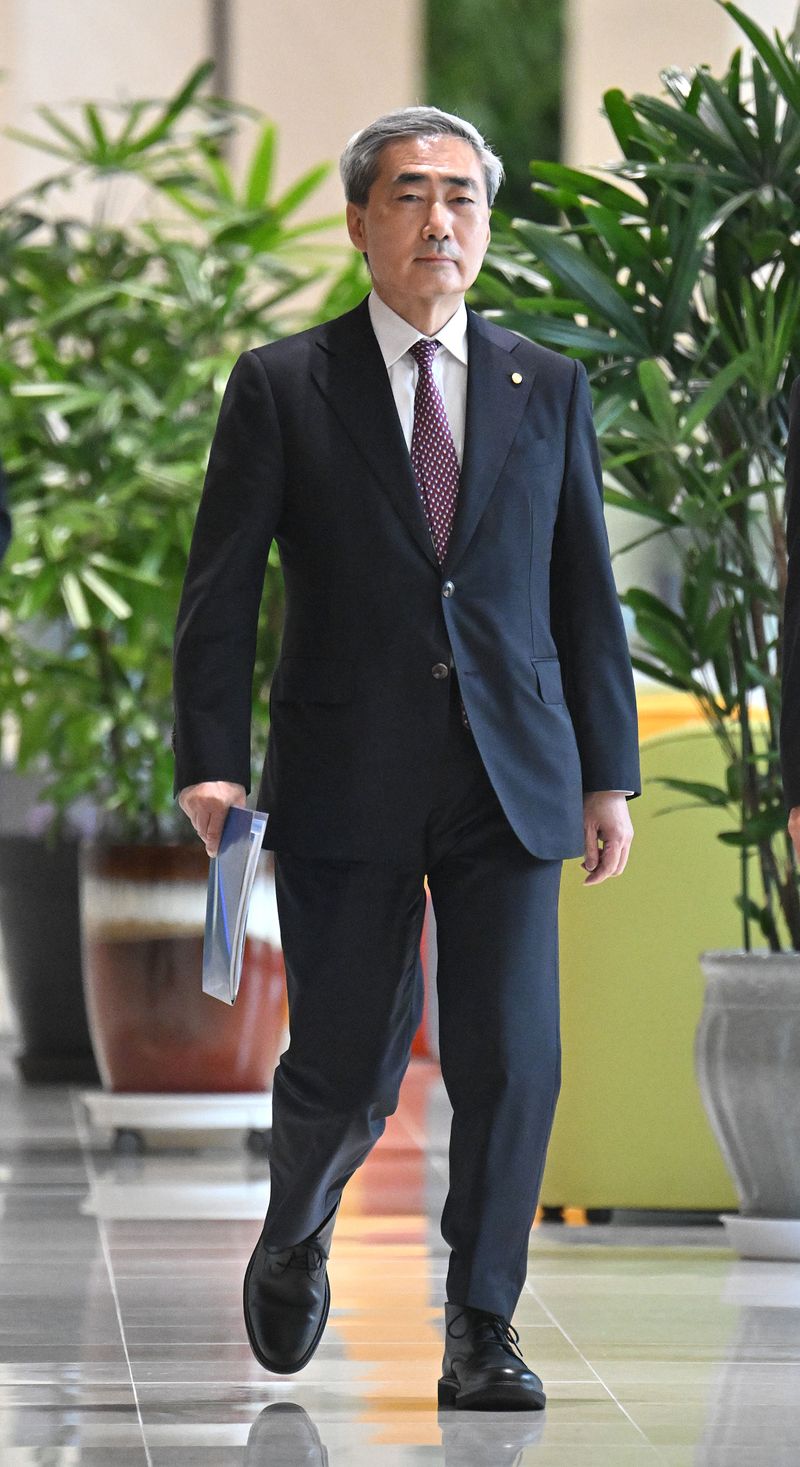
On the 17th, the BOK said it would closely monitor the potential impact of the Fed's rate hike on domestic financial and foreign exchange markets. It also reaffirmed its stance of pursuing preemptive tightening in response to explosive nominal economic growth and expanding demand fueled by the semiconductor boom, as well as mounting inflationary pressures.
Based on Governor Hyun Song Shin's remarks, the BOK's policy stance can be summed up as "preemptive, timely action" and "maintaining monetary tightening." Regarding the Fed's monetary policy, the BOK assessed, "Given its commitment to price stability and indications that additional rate hikes remain possible, the Fed is expected to maintain its tightening stance going forward."
The indicators cited by Governor Shin as key to the direction of interest rates include inflation, economic growth, household loans and the housing market, as well as the Fed's policy stance. With the Fed making its tightening stance clear, markets are treating an additional BOK rate hike this year as a foregone conclusion, with timing the only question. November is generally viewed as more likely than October. However, given the clear synchronization between Korean and U.S. Treasury yields during past periods of monetary tightening, some have also raised the possibility of three consecutive rate hikes.
Inflation is the biggest source of concern. As the war in the Middle East has worsened, international oil prices recently rose above $100 per barrel again. Oil prices are the largest and most direct source of inflationary pressure. Consumer inflation stood at 3.1% in August, relatively contained compared with major economies, but this was partly because the government has been artificially suppressing prices through policy tools such as an oil price ceiling system. If those restraints are lifted, inflation could surge. The won-dollar exchange rate, which is closely linked to import prices, also fell to around 1,330 won per dollar early this month before quickly approaching the 1,400-won range, increasing uncertainty.
Moreover, purchasing demand for housing and other goods has been explosive among some groups whose nominal wages have risen on the back of strong semiconductor exports. This expansion in demand directly fuels inflation.
The minutes of the August Monetary Policy Board meeting show that the BOK assessed inflation and growth as exceeding potential levels, with the real economy showing signs of overheating.
Household loans, which have shown no sign of slowing, are another variable. Household borrowing is increasing rapidly amid an overheated real estate market centered on Seoul and the Capital Metropolitan Area. According to the BOK, the household loan balance stood at nearly 1,900 trillion won at the end of the second quarter, recording its largest increase since the third quarter of 2021, at 24.9 trillion won.
Monetary Policy Board members expressed concern that the government's easing of overall household-loan regulations could help relieve the "loan cliff" facing genuine borrowers, but could also inadvertently lead to higher home prices and rising household debt. They further warned that if the increased lending capacity created by regulatory easing combines with market expectations of higher home prices, it could exert strong upward pressure on both housing prices and household loans.
Uncertainty in the financial and foreign exchange markets is also increasing. Within the Monetary Policy Board, members cited the precedent of the 2008 financial crisis, when accumulated leverage collapsed rapidly and developed into a systemic crisis. They warned, "If an unexpected shock, such as a slowdown in Artificial Intelligence (AI) investment, triggers rapid deleveraging (debt reduction), it could roil financial markets." The risk that surging U.S. Treasury yields could spill over into Korea is also considered a major factor supporting a policy rate hike.
With market risks piling up, analysts say the BOK is highly likely to tighten the monetary policy reins further to stabilize prices and prevent financial imbalances.
[email protected] Jung Sang-gyun Reporter