Electricity Sales Price Talks Hit Snag... “If the Returns Make Sense, We Should Do It Even If We Have to Borrow” [Key Issues in Negotiations over Investment in the United States]
- Input
- 2026-09-17 18:35:38
- Updated
- 2026-09-17 18:35:38
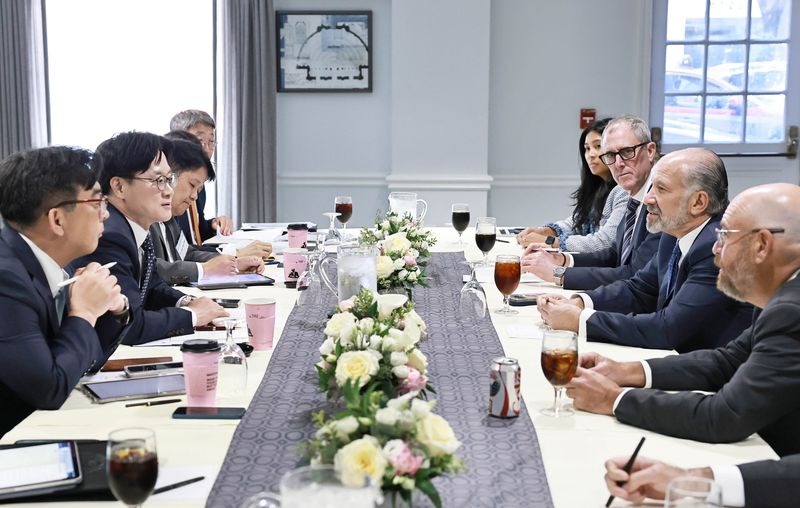
According to Financial News reporting on the 17th, South Korea believes it would be difficult to disburse the funds before detailed conditions are set for assessing the possibility of recovering the principal, including the power project's customers, sales prices, and the method for calculating profits and losses across all investments. The disagreement also put the brakes on the signing and announcement, scheduled for the 18th, of a memorandum of understanding (MOU) for the first investment project, which the U.S. side had been pushing to conclude quickly.
■ PPA Alone Is Not Enough
For the Texas gas-fired combined-cycle power plant cited as the first investment project in the United States, the key questions are “who will buy the electricity, at what price, and for how long?” Long-term cash flow can be estimated only after securing stable off-takers, such as big-tech data centers, through long-term PPAs and specifying the structure for determining electricity sales prices. A power plant is a long-term project that takes several years from groundbreaking to operation. What matters is how electricity demand and market prices in Texas will move after completion, rather than current prices. If local electricity prices rise as data centers and other facilities expand, profitability could vary depending on how that increase is reflected in the price at which the Korean side sells the electricity. An anonymous source familiar with the matter explained that profitability must be assessed by calculating expected sales revenue and the investment recovery period based on electricity demand and prices when the plant actually begins operating. Ultimately, “who will buy it?” and “at what price will it be sold?” are closely intertwined.
The initial agreement between the two countries reportedly included language to the effect that the United States would work to secure customers for the electricity, but this was not a legal obligation. The South Korean side believes it would be difficult to meet the standard of commercial rationality unless the customers and sales terms are backed by firm arrangements.
■ Cash Flow Determines PF
Electricity sales terms are directly tied to financing. Large-scale power projects can typically raise funds through project financing (PF) by establishing a special-purpose vehicle (SPV) for each project and combining equity with borrowing from financial institutions. The key is the project's cash flow. Once a long-term PPA and a sales-price structure are in place, lenders can assess the project's ability to repay principal and interest based on expected electricity sales revenue, making it easier for financial institutions to participate.
A source in the financial sector explained that even large investors use a combination of equity and external borrowing, saying, “It is difficult to carry out projects like these without taking on debt.” The ruling camp has also said that if the business conditions are in place, “we can undertake the project even by borrowing money if the terms are right.” However, the actual borrowing amount and equity ratio of each SPV will vary depending on the contractual terms of the individual project.
■ South Korea Holds Firm on Safeguards
The issue is not only the profitability of individual projects but also how profits and losses will be settled across the entire $200 billion investment. The two countries have been discussing a plan to disburse the $200 billion in investment funds over 10 years, at $20 billion annually. The initial agreement was understood to involve establishing an SPV for each project while aggregating the profits and losses of all projects at an upper level. In other words, profits from one project could offset losses from another. However, the U.S. side has recently demanded that profits and losses be calculated separately for each project, reportedly triggering a disagreement. South Korea views this as contrary to the original intent of the agreement. Whether profits and losses are aggregated could affect both the recoverability of the overall investment and the level of risk borne by the South Korean side.
Ultimately, the final tug-of-war between the two countries is focused not just on “how much to invest” but on “under what conditions to put in the money.” The United States is demanding an upfront transfer of $10 billion and pressing for rapid disbursement, while South Korea maintains that conditions supporting the recovery of the investment must be finalized first, including PPA off-takers, electricity sales prices, and the method for settling profits and losses.
[email protected] Song Ji-won Reporter