Park Heon, Deputy Commissioner of the Korea Customs Service, Checks Chuseok Food Prices... Inspects Release Site for Pork Under Tariff-Rate Quota
- Input
- 2026-09-17 16:17:57
- Updated
- 2026-09-17 16:17:57
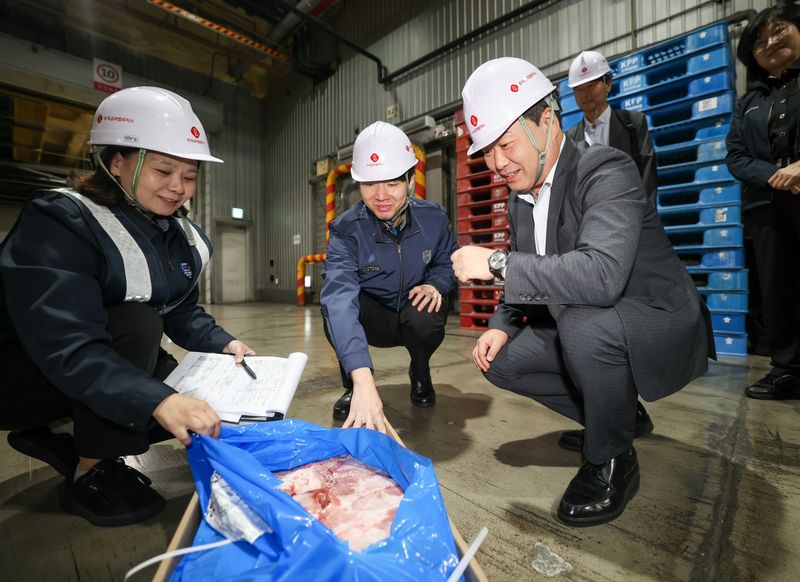
The Korea Customs Service said Deputy Commissioner Park Heon visited Lotte Global Logistics' Icheon Logistics Center in Icheon, Gyeonggi Province, on September 17 to inspect the rapid customs clearance and release of frozen pork, a key item under special tariff-rate quota management, from bonded areas.
The Korea Customs Service is closely monitoring 18 items, including frozen pork, frozen fruit and sunflower-seed oil, for which intentional delays may occur during customs clearance and domestic distribution.
The inspection was arranged to review rapid customs clearance and the release of goods from bonded areas ahead of Chuseok, as the burden of food prices continues. The aim is to ensure that consumers quickly benefit from lower tariff rates under the government's tariff-rate quota system.
Park toured the bonded warehouse and compared import customs records with the actual quantities released and inventory levels. He also checked whether the mandatory release period under the Ministry of Agriculture, Food and Rural Affairs' recommendation guidelines was being observed. Park instructed customs officials, "Operate a 24-hour rapid customs clearance system for items with a major impact on prices, but take strict action against unfair practices such as intentionally delaying release after import declarations are filed."
He added, "Monitor customs clearance times in real time from arrival at bonded areas through release to encourage swift distribution, and continue special crackdowns on acts that exploit the tariff-rate quota system. We will make stabilizing prices for people's livelihoods our top priority."
Meanwhile, ahead of the holiday shopping season, the distribution industry has identified so-called "hoarding"—importers stockpiling goods in bonded warehouses in anticipation of price increases—as a major cause of rising food prices. Even if the government lowers tariffs and increases import volumes, bottlenecks in the distribution process inevitably reduce the price savings felt by consumers.
[email protected] Kim Won-jun Reporter