Police Push for 'One-Stop Support' System for Crime Victims; Consider Integrating Sexual Exploitation Investigations [Comprehensive]
- Input
- 2026-09-17 16:21:59
- Updated
- 2026-09-17 16:21:59
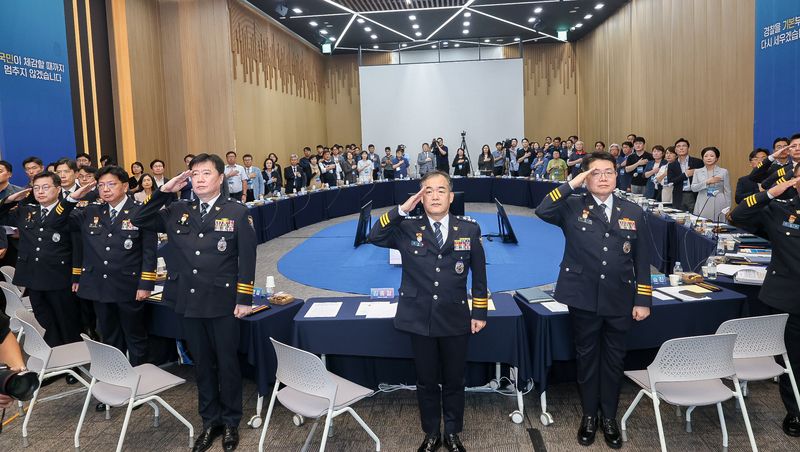
[Financial News] Police have begun preparations to establish a system that links support for crime victims from the early stages of a case through post-case management. They will also consider integrating the investigative systems for sexual exploitation crimes, which are currently divided between cybercrime and women-and-youth units. The police plan to turn demands raised in the field into institutional improvements by enhancing expertise in victim protection and streamlining support procedures for cases involving socially vulnerable people.
The Korean National Police Agency held a 'Police Reform Public Listening Session' on the 17th at its headquarters in Seodaemun District, Seoul, with crime victims, organizations representing women, children, and people with disabilities, and families of missing persons in attendance. Participants described the difficulties they had experienced during case handling and victim protection and proposed improvements to the system, while police leaders responded directly.
At the session, participants repeatedly called for a support system that would continue beyond the investigation and help victims recover their daily lives after a crime. Ahn Eun-mi, a victim counselor at the Korea Victim Support Association, said, "The first reports of domestic violence and child abuse should be viewed as 'early warnings' indicating the risk that they could lead to more serious crimes in the future." She proposed a 'one-stop system' in which a single institution could provide support ranging from psychological counseling to post-case management.
The police said they were preparing to establish such a support system in cooperation with relevant agencies. A police official explained, "There are shortcomings in post-case management after a case has been handled," adding, "We are preparing to establish a system that can handle cases through a one-stop process in consultation with relevant agencies." Acting Commissioner Kim Jongcheol also said, "We will make greater efforts to ensure systematic management from the initial stages of cases."
The police will also pursue measures to enhance expertise in victim protection. They plan to secure additional specialized personnel and obtain the necessary budget for safety measures, including smartwatches and private security, while coordinating roles with the Ministry of Justice and other relevant agencies.
Calls were also made to strengthen protection for victims of relationship-based crimes, including stalking and domestic violence. Choi Yeon-hwa, head of the National Council of Domestic Violence Counseling Centers, said frequent personnel transfers among staff in charge make it difficult to build expertise and proposed incentives to encourage long-term assignments. A police official responded, "The average tenure of staff responsible for these duties is about two years," adding, "We recognize the need for long-term assignments and greater expertise and will develop incentive measures."
Some participants also argued that victims of relationship-based crimes should receive more proactive information about the progress of investigations into perpetrators and the risks they pose. The police explained that procedures are in place to notify victims of investigative developments and decisions on provisional and temporary measures. However, they said that providing victims directly with materials used to assess a perpetrator's risk requires careful consideration.
Regarding procedures for informing victims about case developments and changes involving perpetrators, Acting Commissioner Kim Jongcheol pointed out, "There are cases in which the procedures are not followed under the excuse that staff are busy. Not only the system but also the attitude of officials dealing with victims is important." He added, "We will continue to provide repeated training on how to approach and support crime victims."
The session also addressed improvements to the response system for sexual exploitation crimes involving children and adolescents. Cho Jin-Kyeong, head of TeenUp, called for procedures to refer child victims of prostitution to specialized support agencies and for the investigative system for sexual exploitation crimes, which is divided between cybercrime and women-and-youth units, to be overhauled.
The police explained that counseling centers related to prostitution had not been explicitly included in guidance on victim support, so they added them and improved the mandatory questions in statement records from victims of prostitution. Regarding the proposal to integrate the investigative system for sexual exploitation crimes, which is divided between cybercrime and women-and-youth units, they said they would conduct a careful and in-depth review. They also agreed to consult with relevant departments on establishing a cooperation framework with civic groups and platforms.
Concerns about investigative expertise were also raised. Jeon Ji-hye, standing director of the Korean Women Lawyers Association, suggested strengthening investigators' legal knowledge and establishing case-assignment principles that take into account the specific nature and difficulty of each case. The police said they would improve expertise through investigator training and evaluations of team leaders' command capabilities, while also examining assignment methods that reflect case difficulty.
Acting Commissioner Kim Jongcheol said, "It is painful to acknowledge that the quality and thoroughness of an investigation can vary depending on the abilities of the investigator assigned, even when the cases are the same." He added, "We are also aware that there are significant differences in investigative capabilities between the Seoul metropolitan area and other regions."
The police will continue holding regional listening sessions at metropolitan and provincial police agencies and collecting opinions online through November. The submissions will be reviewed by the relevant departments, developed into specific reform initiatives, and implemented beginning with those that are feasible. In mid-December, the police plan to hold a '100-Day Police Reform Briefing with the Public' to disclose how proposals were incorporated and the progress made on key initiatives.
[email protected] Kim Ye-ji Reporter