Jeju Cruise Visitors Top 510,000; University and Shipping Sectors Develop Field-Ready Talent
- Input
- 2026-09-17 16:06:14
- Updated
- 2026-09-17 16:06:14
[Financial News | Jeju—Jeong Yong-bok] With the number of cruise tourists visiting Jeju surpassing 510,000 this year, a foundation has been established to develop talent in the shipping and cruise sectors by connecting university education with operations at ports and passenger terminals.
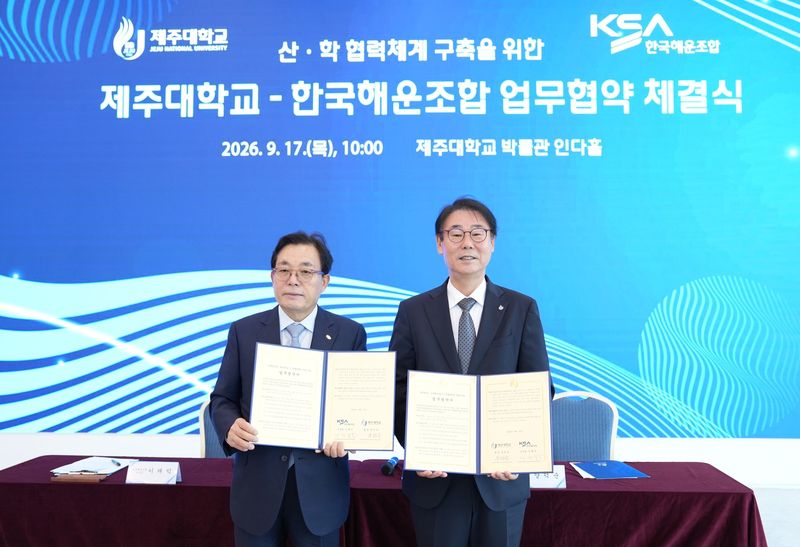
JNU and the Korea Shipping Association signed an industry-academia cooperation agreement on the morning of the 17th at Indahall in the JNU Museum to foster talent in the shipping and cruise sectors.
Under the agreement, the two organizations will share knowledge and information related to research and education in the shipping sector. They will also pursue industry-academia education and research activities through the Anchor Project, a regional growth talent development system.
The key objective is to expand students' educational experience beyond the classroom to ports and passenger terminals. The organizations agreed to help students participating in the JNU RISE Project Group's Global Cruise Convergence Track apply what they learn in lectures at actual cruise and passenger terminal operations sites, while linking their work experience in the shipping and cruise sectors to career exploration and employment.
The agreement is drawing attention amid the rise in cruise tourism to Jeju. According to the Jeju Tourism Organization Tourism Big Data Platform, 513,506 cruise visitors arrived in Jeju this year as of the 14th, up 15.3% from the same period last year. The figures underscore the growing need to develop not only the capacity to accommodate more tourists as cruise calls increase, but also the workforce responsible for service and on-site operations.
The Korea Shipping Association is a cooperative organization of shipping operators established under the Korea Shipping Association Act. It carries out coastal shipping-related projects, including policy support and passenger terminal management. The agreement has created a direct link between university education and the shipping industry.
Participants included Yang Deok-soon, president of JNU; Lee Che-ik, chairman of the Korea Shipping Association; Oh Wook, head of the JNU Anchor Project Group; Professors Park Un-jeong and Baek Ju-a of the Global Cruise Convergence Track; Ko Young-cheol, CEO of Jeju-based cargo shipping company Ssangyong Tongun; Seong Ji-heon, head of the Korea Shipping Association's Southwest Regional Headquarters; and Yoo Won-ju, head of its Jeju Branch.
Yang Deok-soon, president of JNU, said, "Students now have the opportunity to apply directly at a cruise terminal what they learned in the classroom. We will expand cooperation so that students can build experience in the field and turn it into employment."
Lee Che-ik, chairman of the Korea Shipping Association, stated, "Young talent who understand the field represents the future of the shipping industry. By opening our worksites to students, we will pursue two goals at once: improving services for cruise passengers and developing talent."
The JNU RISE Project Group's Global Cruise Convergence Track is being carried out with support from the Anchor Project Group and the Jeju Special Self-Governing Province Oceans and Fisheries Bureau's privately commissioned project to develop cruise-sector talent.
[email protected] Jeong Yong-bok Reporter