Will 'Inter-Korean Civilian Contacts' Be Fully Permitted for the First Time in 36 Years? Government Supports Amendment to the Inter-Korean Exchange and Cooperation Act
- Input
- 2026-09-17 15:55:05
- Updated
- 2026-09-17 15:55:05
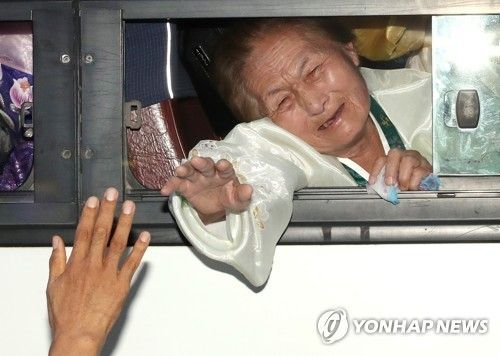
[Financial News] The government has expressed support for legislation that would abolish the legal basis allowing it to selectively reject notifications filed by South Korean citizens seeking to contact North Korean residents.
If enacted, the amendment would fully permit private-sector inter-Korean exchanges. It could become a factor bringing change to the severed inter-Korean relationship. However, the opposition is against the amendment, citing threats to national security and other concerns, raising the possibility that controversy will intensify.
According to documents that the Ministry of Unification (MOU) submitted on the 17th to Ahn Cheol-soo of the People Power Party, a member of the Foreign Affairs and Unification Committee of the National Assembly, the MOU decided to accept an amendment to the Inter-Korean Exchange and Cooperation Act proposed by Kim Jun-hyung of the Rebuilding Korea Party (RKP).
Submitted to the National Assembly in June last year, the amendment centers on deleting Paragraph 3 of Article 9-2 of the Inter-Korean Exchange and Cooperation Act.
The provision requires South Korean residents to notify the minister of unification in advance before contacting North Korean residents. It also allows the minister to refuse to accept the notification when there is a clear concern that the contact could harm inter-Korean exchanges and cooperation, national security, the maintenance of public order, or public welfare.
The number of cases in which the MOU refused to accept advance notifications for contact with North Korean residents under the provision was four in 2022, 44 in 2023, 25 in 2024, and 16 in 2025.
The MOU has stated that it agrees with the purpose of Representative Kim's amendment.
The MOU stated, "The government supports the amendment after taking into consideration the promotion of exchanges and cooperation, which is the purpose and intent of the Inter-Korean Exchange and Cooperation Act; the operation of a system consistent with a 'notification system'; and the expansion of the private sector's autonomy in exchanges and cooperation." It added, "The Ministry of Justice and the National Intelligence Service (NIS), the relevant government agencies, share the same position."
Earlier, Minister of Unification Chung Dong-young said that he had scrapped the ministry's internal guidelines, titled 'Guidelines for Processing Notifications of Contact with North Korean Residents,' in July last year.
The amendment is currently pending before the bill review subcommittee of the Foreign Affairs and Unification Committee of the National Assembly. If the ruling party agrees, it is highly likely to pass the National Assembly plenary session. If it clears the National Assembly, it would mean that the regulations restricting contact between South and North Korean residents would disappear 36 years after the Inter-Korean Exchange and Cooperation Act was enacted in 1990.
[email protected] Kim Kyung-soo Reporter