"I Won’t Cross the Han River": Disciplinary Action Against Military Officer for Passive Response to Martial Law Ruled "Unlawful"
- Input
- 2026-09-17 15:21:02
- Updated
- 2026-09-17 15:21:02
[Financial News] A court has ruled unlawful the severe disciplinary action imposed on a military officer who responded passively by delaying deployment despite being ordered to secure servers belonging to a private public-opinion polling company during the Dec. 3 emergency martial law declaration. It is the first victory in an administrative lawsuit brought by a military officer disciplined in connection with the emergency martial law.
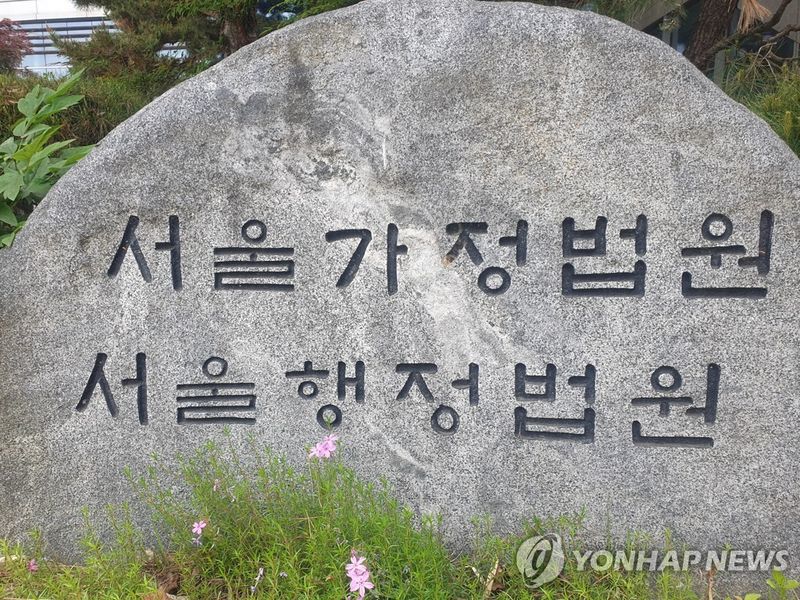
The 14th Administrative Division of the Seoul Administrative Court, presided over by Presiding Judge Lee Sang-deok, ruled in favor of the plaintiff on Wednesday in a lawsuit filed by Yoo Jae-won, a former head of the Defense Counterintelligence Command’s Cybersecurity Office and a colonel, seeking to overturn his suspension by the Minister of National Defense.
The court said, "While an ideal soldier should categorically refuse an unlawful order from a superior, it is difficult in reality to expect every soldier to commit such defiance at personal risk. Passively resisting or evading an unlawful order by delaying its execution or preventing subordinates from taking part cannot be considered a violation of the duty of good faith."
According to the ruling, during the Dec. 3, 2024 emergency martial law declaration, Jung Sung-woo, then head of the DCC’s First Office, instructed Col. Yoo around midnight to organize four teams and secure the computer servers of the National Election Commission (NEC) and Poll Flower, a public-opinion polling outlet run by Kim Ou-joon. Yoo objected, pointing out the illegality of securing private servers without a warrant, and remained on standby without organizing personnel or deploying his subordinates until the National Assembly passed a resolution calling for the lifting of martial law.
When his superior again ordered him to deploy, Col. Yoo told his subordinates, "I will go alone, so do not deploy," and set out with only the minimum number of personnel. Even while en route, he said, "I will not cross the Han River," and waited with the vehicle parked at the southern end of Jamsu Bridge until he received an order to return, after which he went back to his unit.
The Ministry of National Defense sought disciplinary action, claiming that Col. Yoo had attempted to carry out the unlawful order after the National Assembly voted to lift martial law. Initially, the ministry’s Military Disciplinary Committee found no wrongdoing, describing his conduct as a "passive response." However, after the minister requested a review, Yoo was given the severe disciplinary punishment of a two-month suspension on Dec. 28 last year. He then filed an administrative lawsuit challenging the action.
The court found that the grounds for disciplining Col. Yoo were not established. The court said, "Col. Yoo did not assemble available troops and stalled for time, refraining from deploying until the National Assembly called for the lifting of martial law. It is difficult to view the deployment as having been made for the purpose of carrying out an unlawful order; rather, there is considerable basis to view it as a formal deployment with only the minimum number of personnel so that his subordinates would not be drawn in."
The court continued, "Passive resistance or evasion may necessarily take the outward form of partially complying with some orders in the process of avoiding a clash with a superior. It is not reasonable to assess isolated acts, without examining the overall circumstances, purpose and outcome, as carrying out an unlawful order. The disciplinary action is therefore unlawful and is hereby cancelled."
[email protected] Lee Chang-hoon Reporter