Single-Port Robot Tackles Often-Recurrent Vesicovaginal Fistula [Health Check]
- Input
- 2026-09-17 15:20:04
- Updated
- 2026-09-17 15:20:04
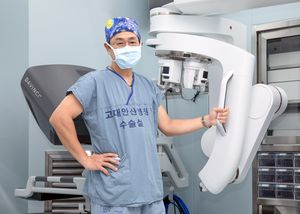
[Financial News] Treating vesicovaginal fistula, an abnormal passage that forms between the bladder and vagina, with single-port robotic surgery resulted in a 90% surgical success rate.
According to Bae, Jae Hyun, a professor of urology at Korea University Ansan Hospital, nine out of 10 patients with vesicovaginal fistula—including those whose condition had recurred after previous surgery—were cured with single-port robotic surgery in their first operation.
Vesicovaginal fistula is a condition in which an abnormal passage forms between the bladder and vagina, causing urine to leak continuously. It can occur after gynecological procedures such as hysterectomy or after pelvic radiation therapy, and most cases require surgical treatment. Surgery is particularly challenging because the small fistula must be precisely located and sutured in a confined space. Treatment becomes even more difficult when the fistula has recurred after previous surgery because of adhesions in the surrounding tissue.
Professor Bae developed a bladder insufflation procedure using the da Vinci Single Port (SP) to treat vesicovaginal fistula. The technique involves making a single small incision measuring approximately 2.5 to 3 cm in the lower abdomen, inserting robotic surgical instruments into the bladder, and injecting carbon dioxide to inflate the bladder and create a surgical workspace. The tissue surrounding the fistula is then removed until healthy tissue is identified, after which the defects in the bladder and vagina are sutured separately.
The study analyzed treatment outcomes for 10 patients with vesicovaginal fistula who underwent the procedure at Korea University Ansan Hospital between April 2024 and January 2026. Six of the patients had previously been treated for vesicovaginal fistula through laparoscopic surgery, robotic surgery, or a vaginal approach, but experienced recurrence. The fistulas ranged in size from 3 to 30 mm.
The analysis showed that the vesicovaginal fistula was resolved after the first operation in nine of the 10 patients, producing a 90% surgical success rate. One patient with recurrent disease was also successfully treated after undergoing repeat robotic surgery using the same technique. No operation had to be converted to open surgery, no patients required blood transfusions, and no postoperative complications were observed.
A key advantage of the technique is that it allows surgeons to access the bladder directly while avoiding adhesions in the pelvis, even when such adhesions have formed after previous surgery. Because the same route can be used for recurrent vesicovaginal fistula, the technique can also be applied in repeat operations.
Bae, Jae Hyun, said, "Vesicovaginal fistula becomes more difficult to treat when it recurs, and the burden on patients can also increase." He explained, "This study confirmed that single-port robotic surgery, which provides direct access to the bladder, can be a new treatment option for vesicovaginal fistula, including recurrent cases." He added, "We plan to assess long-term treatment outcomes in a larger number of patients and further define the surgery's safety and range of applications."
The findings were published in the international academic journal World Journal of Urology.
[email protected] Jung Myung-jin, medical specialist Reporter