"'I paid 100 million won for moving expenses'... 'Again' extension of actual residency deferral raises questions: 'Why did they sell?'"
- Input
- 2026-09-17 16:51:13
- Updated
- 2026-09-17 16:51:13
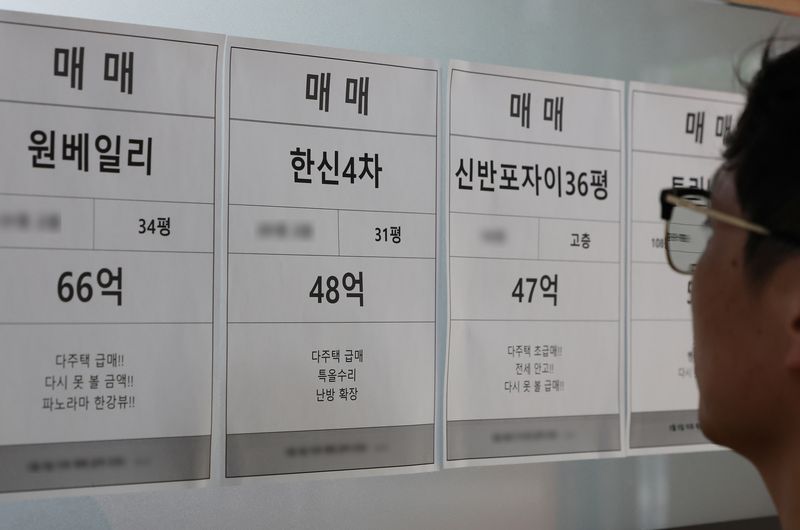
■ "Listings will increase, but trust hits rock bottom"
MOLIT announced on this day that it is extending the application deadline for measures to waive the actual residency requirement in land transaction permit zones by one year, from the end of this year to the end of next year. The related amendment to the Real Estate Transaction Reporting Act will go into effect on October 1 following a legislative notice on the upcoming 18th, and will apply to all housing units that are currently being rented or have a Jeonse right established as of the effective date.
Real estate agents across Seoul analyze that while listings will increase in the short term, trust in the government has significantly declined among both buyers and sellers due to the excessively frequent changes in policies.
A real estate agent in B-dong, Gangnam-gu criticized, "Many people sold their homes at a discount before May 9, when the grace period for the actual residence requirement was set to end, trusting the government's confident claim that 'this time would be different.' It is only those who acted first who end up looking like fools."
In fact, it is predicted that it will be difficult for distressed sales to appear. A real estate agent working near a large complex in Mapo District explained, "Since the mandatory residency requirement has been deferred for one year, sellers have effectively bought themselves time," adding, "This is why I predict that while more properties with existing Jeonse leases will enter the market, there will be no distressed sales."
It was predicted that transactions in the outskirts of Seoul could actually increase, pushing prices up. "Prices may temporarily drop slightly as 'gap investment' properties flood the market, but they will quickly recover due to high demand," said C, a real estate agent in Gangbuk District. "Even in Gangbuk, prices rose significantly in a short period, and there are still many inquiries."
■ "Rent Volatility, Limited Price Decline"
Experts are concerned that the deferral of actual residency requirements could increase volatility in Jeonse and monthly rent prices. Nam Hyuk-woo, a researcher at Woori Bank's Real Estate Research Institute, stated, "This deferral measure has enabled properties coming onto the market ahead of tax reform to be traded more smoothly," but added, "However, if sales volumes from rental business operators, non-residents, and multi-home owners concentrate, it will have the effect of reducing Jeonse and monthly rent listings as well, so there is a possibility that volatility in Jeonse and monthly rent prices could increase."
Analysis suggests that the effect of falling real estate prices will also be limited. Ham Young-jin, head of Woori Bank's Real Estate Research Lab, stated, "Since the conditions requiring buyers to remain non-homeowners starting May 12 of this year and reside in the property for two years after moving in remain in effect, it is difficult to view this as an immediate result of a surge in listings and a drop in prices within the land transaction permit zone."
[email protected] Kwon Jun-ho Reporter