JPMorgan CEO Warns "Inflation Isn't Over," Signaling Need for Continued Rate Hikes
- Input
- 2026-09-17 14:41:47
- Updated
- 2026-09-17 14:41:47
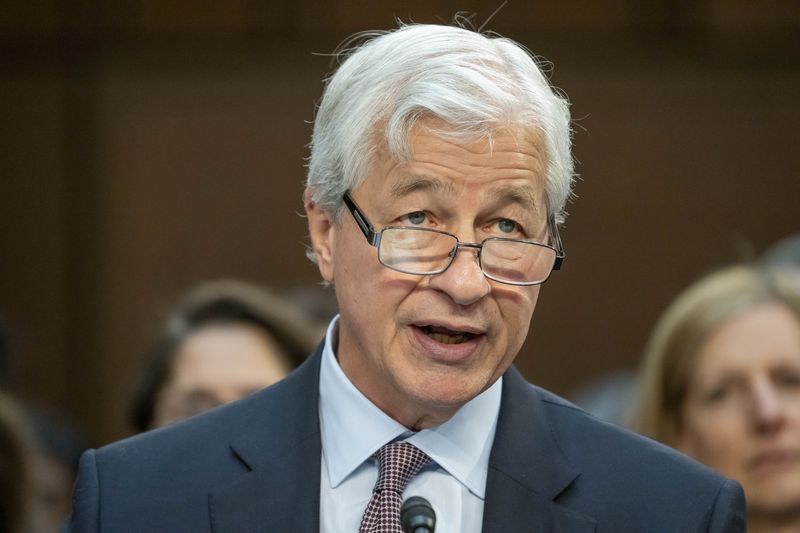
[Financial News] Jamie Dimon, CEO of JPMorgan Chase, warned that inflation is not over despite the Federal Reserve System (Fed)'s decision to raise interest rates.
On the 17th, local time, Yahoo Finance and other outlets reported that Dimon said, "I sympathize with people struggling with high prices," but added, "It is difficult to say that inflation is over. We cannot be sure that inflation has been fully brought under control."
The remarks came immediately after the Fed's rate hike. They suggested that the Fed's action had been insufficient.
He explained, "As large amounts of funding become necessary for artificial intelligence (AI), defense buildup, and infrastructure construction, they could exert sustained upward pressure on market interest rates." He added, "All companies must prepare for interest-rate volatility."
Dimon said, "There are many highly risky factors, but we do not know how they will unfold." He also pointed out that global fiscal deficits and enormous demand for funds, in addition to inflation, are pushing interest rates higher.
Dimon has repeatedly warned that inflation could last longer than markets expect. In a shareholder letter last April, he compared inflation to a "skunk at the party" that ruins the mood.
However, he did not believe the United States was about to enter a recession. He judged that the low unemployment rate, companies' solid profitability, and the growing number of new businesses were supporting the U.S. economy. In fact, the U.S. Consumer Price Index (CPI) rose 3.4% in August from a year earlier, remaining well above the Fed's 2% inflation target.
He identified the labor market as the most important indicator going forward. If the unemployment rate begins to rise, credit problems could increase among households and businesses, weakening consumer spending as well. He stressed, "When unemployment rises, consumers and businesses suffer credit losses and people begin to cut spending." He called it "the most important indicator for everyone."
Meanwhile, Jeffrey Gundlach, an influential Wall Street bond investor and CEO of DoubleLine, also argued on the 16th that the Fed's decision to raise its benchmark interest rate by 0.25 percentage points did not fully reflect the seriousness of inflationary pressures.
In an interview with the U.S. financial news outlet CNBC that day, Gundlach said the Fed should have raised its benchmark interest rate by 0.50 percentage points rather than 0.25 percentage points.
Referring to a "stun and done" approach, he criticized the Fed for failing to deliver one forceful shock that would have firmly established its tightening stance and adjusted market expectations.
He stressed the need for a preemptive and forceful move, saying, "The Fed should have implemented 50 basis points (1 bp = 0.01 percentage points) and then watched how the data came in."
He also pointed out that the United States' inflation problem is still "not being taken sufficiently seriously."
On the 16th, the Fed raised its policy rate by 0.25 percentage points to a range of 3.75%–4.00%.
[email protected] Lee Seok-woo, International Affairs Correspondent Reporter