Seoul Metropolitan Government Says Seeking Reimbursement Over GTX-A Samseong Station Delay Is "Inappropriate" and Shifts Blame
- Input
- 2026-09-17 14:26:27
- Updated
- 2026-09-17 14:26:27
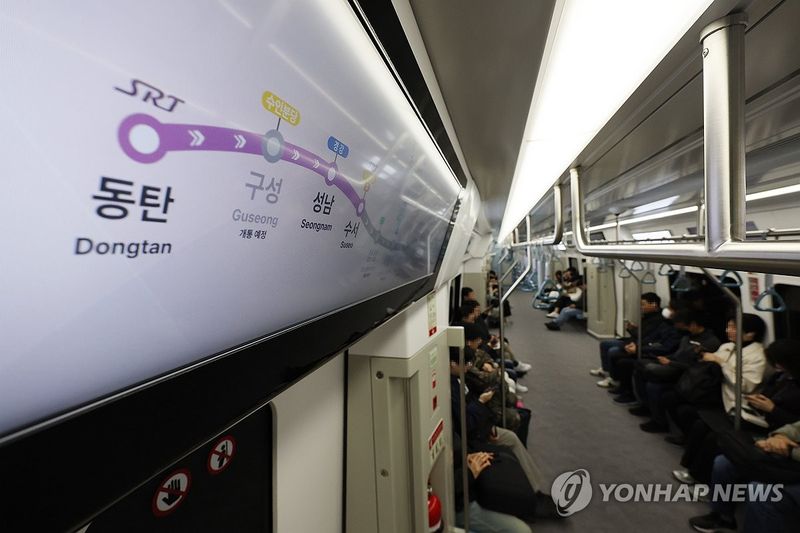
[Financial News] Seoul Metropolitan Government has rejected as "inappropriate" a statement by Hong Ji-sun, nominee for minister of the Ministry of Land, Infrastructure and Transport (MOLIT), that the government would seek operating compensation from Seoul over the delayed opening of GTX-A at Samseong Station due to missing reinforcing bars.
Lee Min-kyung, a spokesperson for Seoul Metropolitan Government, said in a statement on the 17th, "It is highly inappropriate to unilaterally treat Seoul’s responsibility as an established fact and announce plans to seek reimbursement before even completing an objective verification of the cause of the losses and the party responsible for them."
The previous day, Hong had responded at a parliamentary confirmation hearing to a question from Jeon Yong-gi of the Democratic Party of Korea about whether reimbursement should be sought from Seoul. "By the end of this year, we plan to seek reimbursement from Seoul for the losses, divided by quarter and institution," Hong said.
Seoul Metropolitan Government explained that GTX-A trains had originally been scheduled to pass through Samseong Station without stopping in August this year. After missing reinforcing bars were discovered in November last year, it inspected structural safety and pursued repair and reinforcement work. Seoul said it drew up a reinforcement plan in December last year, prepared detailed construction plans in March this year, and shared specific reinforcement measures and future plans with MOLIT and Korea National Railway in April.
The spokesperson emphasized, "Seoul Metropolitan Government planned to complete the reinforcement work by July while securing safety and conducting the work alongside commercial trial operations." The spokesperson added, "Above all, the safety of the structure was not determined by Seoul alone. MOLIT and Korea National Railway also confirmed its safety through direct inspections."
MOLIT conducted an emergency nighttime inspection on April 29, while Korea National Railway carried out an emergency safety inspection by outside experts from May 6 to 8. Verification tests for the facilities, which had been temporarily suspended, also resumed, and a total of 94 train test runs were conducted through May 19.
The spokesperson countered, "If the structure had been in a structurally dangerous condition, could MOLIT have directly resumed test operations?"
Seoul Metropolitan Government also presented vibration measurements as evidence. In measurements conducted in May at the request of the Korea Authority of Land & Infrastructure Safety, the maximum vibration velocity was 0.069cm/s. In measurements conducted in July at the request of MOLIT and Korea National Railway by the Korea Concrete Institute (KCI), it was 0.049cm/s. Seoul said both measurements were no more than one-fourth of the 0.3cm/s standard for railway facilities.
Based on these findings, Seoul Metropolitan Government argued that the reinforcement work and GTX-A’s passage through the station without stopping could proceed simultaneously. However, MOLIT extended the inspection period by four months, from the original deadline of July 20 to November 20. As a result, both the reinforcement work, which was scheduled for completion in July, and the non-stop passage, scheduled for August, were delayed.
The spokesperson criticized the decision, saying, "Even though MOLIT and Korea National Railway confirmed the structural safety themselves and resumed test operations, they delayed the relevant procedures for an extended period under the pretext of additional verification. To then make Seoul’s citizens pay the increased costs is the height of hypocrisy."
The spokesperson continued, "If reimbursement is actually sought in the future, we will clearly distinguish and examine the responsibility for the missing reinforcing bars from the responsibility for additional inspections and schedule delays." The spokesperson added, "We will respond firmly to any attempt to shift responsibility by passing on to Seoul citizens’ taxes even the additional costs caused by MOLIT’s decision."
[email protected] Seong Cho-rong Reporter