Ministry of Climate, Energy and Environment and IEA Launch 'RISE ASIA' for Asian Energy Security
- Input
- 2026-09-17 15:30:00
- Updated
- 2026-09-17 15:30:00
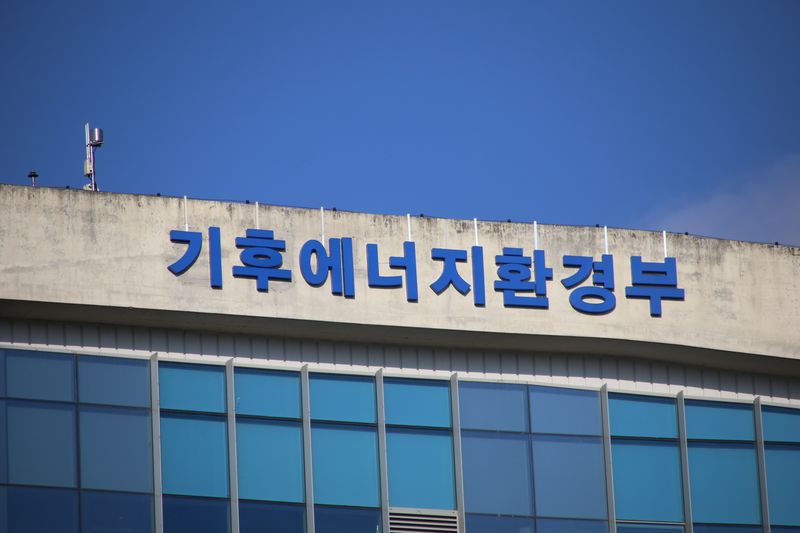
[Financial News] The Ministry of Climate, Energy and Environment said on the 17th that it had signed a Korea-IEA Memorandum of Understanding (MOU) on Asian Energy Security Cooperation with the International Energy Agency (IEA) at the Four Seasons Hotel in Jongno-gu, Seoul. It added that it would fully launch Resilient and Integrated Asian Energy Security Cooperation (RISE ASIA).
The MOU was signed immediately after a meeting between President Lee Jae Myung and IEA Secretary-General Fatih Birol. It is a follow-up measure to flesh out President Lee's proposal at the Group of Seven (G7) summit in June to strengthen the resilience of energy supply chains in Asia, while pursuing new energy security cooperation in the region in response to the rapidly changing global energy landscape.
The situation in the Middle East is a key factor behind the initiative. About 90% of the crude oil and liquefied natural gas (LNG) passing through the Strait of Hormuz is bound for Asia, creating significant geopolitical risks. Recent developments in the Middle East have also once again exposed the vulnerability of energy supply chains in Asian countries that heavily depend on fossil fuel imports. As the spread of artificial intelligence (AI) and data centers drives up electricity demand, the importance of stable power supplies is growing. At the same time, extreme climate disasters such as major floods in Nepal are increasing the need for an energy transition and electrification.
RISE ASIA is a cooperative initiative designed to strengthen Asian countries' capacity to respond to energy crises. It addresses not only traditional energy and resource supply and demand, but also the transition to renewable energy, electrification, and the stability and resilience of power systems. Its three pillars are sharing energy risk information and responding to crises; cooperation on electrification for future growth; and open, inclusive energy policy dialogue. The 2026–2027 period will focus on building the foundation and conducting joint assessments, 2027–2028 on establishing crisis response systems and identifying projects, and the period from 2028 onward on fully launching projects and linking them to investment.
IEA Secretary-General Fatih Birol said, "Recent developments in the Middle East represent a serious crisis facing global energy security and, as with the oil shocks of the 1970s, an impetus for countries to fundamentally reassess their energy strategies. In Asia, where dependence on fossil fuel imports is high, there is a need to diversify energy sources and supply routes while accelerating the expansion of clean energy, electrification, and the strengthening of power systems."
Minister of Climate, Energy and Environment Kim Seong-hwan said, "Energy security and responding to the climate crisis are not a matter of choosing one over the other; they are tasks that must be achieved together. As a responsible leader in the international community, Korea will use RISE ASIA to strengthen the resilience of energy supply chains in Asia and lead the development of renewable energy-centered electrification and resilient power systems."
[email protected] Lee Yu-beom Reporter