Imagining Even a Robot Jeon Tae-il: Artists Envision the Future of Labor
- Input
- 2026-09-17 15:01:11
- Updated
- 2026-09-17 15:01:11
[Financial News Ulsan = Choi Su-sang, Reporter] As the adoption of AI and the deployment of industrial humanoids on production lines draw closer, workers at Hyundai Motor Ulsan Plant are already growing concerned. The prospect that labor itself could change as humans are replaced by machines is becoming a source of fear. How do artists view the future of labor that lies ahead? An opportunity to explore their perspectives is being offered through "The Future of Labor, Apocalypse," which opens on the 18th at Ulsan Labor History Museum 1987 in Buk-gu, Ulsan.
Ulsan Labor History Museum 1987 said on the 17th that apocalypse (ἀποκάλυψις) comes from an ancient Greek word meaning "to open the cover" or "to lift the veil." The exhibition was designed to imagine the future reality of labor through the eyes of artists and to open it up in advance.
As artificial intelligence and humanoids have advanced rapidly in recent years, they have become directly connected to our lives. The workplace is no exception. Predictions about which occupations would disappear because of AI have now become reality. Humanoids are also emerging with claims that they can go beyond robotic arms performing repetitive tasks along conveyor belts and carry out more demanding labor around the clock without rest. Many companies have already entered the final testing stage, and deployment in workplaces is beginning.
The domestic labor movement has long focused on resolving numerous forms of precarious and incomplete work, including non-regular employment, special employment, platform labor and shadow labor. Social conflicts have arisen over legal and institutional reforms to address these issues. Now, however, there are concerns that technological progress could also become a catalyst for the end of labor, job insecurity and unemployment. The exhibition "The Future of Labor, Apocalypse" follows this trend.
The exhibition was organized as part of the special exhibition "Labor Art 2026" and features 20 Korean artists: Kim Kyu-pyo, Mi-ryeon Kim, Kim Jae-seok, Park Gyeong-yeol, Park Gyeong-hyo, Park Seong-wan, Park Young Gyun, Park Eun-tae, Park Cheol-woo, Bae Seong-hee, Seo Su-gyeong, Seong Hyo-suk, Song Ju-ung, Shin Mi-ran, Yoo Ji-su, Yoon Eun Sook, Lee Seon-il, Jeong Bong-jin, Jeong Seong-jin and Choi Hee-beom. The participants include artists active in Ulsan as well as artists from across the country whose work reflects themes of labor, human rights and progress.
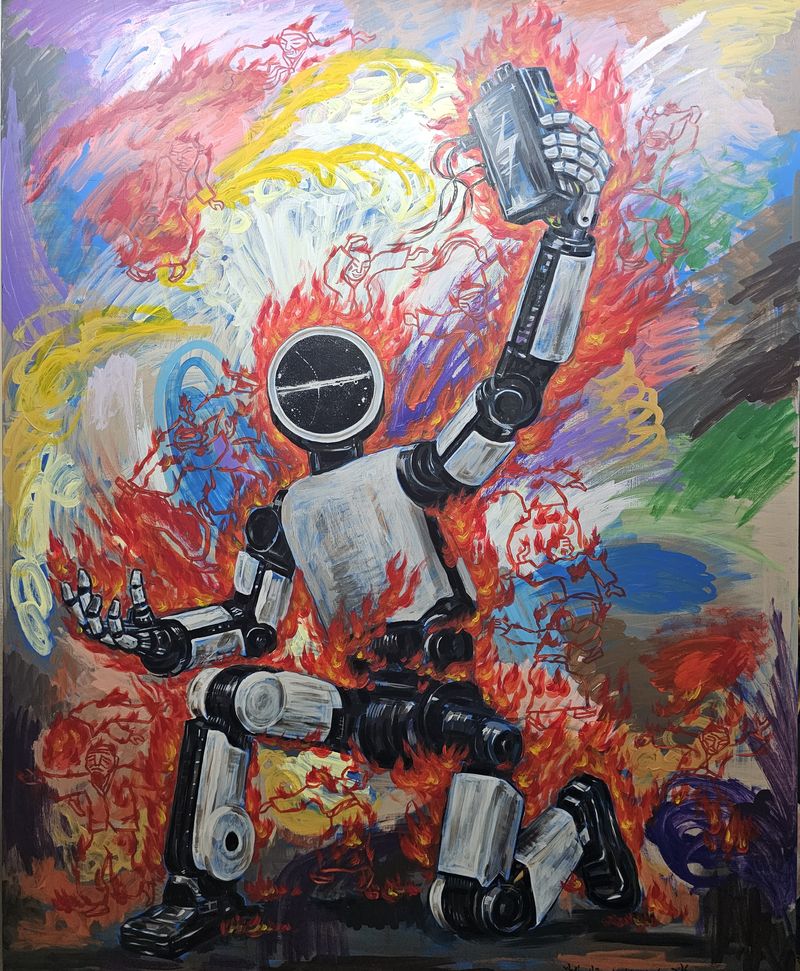
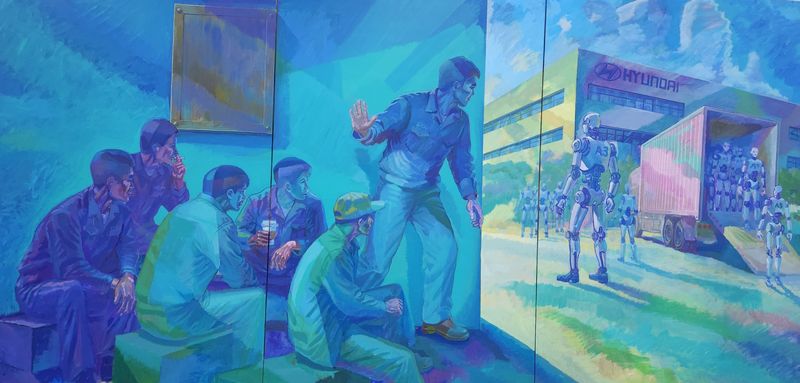
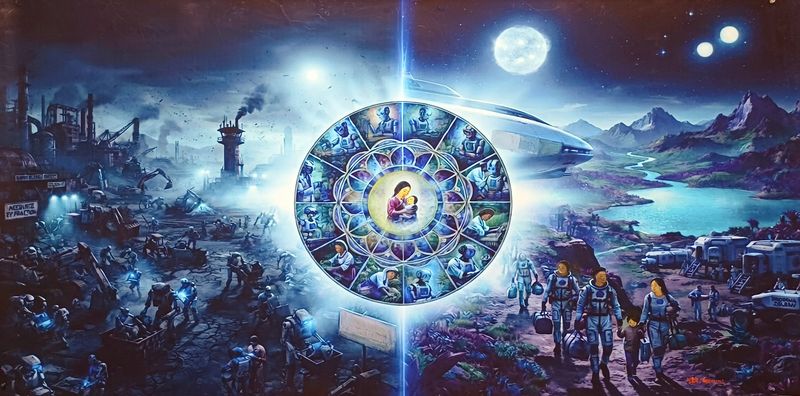
One notable work is "Self-Immolation Simulation" by Busan-based artist Park Gyeong-hyo. A humanoid reminiscent of Hyundai Motor Company’s Atlas appears in the form of Jeon Tae-il, who called for the Labor Standards Act in 1970. As a robot designed to repeat 24-hour labor endlessly, it carries a highly symbolic message. "We Want a Better Future" by Park Young Gyun of Gimpo, Gyeonggi Province, contrasts an imagined workplace scene commissioned from AI with a colored painting created by the artist. Seong Hyo-suk goes a step further, depicting humans migrating to an unknown planet as if in a scene from a science-fiction film.
In contrast, Shin Mi-ran speaks to the depth inherent in human beings that cannot be replaced by AI. "Machine and Life," which captures flowers blooming over a cold machine lathe, conveys the artist’s understated message. Lee Seon-il’s "Will There Ever Be an End?" also offers a warm perspective that holds and comforts people together instead of dwelling on vague anxiety.
Works that carefully capture the daily realities of labor at the intersection of the future and the present also stand out.
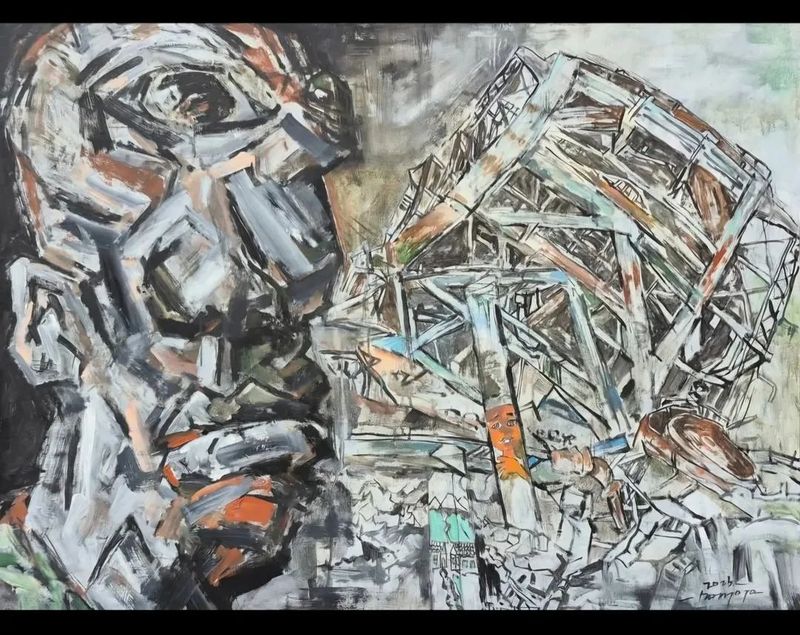
Bae Seong-hee’s "The Last Starry Night," depicting a delivery worker resting amid the pressures of platform labor, and Park Seong-wan’s "The Delivery Worker’s Rest" create a quiet resonance despite their small canvases. Director Choi Hee-beom’s media work "Strength Solidarity Movement" and Mi-ryeon Kim’s "We Want to Work" were completed through collaborative efforts and present the results of directly standing in solidarity with the high-altitude sit-in protest at Sejong Hotel and the rooftop sit-in protest at Gumi Optical High-Tech, respectively. Song Ju-ung’s "Song of the Blind Fool" addresses the collapse at the Ulsan Oil-Fired & C.C Power Complex in November 2025. Seven workers died in the accident while dismantling the tower.
Bae Mun-seok, secretary-general of Ulsan Labor History Museum 1987, explained, "Art has an infinite power to imagine in advance what has not yet come, as well as the power to intuit and use metaphor to express a rigid and harsh reality." He added, "This exhibition is filled with works that use art to lift the veil from the unknown. They contain messages that are essential for the time when we must confront it directly, rather than remain in vague anxiety."
The exhibition runs through November 14.
[email protected] Choi Su-sang Reporter