Find Public Data Scattered Across Government Agencies in One Place
- Input
- 2026-09-17 12:44:40
- Updated
- 2026-09-17 12:44:40
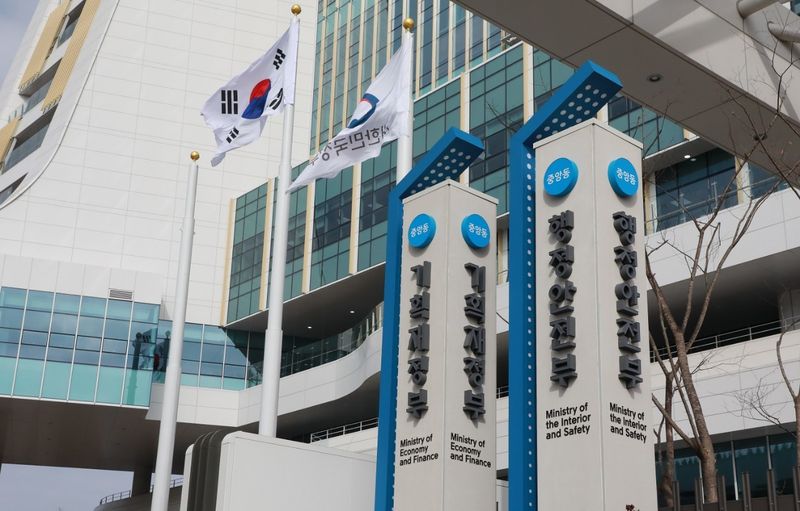
[Financial News] A system is being launched to find, connect, and use data scattered across government ministries, local governments, and public institutions in one place. Previously, policy-related materials had to be located and requested individually from each institution. Going forward, they will be searchable and usable on a single platform. The system will also enable analysis of “combined data” from different institutions, and is expected to support policy responses requiring information from multiple agencies, such as identifying blind spots in welfare services and predicting facility risks.
The Ministry of the Interior and Safety (MOIS) announced on the 17th that it had established a government-wide data pipeline connecting data from central government ministries, local governments, and public institutions, and would begin pilot operations on the 18th.
Until now, public data had been distributed across systems operated by individual institutions. When data held by another institution was needed, users had to first determine what information was available, then request it separately and go through a process to receive it. MOIS established a government-wide data-linkage system to connect the production, sharing, opening, and use of data across institutions.
Data produced by each institution is connected to the National Shared Data Platform through the Institutional Data-Sharing System. The structure allows shared data held by central government ministries, local governments, and public institutions to be searched and used in one place.
A major change is the ability to combine and analyze data from different institutions. For example, implementing an energy voucher policy requires housing complex information from Korea Housing Management, information on households receiving energy vouchers from the Korea Energy Agency (KEA), and building data from the Ministry of Land, Infrastructure and Transport (MOLIT). Previously, the data had to be requested separately from each institution. With the pipeline, users can find and request the necessary data in one place. This could be used, for instance, to identify low-income households that are not using energy vouchers.
The system can also be used for facility safety management. Combining facility information from the Korea Authority of Land & Infrastructure Safety with data on flood-vulnerable areas, building information linked to road-name addresses, seismic zones, traffic volumes, and topography could help identify potentially dangerous bridges.
MOIS plans to use combined data to identify potentially at-risk households that would be difficult to detect using data from a single ministry alone. It is also pursuing measures to connect combined data with analytical tools so that each institution can conduct analyses directly in line with conditions in the field.
Following the pilot operation in September, MOIS will expand the system’s functions and the scope of its source-data connections. The plan is to link the government-wide data pipeline with the Public Data Portal, information systems operated by individual ministries, and private AI platforms. However, the system is intended for public-sector users, including civil servants and employees of public institutions. The general public must continue to use the existing Public Data Portal.
[email protected] Lee Bo-mi Reporter