Vietnam Faces Power Shortage Concerns from 2027 to 2030; Ministry of Industry and Trade Proposes Urgent Measures
- Input
- 2026-09-17 16:57:02
- Updated
- 2026-09-17 16:57:02
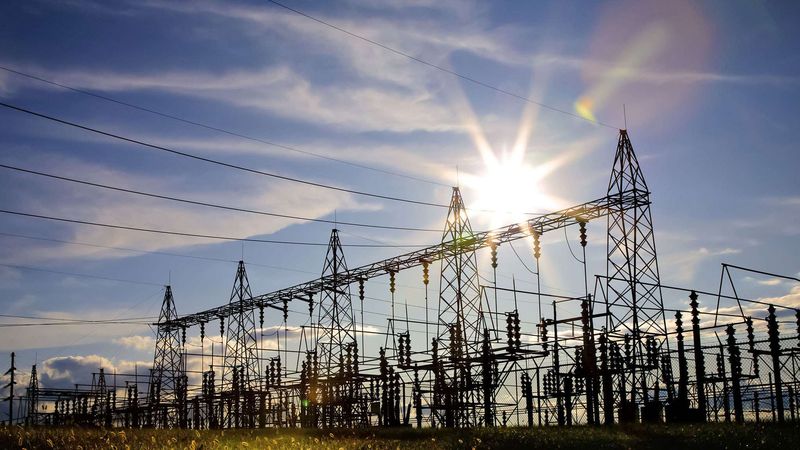
【Hanoi, Vietnam—Correspondent Kim Jun-seok】As Vietnam faces a power shortage crisis of up to 14,000 MW by 2030, MOIT has proposed urgent measures including accelerating power-generation projects, expanding solar power and battery energy storage systems (BESS), and considering additional coal-fired power generation.
According to local media on the 17th, MOIT estimated in its recently released report, "Measures to Ensure Power Supply During 2026–2030 and Amendment to Vietnam’s Eighth National Power Development Plan (PDP8)," that total power generation this year will reach 354.4 billion kWh, up about 9.7% from 2025. Peak power demand is expected to reach 57,537 MW, 6.4% above the 2025 record. Accordingly, the national power grid is expected to basically meet economic and social development needs as well as household demand in 2026.
However, after recalculating annual power demand and peak loads, MOIT warned that power shortages could become more pronounced in the coming years, particularly in northern Vietnam.
Nationwide, shortages are expected to reach approximately 4,256 MW in installed capacity and 2.9 billion kWh of electricity in 2027. By 2030, the shortfall is projected to expand significantly to about 14,000 MW in installed capacity and more than 61 billion kWh of electricity. In northern Vietnam, where large-scale manufacturing and industrial projects are concentrated and power loads are high, the shortfall in 2030 alone is estimated at approximately 13,000 MW in installed capacity and 45 billion kWh of electricity.
MOIT pointed out that investment and construction of power-generation and transmission-grid projects have progressed more slowly than required. As a result, the supply of new power sources has failed to keep pace with rising demand, which it identified as the main cause of power shortages from 2027 to 2030.
Liquefied natural gas (LNG)-fired power projects are expected to play an important role because they can operate flexibly, but they face several obstacles during development. MOIT assessed that the projects have been delayed by difficulties in securing financing, turbine supply problems, high prices and price volatility for imported LNG, and, in particular, negotiations over Power Purchase Agreements (PPA).
Accordingly, MOIT proposed urgent measures to immediately revise and supplement PDP8 and accelerate the development of alternative power sources.
First, self-consumption solar power generation will be significantly expanded from 2027 to 2028. Using government funding, approximately 2,800 MW of solar facilities will be installed as a priority at public institutions, schools, and hospitals before June 2027. The government also plans to encourage the installation of 3,000–5,000 MW of self-consumption solar power at industrial complexes and manufacturing companies before the 2027–2028 dry season. In addition, it plans to introduce an additional 2,000–3,000 MW of BESS to meet electricity demand during peak hours.
It also said that power-import projects from Laos and China should proceed as scheduled so they can begin operation before March 31 next year. Among large-scale solar power projects whose investment policies have been approved or whose investors have been selected, it proposed bringing approximately 1,000 MW online in 2027 and 3,000 MW in 2028, respectively.
From 2029 to 2030, the government plans to consider additional construction of some coal-fired power projects to prepare for delays in LNG projects. It will also draw up a roadmap for introducing carbon capture and storage (CCS) systems to make up for the power shortfall. At the same time, it plans to prioritize renewable-energy allocations in areas with high generation potential and connect an additional 3,000 MW of onshore and offshore wind power and 5,500 MW of solar power to the grid in 2029, followed by 4,000 MW of wind power and 3,000 MW of solar power in 2030.
[email protected] Kim Jun-seok Reporter