Ilsan CHA Hospital Surpasses 10,000 Keloid Electron-Beam Treatments; Half of Cesarean Mothers Received Therapy
- Input
- 2026-09-17 11:14:40
- Updated
- 2026-09-17 11:14:40
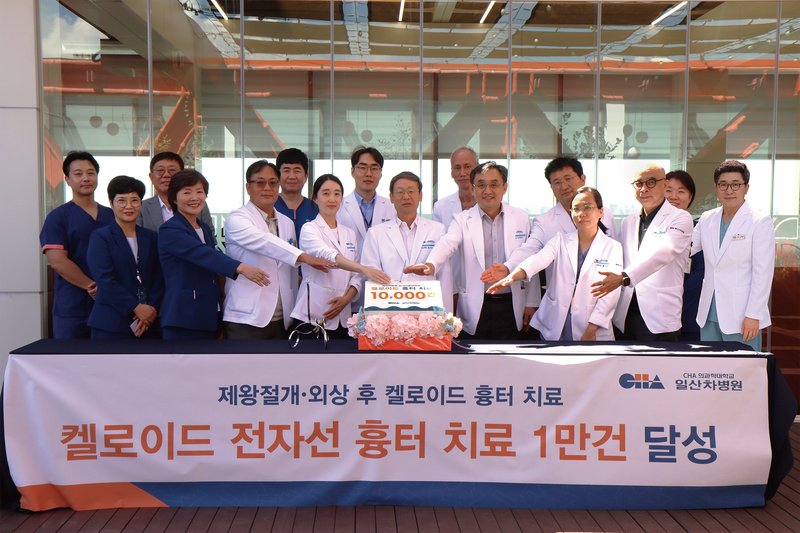
[Financial News] Ilsan CHA Hospital of CHA University has surpassed 10,000 electron-beam treatments for keloid scars. The hospital’s multidisciplinary care system, which links cesarean sections, keloid excision, and radiation therapy during a patient’s hospital stay, has driven the expansion of treatment.
According to Ilsan CHA Hospital on the 17th, the Keloid Clinic has recorded a cumulative 10,000 electron-beam treatments. The milestone was reached in about six years since the clinic opened in August 2020, making it the highest total in South Korea. The figure doubled in about two years after surpassing 5,000 cumulative cases in 2024.
Demand for treatment is particularly strong among mothers who deliver by cesarean section. More than half of the women who underwent cesarean deliveries at Ilsan CHA Hospital receive electron-beam therapy to prevent keloid scar recurrence. When a mother with a keloid at a previous cesarean incision undergoes another cesarean section, the existing scar is excised during the operation, followed by three days of electron-beam therapy starting the next day. Most of the treatment can therefore be completed during the postpartum hospital stay.
A keloid is a condition in which fibrous tissue grows excessively during wound healing, causing a scar to enlarge beyond the boundaries of the original wound. Because keloids can regrow even after surgical removal, managing recurrence after excision is important.
Ilsan CHA Hospital uses the Department of Radiation Oncology’s linear accelerator (LINAC) to irradiate the surgical site with electron beams, suppressing the regrowth of keloid tissue. In addition to obstetrics, the hospital works with an external plastic surgery clinic specializing in keloids to provide treatment within about 72 hours after surgery for patients who undergo keloid excision on the earlobes, shoulders, chest, and other areas.
Medical professionals appear to place greater significance on the fact that the multidisciplinary protocol linking surgery and radiation therapy has become established in actual clinical practice than on the number of treatments itself.
A medical industry official said, "Because managing recurrence after excision is important for keloids, the key is to connect surgery and electron-beam therapy as a single treatment process. When the treatment is linked to a scheduled operation requiring hospitalization, such as a cesarean section, it can also reduce the burden of additional hospital visits for patients."
Yang Go-woon, a professor in the Department of Radiation Oncology at Ilsan CHA Hospital, also noted, "Because keloids can regrow even after excision, it is important to consider the timing of surgery and electron-beam therapy together. We develop treatment plans tailored to each patient through collaboration among medical departments."
[email protected] Kim Kyung-ah Reporter