Incheon’s Jungang Park to Connect Five Districts into One with Barrier-Free Pedestrian Greenways
- Input
- 2026-09-17 11:16:08
- Updated
- 2026-09-17 11:16:08
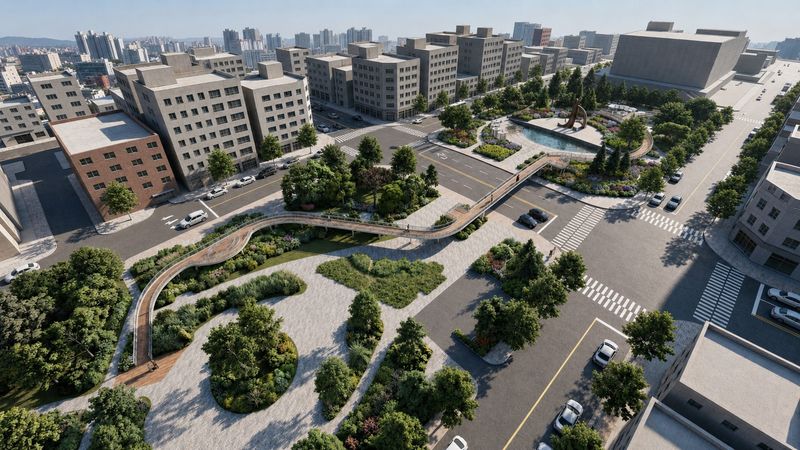
【Financial News, Incheon = Reporter Han Gap-su】 Jungang Park in Incheon, which has been divided into separate districts by roads and used accordingly, will be connected as one park.
Incheon Metropolitan City Government announced on the 17th that it will carry out the Jungang Park Revitalization Project through 2028, creating five barrier-free pedestrian greenways and renovating aging park facilities.
Jungang Park is a major urban park stretching from Ganseok-dong and Guwol-dong in Namdong District, Incheon, to Gwangyo-dong in Michuhol-gu. However, roads running through the park have divided it into several districts, making it inconvenient to move between districts and use the park continuously.
To address this fragmentation, the city will create five barrier-free pedestrian greenways that allow people to move between areas without stairs. Two have already been completed, while the remaining three will be built sequentially by 2028.
The pedestrian greenways will feature barrier-free routes so that wheelchair and stroller users, older adults, and others with limited mobility can move around conveniently.
The project has been implemented in phases since the basic plan was established in 2017. During Phase 1, carried out from 2018 to 2020, the city installed Wolun Bridge connecting Districts 3 and 4 of Jungang Park, and Gaon Bridge connecting Districts 4 and 5.
From 2023 through August this year, the city completed the detailed design for Phase 2 and the decision to amend the urban management plan, then began construction. For the privately funded Phase 3 and Phase 4 projects, it has completed the basic concept plan and public design consultations. After holding resident briefings and consulting experts, the city also finalized plans to install pedestrian greenways and remodel aging facilities.
The total project cost is 43.59 billion won, comprising 35 billion won in private funding and 8.59 billion won in city funds. Of the private funding, 10 billion won secured through the development of a mixed-use facility on the Incheon Bus Terminal site will be used to build a pedestrian greenway connecting Districts 1 and 2 and remodel the park. Another 25 billion won secured through the development of the former Lotte Department Store site in Guwol-dong will be used for a pedestrian greenway connecting Districts 5 through 8 and for park remodeling.
The project’s core objective is not to acquire additional parkland, but to connect spaces cut off by roads and expand the park’s perceived size and usable area for residents.
The city expects that once all the pedestrian greenways are connected, residents will be able to walk between the districts and enjoy Jungang Park across a longer and broader area.
The phased projects are also moving forward. In 2027, the city plans to install one pedestrian greenway under Phase 2 and complete one additional pedestrian greenway and the remodeling of the park in the relevant district under Phase 3. In 2028, Phase 4 will add one more pedestrian greenway and complete the park remodeling.
The privately funded Phase 3 and Phase 4 projects will begin construction after completing administrative procedures, including a decision to amend the urban management plan, deliberation by the Urban Park Committee, and detailed design work.
The park remodeling will include a children’s water playground and a senior garden. The city envisions transforming Jungang Park from a simple green space into a multifunctional cultural hub in the city center where people of all generations, from children to older adults, can spend time and interact.
Yoo Gwang-jo, director of the Urban Balance Bureau, said, "We will connect the fragmented spaces and remodel the facilities so that residents can use Jungang Park more extensively and conveniently."
[email protected] Han Gap-su Reporter