"I pay 3 million won in monthly rent while living in Nowon, Dobong and Gangbuk"...The harsh reality of life in Seoul for non-homeowners
- Input
- 2026-09-17 10:27:12
- Updated
- 2026-09-17 10:27:12
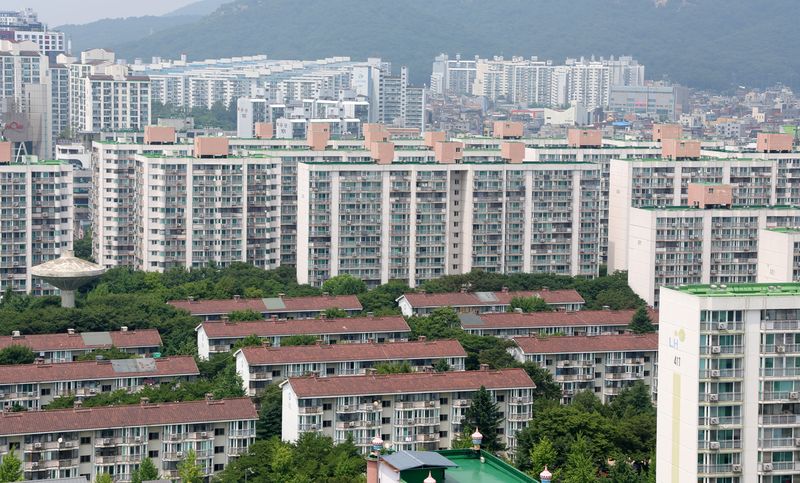
[Financial News] Ahead of the fall moving season, traditionally considered the peak period for relocations, monthly rents in Seoul are rising sharply. With average monthly rent for homes in Seoul surpassing 1.3 million won for the first time, high-priced rentals are also emerging in Nowon, Dobong and Gangbuk districts, where housing costs have traditionally been relatively lower, adding to residents’ financial burden.
Average monthly rent for homes in Seoul surpasses 1.3 million won for the first time
According to Newsis on the 17th, the Korea Real Estate Board (KREB)’s August national housing price trend survey showed that the average monthly rent for all homes in Seoul stood at 1.313 million won last month. The figure includes apartments, row houses and multi-family homes, as well as detached and multi-unit houses. It was the first time the average monthly rent for homes in Seoul exceeded 1.3 million won since related statistics began being compiled in July 2015.
The burden was even greater for apartments alone. Average monthly rent for apartments in Seoul reached 1.641 million won in August, up 0.91% from the previous month. By district, Seongbuk District recorded the sharpest increase at 1.85%, followed by Geumcheon District at 1.64% and Nowon District at 1.57%.
The rise in monthly rents is attributed to a sharp decline in jeonse listings and the resulting increase in jeonse prices. Analysts say monthly rents are also rising as more lease contracts are converted to monthly-rent arrangements. As a result, high-priced monthly-rent transactions are rapidly increasing even in Nowon, Dobong and Gangbuk districts, which have been considered relatively affordable areas in Seoul.
According to the Ministry of Land, Infrastructure and Transport (MOLIT)’s transaction disclosure system, 12 apartment monthly-rent contracts with rents of at least 3 million won were signed in Nowon, Dobong and Gangbuk districts between January 1 and the 13th of this month. That represents a sharp increase from just one transaction during the same period last year.
By district, Gangbuk District recorded the most high-priced monthly-rent contracts, with six reported this year. Nowon District followed with five, up from one last year, while Dobong District recorded one, compared with none last year. In particular, Dobong District saw its first transaction involving monthly rent of at least 3 million won, a level not recorded there through last year.
Contracts with monthly rents of at least 2 million won and at least 1.5 million won also increased. In the 2-million-won-and-above category, transactions in Nowon District rose from 42 last year to 68 this year, while Gangbuk District increased from 15 to 69 and Dobong District from 6 to 19. Contracts with monthly rents of at least 1.5 million won also rose in all three districts: Nowon District from 234 to 312, Gangbuk District from 127 to 188, and Dobong District from 60 to 113.
Concern that landlords’ property-holding tax burden could be passed on to jeonse and monthly-rent costs
Concerns are growing that the rise in jeonse prices could continue to drive up monthly rents. In response to the government’s real estate tax reforms, landlords are returning to owner-occupancy, reducing the supply of jeonse and monthly-rent listings. At the same time, housing ownership costs, including property-holding taxes, could be reflected in rents. As the shift from jeonse to monthly rent accelerates, demand for monthly rentals will increase and the imbalance between supply and demand in the rental market could worsen.
Experts forecast that simultaneous declines in rental supply caused by owner-occupancy and the passing of housing ownership costs on to rents could make the concurrent rise in jeonse and monthly rents even more pronounced. Kwon Dae-jung, an emeritus professor in the Department of Economics and Real Estate at Hansung University, explained, "It will not be easy to resolve the jeonse and monthly-rent crisis in the short term. Housing costs for tenants are rising as both sale prices and jeonse and monthly rents increase, particularly in the Seoul metropolitan area."
Professor Kwon emphasized, "With home prices rising and lending regulations tightening, people who cannot afford to buy homes have no choice but to remain in the rental market. Jeonse and monthly rent are effectively the last housing ladder for non-homeowners, so policy measures are needed to ease the imbalance between supply and demand in the rental market."
[email protected] Kim Hee-sun Reporter