From Apple to BYD, Business Leaders from Both Countries to Turn Out in Force at U.S.-China Summit on the 24th
- Input
- 2026-09-17 16:06:12
- Updated
- 2026-09-17 16:06:12
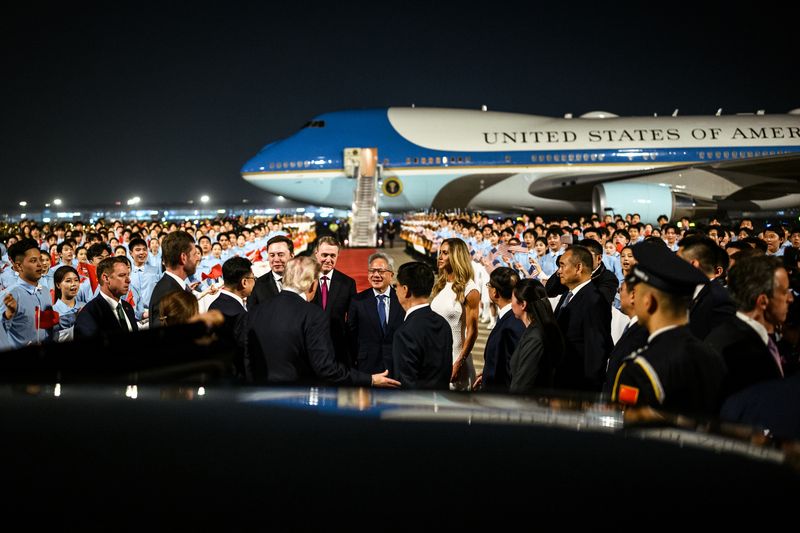
Hong Kong-based English-language newspaper South China Morning Post (SCMP) reported on the 17th, citing two sources, that representatives from Chinese electric vehicle maker BYD, IT company Xiaomi and optical communications company Zhongji Innolight were included in Xi Jinping's U.S. delegation. Although Xi's visit to the United States will come about three years after his previous visit in November 2023, 2015 was the last time he traveled with a business delegation. During his 2015 visit to the United States, he was accompanied by Jack Ma, founder of Alibaba, Pony Ma, founder of Tencent, and other IT and state-owned enterprise leaders.
On the 16th, U.S. media reported that senior officials, including Cai Qi, director of the General Office of the Central Committee, were reviewing the list of business leaders who would join the delegation to the United States. A source explained, "The criteria China is using to select the business delegation include having potential deals with the United States, loyalty to the Party, and the ability not to overshadow Xi Jinping's presence." BYD Chairman and founder Wang Chuanfu was also reportedly among those under consideration.
U.S. media noted, "Including Chairman Wang in the delegation could also be a move that provokes the United States." The United States has imposed a 100% tariff on Chinese electric vehicles, effectively blocking their entry into the U.S. market. In June, it also added BYD to a "military blacklist," saying the company was "linked to the People's Liberation Army." More recently, U.S. Transportation Secretary Sean Duffy expressed concern in a letter to Ford CEO Jim Farley about doing business with BYD, Chinese battery maker CATL and Geely, and urged him to sever ties with them.
Wu Xinbo, director of Fudan University's Center for American Studies, said of the reports, "It is appropriate for BYD to be included in Xi Jinping's business delegation to the United States," adding, "If the United States allows it, China would like to invest in the electric vehicle sector." Given the still significant barriers to entry for Chinese automakers in the U.S. market, Wang's inclusion in the delegation would be expected to mark a major turning point.
Earlier, in a Fox News interview on the 11th, U.S. President Donald Trump noted that Japanese automakers were building plants in the United States and hiring local workers, emphasizing, "The most important thing is that we are hiring Americans." He also said, "If China wants to come into the United States, open a factory and make cars, that's okay," signaling that Chinese companies could also be accepted if they pursue local production and employment like Japanese automakers. This has drawn attention to the possibility of a shift in U.S. policy toward Chinese automobiles.
American business leaders are also closely watching the meeting. On the 16th, U.S. media reported that NVIDIA CEO Jensen Huang, OpenAI CEO Sam Altman and Apple Executive Chairman Tim Cook would attend the state dinner for the U.S. and Chinese leaders. The state dinner is reportedly scheduled for the evening of the 24th, the day the two leaders meet. During Trump's visit to China in May, he was accompanied by Huang, Cook, who was then Apple's CEO, and Tesla CEO Elon Musk.
Meanwhile, U.S. Treasury Secretary Scott Bessent is scheduled to hold preliminary talks this weekend with his Chinese counterpart, Vice Premier He Lifeng, to coordinate the agenda. As U.S.-China tensions continue over technological dominance and international trade, attention is focused on the outcome of the working-level negotiations and the messages from the two leaders and the heads of major U.S. technology companies.
[email protected] Hong Chae-wan Reporter