Molecular Features of Autism Revealed, Raising Hopes for Personalized Treatment
- Input
- 2026-09-18 03:00:00
- Updated
- 2026-09-18 03:00:00
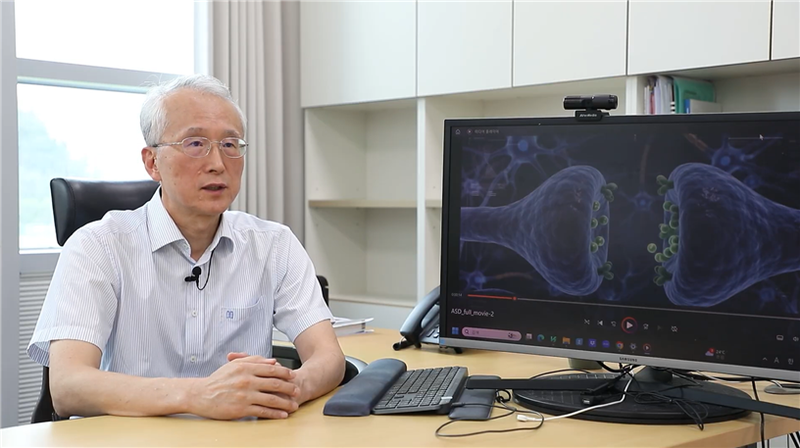
The Ministry of Science and ICT announced on the 18th that a joint research team led by Eunjoon Kim, head of the IBS Center for Synaptic Brain Dysfunctions, and researchers from the Korea Institute of Science and Technology Information (KISTI)'s Digital Bio-Computing Research Division analyzed the world's largest-scale mouse models carrying mutations in autism spectrum disorder risk genes. The team found that various genetic mutations converge on two opposing transcriptomic states, or gene activity states.
The research was conducted through the Ministry of Science and ICT's IBS Basic Science Research Center Support Program. The integration and analysis of the large-scale experimental data were carried out using computing resources provided through the Korea BioData Station (K-BDS), supported by KISTI. The findings were published at 3 a.m. Korea Standard Time that day in Science, one of the world's most prestigious academic journals.
According to the research team, Autism Spectrum Disorder (ASD) is a major neurodevelopmental disorder characterized by difficulties with social communication and interaction, as well as restricted and repetitive behaviors. Although various genetic causes have been reported, it has remained unclear how autism leads to the disorder through common biological mechanisms.
The researchers selected 17 autism risk genes involved in different biological functions. Over several years, they developed mouse models carrying mutations in each gene and conducted an integrated analysis of 1,008 datasets. The analysis showed that mice with different genetic mutations converged on two common transcriptomic states, regardless of the type of mutated gene. In other words, although the genes causing the disorder differed, gene expression at the molecular level followed two consistent patterns.
The two groups also showed clear differences in their responses to medication. When the antidepressant fluoxetine and the mood stabilizer lithium were administered separately, several molecular abnormalities in multiple genes consistently recovered in Group 1 after treatment. In Group 2, however, responses varied by gene, and the same medication did not produce a consistent pattern of recovery. The findings are expected to provide a foundation for future research into precision treatments tailored to individual patients. Similar molecular patterns were also observed in additional autism mouse models and brain transcriptomic data from people with ASD, confirming that these are universal molecular features of ASD.
Eunjoon Kim, head of the IBS research center, explained, "The prevalence of autism has steadily increased and is now four times higher than it was 20 years ago. It is understood to be a highly heritable disorder." He added, "There are currently no globally approved treatments for autism's two core symptoms—social deficits and repetitive behaviors. At present, medications for secondary symptoms such as aggression and lack of concentration are being used to treat autism." He continued, "Although this study was conducted in mice, it can also be applied to humans. Based on these findings, it will be the first step toward precision diagnosis of autism and personalized treatment based on that diagnosis." He also expressed hope, saying, "This opens the door to analyzing neurodevelopmental and psychiatric disorders at the molecular level."
The researchers plan to expand the study to human-derived cells and incorporate additional artificial intelligence (AI) analysis. They will also search for medications targeting Group 2 as they pursue more refined research into the mechanisms of autism and new treatment strategies.
[email protected] Yeon Ji-an Reporter