Seoul Metropolitan Government to Reorganize for Ninth Popularly Elected Administration; Establishes Livelihood Economy Headquarters and Upgrades Citizen Health Headquarters
- Input
- 2026-09-17 09:19:10
- Updated
- 2026-09-17 09:19:10
[Financial News] The Seoul Metropolitan Government is undertaking a major organizational reorganization to strengthen the implementation of key policies under the ninth popularly elected administration. It will establish a Livelihood Economy Headquarters to oversee economic policy, from support for small businesses to future strategic industries, and upgrade the Citizen Health Bureau to the Citizen Health Headquarters. It will also create an International Exchange and Cooperation Officer responsible for international exchanges and investment attraction, as well as a Jobs and Labor Bureau integrating employment and labor policies.
The Seoul Metropolitan Government announced on the 17th that it had drawn up a reorganization plan for the ninth popularly elected administration. After a legislative notice period running from that day through the 7th of next month, the city will submit the plan to the Seoul Metropolitan Council next month. It aims to implement the changes in January next year after review and approval by the council and amendments to the rules governing administrative organizations and staffing.
The reorganization focuses on strengthening the organizations and personnel needed to advance key projects under the G3 Seoul Plan, announced on the 10th. Economic, welfare, transportation and housing offices will be reorganized into headquarters to reinforce the headquarters system. Personnel from areas where administrative demand has declined or stabilized will also be reassigned to address new needs.
However, a total of 66 positions will be added in areas requiring additional personnel in response to government policies. These include 51 labor-inspection positions following the delegation of some labor-inspection authority to local governments, 12 firefighting field positions and three positions supporting the activities of the Seoul Metropolitan Council.
In the economic sector, the city will establish a Livelihood Economy Headquarters. It will serve as the control tower for the Seoul Metropolitan Government’s overall economic policy, ranging from support for small businesses and revitalization of neighborhood commercial districts to the development of future industries. A new Economic Vitality Policy Officer will be placed under the headquarters, while the existing Creative Industry Planning Officer will be reorganized as the Strategic Industry Policy Officer.
The city will also expand its organizations to strengthen global competitiveness. An International Exchange and Cooperation Officer will be established directly under the First Deputy Mayor to consolidate functions related to city diplomacy, international cooperation and investment attraction. An Investment Attraction Officer will also be created to identify investors and develop investment-attraction strategies for major development projects, including the Yongsan International Business District (YIBD) and Seoul Digital Bio City (S-DBC).
The Tourism and Sports Bureau will establish a Tourism Content Division to develop stay-and-experience tourism content, including gastronomy, festivals and K-pop performances. The Urban Space Headquarters will create a Space Development Innovation Division to manage development tools, such as pre-negotiation, revitalization around transit stations and complex urban-center development, in an integrated manner.
The Citizen Health Bureau will be upgraded to the Citizen Health Headquarters, expanding its policy scope beyond providing medical services to include everyday health promotion and prevention. A Public Healthcare Policy Officer will also be established to oversee public healthcare policies concerning essential medical services, infectious diseases and mental health.
The Smart Health Division will be reorganized as the Health Vitality Division. The city will expand Seoul Fitness Centers to 100 locations and link them with Wrist Doctor 9988 to establish a health-management system covering fitness assessments, exercise prescriptions, implementation and rewards.
Disaster-response organizations will also be strengthened. To reinforce the field-command function of the Seoul Metropolitan Fire and Disaster Management Headquarters during major disasters, the position of the head of the Field Response Team will be elevated. The city will establish an Advanced Equipment Response Team to oversee advanced disaster-response equipment, including robot dogs, and a Fire Law Support Team to assist special judicial police work by firefighters.
The Urban Infrastructure Headquarters will newly establish the Jamsil Sports Complex Development Task Force. It will create a dedicated construction-management system for the Jamsil Sports and MICE Complex Development Project and oversee its commencement and construction.
The city will also expand organizations to respond to demographic changes. The Women and Family Office will establish a Population and Family Policy Officer and a Population Policy Officer. They will oversee a comprehensive population strategy covering not only the low birth rate and aging population, but also population imbalances, diversifying household structures, the attraction of overseas talent and immigration policy.
The city will establish a Jobs and Labor Bureau to handle employment and labor policies in an integrated manner. It will create a Labor Inspection Division and a Social Economy Division to cover matters ranging from employment linkages to the protection of labor rights and interests. In particular, it will add 51 labor-inspection positions following the delegation of some labor-inspection authority to local governments.
The housing-supply organization will also be revised. To support the goal of starting construction on 310,000 housing units by 2031, the Seoul Metropolitan Government will reorganize the existing Architectural Planning Officer as the Rapid Supply Policy Officer.
The city will expand its organization to prepare for a major international event scheduled for next year. With up to 1 million people expected to participate in the 2027 Seoul World Youth Day, the International Events Support Division under the Administration Bureau will be expanded and reorganized as the International Events Support Task Force. It will oversee coordination among the government, local governments and related organizations, as well as on-site safety management.
By contrast, the Regulatory Innovation Planning Officer will be abolished. The Seoul Metropolitan Government explained that the move is intended to improve organizational efficiency now that the institutional foundation for regulatory reform has been established. The discovery and improvement of regulations will continue under the Creative Regulation Officer.
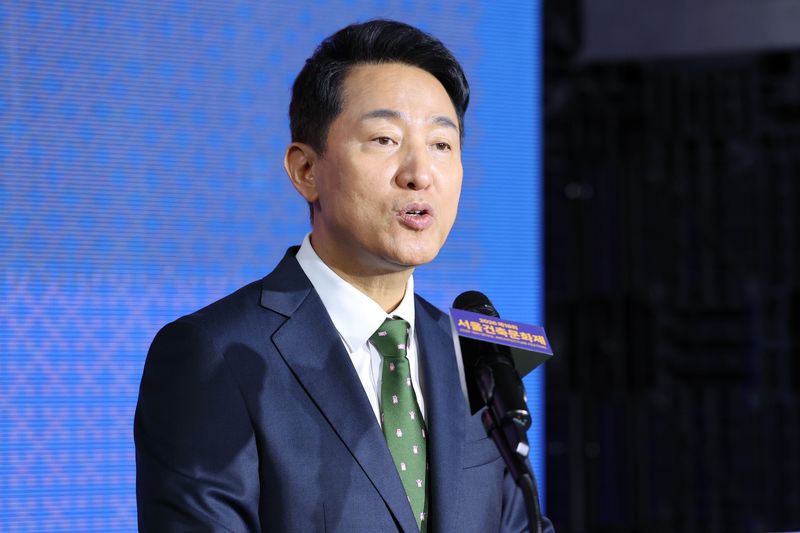
Seoul Mayor Oh Se-hoon said, "This reorganization lays the foundation for fully implementing the G3 Seoul Plan and bringing Seoul’s vision for the future into residents’ daily lives." He added, "We will focus all of the city government’s capabilities on improving residents’ quality of life."
[email protected] Seong Cho-rong Reporter