Yen Plunges as U.S. Shifts Toward Tightening... Will Japan Raise Rates Tomorrow?
- Input
- 2026-09-17 09:36:03
- Updated
- 2026-09-17 09:36:03
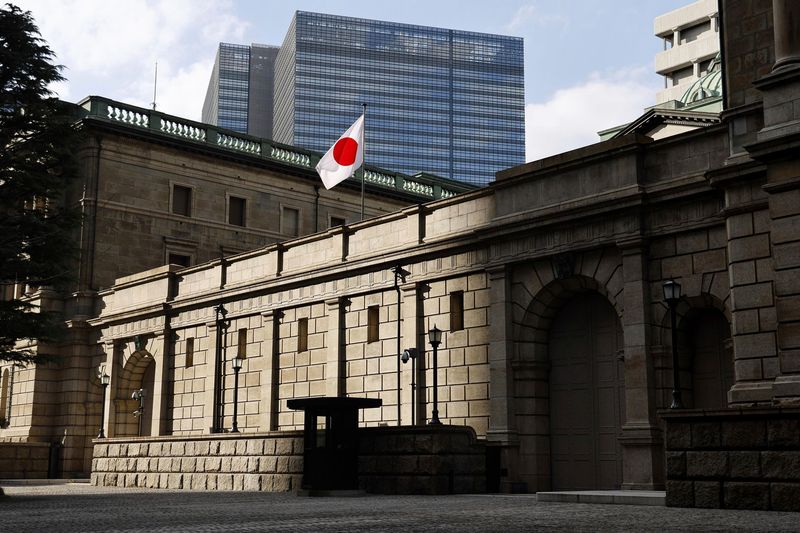
【Financial News Tokyo = Correspondent Hye-jin Seo】The yen fell sharply to the 156-yen range per dollar on the 17th after the Federal Reserve System (Fed) returned to raising interest rates for the first time in three years and two months. As concerns grew that yen weakness could push Japan’s import prices higher again, the Bank of Japan (BOJ) began a two-day monetary policy meeting to discuss an additional rate hike. Financial markets have priced in a 98% chance that the BOJ will raise its policy rate from 1.00% to 1.25% on the 18th.
According to Nihon Keizai Shimbun (Nikkei), the Fed raised its benchmark interest rate by 0.25 percentage points on the 16th local time, adjusting it to 3.75–4.00% annually. As 12 of the 18 Federal Open Market Committee (FOMC) participants projected one additional hike by the end of the year, dollar buying and yen selling intensified.
At 8:30 a.m. that day, the yen was trading at 156.17–156.19 yen per dollar in the Tokyo foreign exchange market, down 1.20 yen from 154.97–154.99 yen at 5 p.m. the previous day.
■Upside Inflation Risks Grow Amid Yen Weakness and High Oil Prices
The BOJ’s rate hike had been widely expected even before the Fed’s decision. However, the renewed weakening of the yen following the U.S. shift toward tighter monetary policy has further increased the upside risks to inflation that the BOJ has been monitoring.
A weaker yen raises Japan’s import prices for crude oil, food and other goods. If international oil prices also rise, exchange-rate-driven inflationary pressure could increase companies’ cost burdens and push consumer prices higher again.
Within the BOJ, concerns have reportedly intensified that continued food-price increases, international oil prices, yen weakness and stronger demand related to artificial intelligence (AI) could drive inflation higher than expected. Officials also reportedly believe that underlying inflation is approaching the 2% target.
If the BOJ raises rates as expected, its policy rate will reach 1.25%, the highest level in 31 years since 1995. This would be an additional hike just three months after the previous increase in June, shortening the interval from the previous pattern of roughly one hike every six months.
■Focus Shifts to the Timing of the Next Hike
Market attention is shifting from this meeting to the timing of the next rate hike. Financial markets are pricing in one increase between December and January next year, followed by another by April next year. In other words, markets expect the pace of hikes could accelerate from once every six months to once every quarter.
The projected policy rate after the July meeting next year has risen to 1.89%, about 0.34 percentage points higher than the 1.55% forecast at the end of July. This means markets have newly priced in expectations for at least one additional hike within roughly a month and a half. Some market participants have also raised the possibility that the policy rate could approach 2% by July next year.
The 0.25-percentage-point hike has already been largely priced into financial markets. If the Fed continues raising rates, the U.S.-Japan interest-rate gap may not narrow sufficiently even if the BOJ hikes rates, allowing the yen’s weakness to persist.
Accordingly, market attention on the 18th is expected to focus less on the rate decision itself and more on BOJ Governor Kazuo Ueda’s press conference. The yen and Japanese interest rates are likely to be influenced by whether Ueda leaves open the possibility of consecutive hikes at next month’s meeting and how he assesses market expectations that rates could approach 2% next year.
[email protected] Hye-jin Seo Reporter