Vaccination Alongside Flu Shots... COVID-19 Also Shifted to Essential Vaccination Program
- Input
- 2026-09-17 12:00:00
- Updated
- 2026-09-17 12:00:00
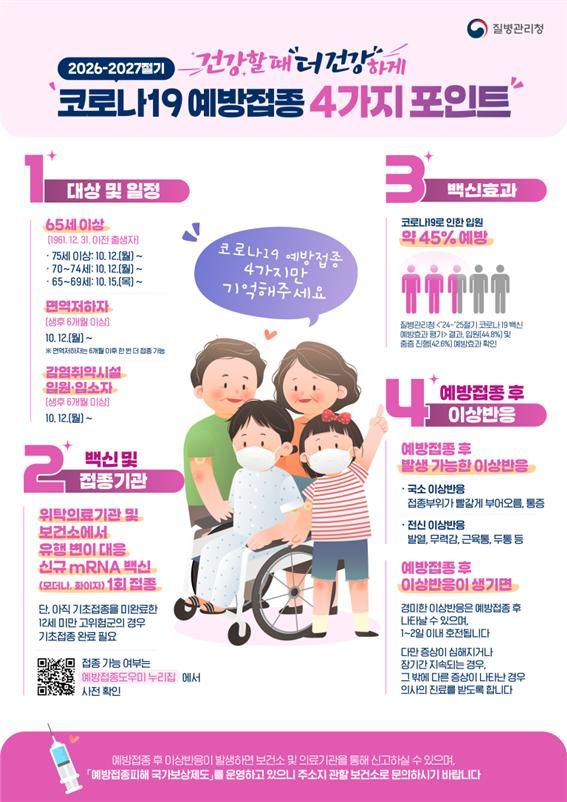
[Financial News] As COVID-19 continues to produce new variants each year and raise the risk of hospitalization and death among older adults, the government has decided to shift COVID-19 vaccination to an essential vaccination program, similar to the influenza vaccination system.
The Korea Disease Control and Prevention Agency (KDCA) announced on the 17th its plan to transition COVID-19 vaccination, which has been administered as a temporary program, to an essential vaccination program. It also unveiled the 2026–2027 national COVID-19 vaccination plan.
The transition follows a comprehensive review of COVID-19 trends, recommendations from the World Health Organization (WHO), and policy directions in major countries, including the United States, Japan, the United Kingdom, and Australia.
The 2026–2027 national COVID-19 vaccination program will begin in stages on October 12 and continue through June 30 next year. The KDCA recommended checking vaccination availability in advance on the Vaccination Helper website before visiting a medical institution.
Why Shift to an Essential Vaccination Program
COVID-19 produces new variants every year that can evade existing immunity. The KDCA explained that regular management, similar to influenza management, remains necessary because people aged 65 and older account for about 63% of all COVID-19 hospitalizations, leaving high-risk groups vulnerable to hospitalization, severe illness, and death.
The WHO also recommends regular COVID-19 vaccination for older adults and high-risk groups, while major countries overseas provide vaccination support at the national level. Accordingly, the government decided to replace the temporary vaccination system used during the pandemic with a stable and sustainable essential vaccination program.
Vaccination to Begin Sequentially with People Aged 65 and Older
The program aims to prevent severe illness and death among high-risk groups facing a substantial disease burden. Eligible recipients include people aged 65 and older, immunocompromised individuals, and residents of facilities vulnerable to infection, including nursing hospitals, nursing facilities, mental health facilities, homeless shelters, and residential facilities for people with disabilities. Vaccination is complete after one annual dose of the new XFG vaccine from Moderna or Pfizer, or two doses annually for immunocompromised individuals.
Hematopoietic stem cell transplant recipients need revaccination because they lose most of their existing immunity after transplantation. The government will support primary vaccination for up to three years after three to six months have passed since the transplant: three doses in total, with four to eight weeks between the first and second doses and eight to 12 weeks between the second and third doses. It will also support booster vaccination twice a year at six-month intervals. However, because the pace of immune recovery and the time elapsed since transplantation vary by patient, individuals should consult medical professionals before vaccination.
For people aged 65 and older, vaccination will begin on October 12, starting with those aged 70 and older and proceeding sequentially by age group. They may also receive the influenza vaccine at the same time. Vaccination for immunocompromised people aged 12 and older and residents of facilities vulnerable to infection will also begin on October 12. A total of 4.84 million doses of the XFG vaccine will be supplied, and vaccination will be complete with one dose, or two doses for immunocompromised individuals, as in the previous season. However, immunocompromised children under 12 and others may require one or two primary doses depending on their previous vaccination history, so prior consultation with a medical professional is necessary.
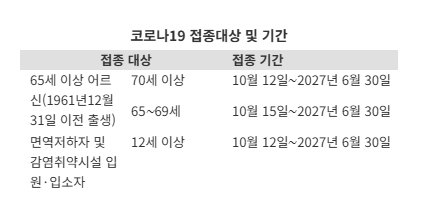
The KDCA recommended that people aged 65 and older receive both vaccines during a single visit to a medical institution, as they are eligible for both influenza and COVID-19 vaccination.
Vaccination is available at nearby designated medical institutions or public health centers regardless of address. It is advisable to check availability in advance on the Vaccination Helper website.
When visiting a vaccination site, recipients must bring documents verifying eligibility, such as an identification card, a copy of their resident registration, or a National Health Insurance card. Immunocompromised individuals and others may need supporting documents, such as a medical certificate, physician's opinion, or facility admission certificate. However, vaccination may be provided without documentation if the vaccinating physician determines that the person is immunocompromised. After vaccination, recipients should remain at the site for 20 to 30 minutes to monitor for adverse reactions, then return home and get sufficient rest.
Im Seung-kwan, Commissioner of the Korea Disease Control and Prevention Agency, said, "Because the COVID-19 virus produces and spreads new variants every year that can evade existing immunity, it is important for high-risk groups to be vaccinated every year." He added, "In particular, I urge people aged 65 and older to conveniently receive the COVID-19 and influenza vaccines during a single visit."
[email protected] Medical Specialist Jeong Myeong-jin Reporter