South Korea to Host G20 Summit for First Time in 18 Years... Jeju Launches Bid with Infrastructure for 35,000 People
- Input
- 2026-09-17 08:48:34
- Updated
- 2026-09-17 08:48:34
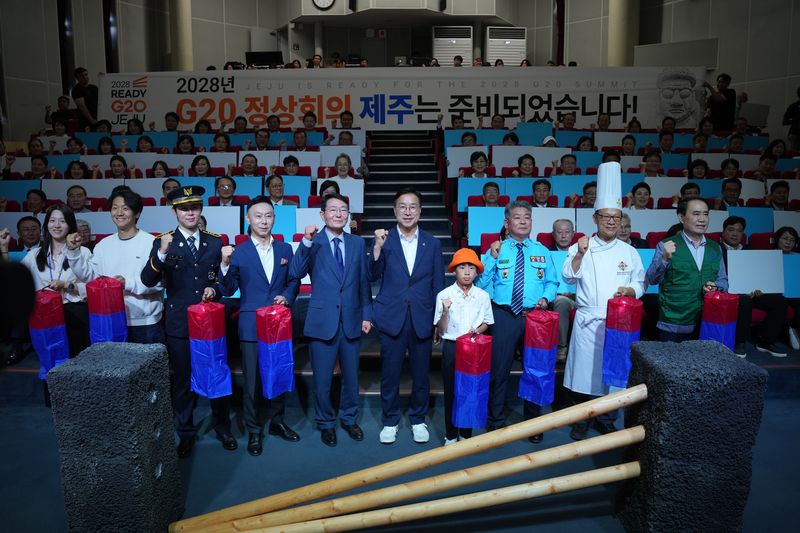
【Financial News Jeju = Jung Yong-bok】 A public-private campaign to bring the 2028 G20 summit in South Korea to Jeju has begun. Jeju Special Self-Governing Province is challenging for selection as the domestic host city by highlighting the large-scale conference and lodging facilities concentrated in the Jungmun Tourist Complex, as well as the security advantages of an island location.
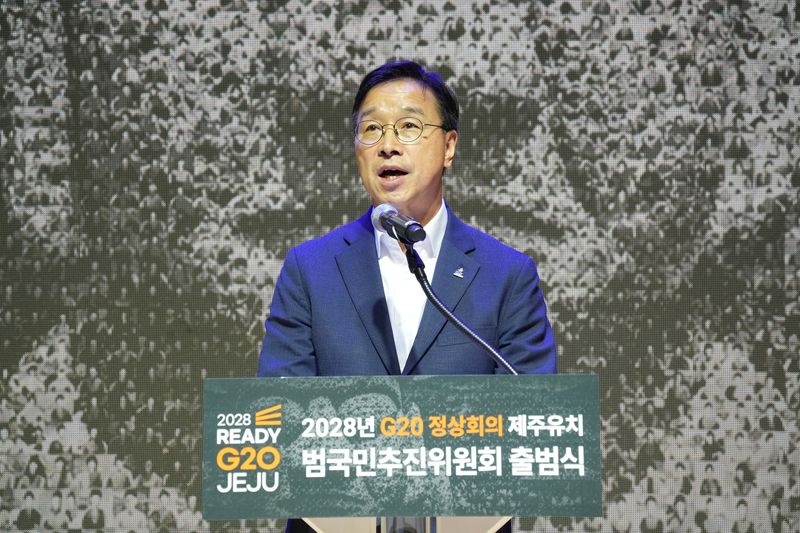
According to Jeju Special Self-Governing Province on the 17th, the Nationwide Promotion Committee for Hosting the 2028 G20 Summit in Jeju was launched the previous day at the Jeju Welcome Center. The initiative expands the administration-led bid effort into a province-wide campaign by bringing together economic, tourism, cultural, sports and civic organizations.
Political and business figures, including Jeju Governor Wi Seong-gon and Jeju Chamber of Commerce and Industry Chairman Yang Moon-seok, will serve as co-chairs. Representatives from public institutions and economic, cultural, tourism, sports and civic organizations will also participate.
South Korea will hold the G20 presidency in 2028. It will be the first time in 18 years that the G20 summit is held in the country since the 2010 G20 Seoul summit.
The G20 presidency involves more than simply providing a venue for the summit. The presiding country leads various meetings held ahead of the summit, coordinates agendas among members and takes responsibility for operating the final leaders’ meeting.
The G20 currently comprises 19 countries, including the United States, China, Japan and Germany, along with the European Union and the African Union. It is a leaders-level forum that discusses international issues involving not only the global economy, trade and finance, but also energy, climate, digital technology and artificial intelligence.
Although South Korea’s hosting of the summit has been confirmed, the domestic host city has yet to be selected. Jeju Special Self-Governing Province plans to prepare an application and proposal while reviewing its conference venues, lodging, transportation and security arrangements ahead of the evaluation and on-site inspection.
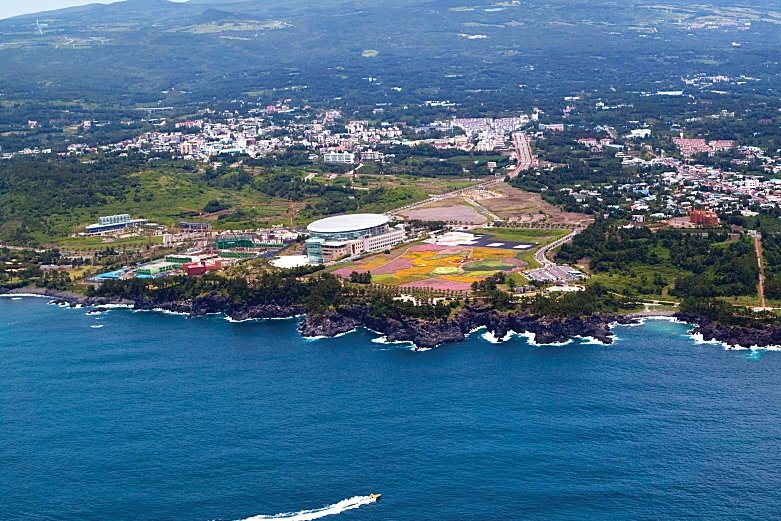
Jeju’s main advantage is its existing international conference infrastructure. According to Jeju Special Self-Governing Province, 20 high-end lodging facilities and 132 meeting rooms are concentrated around International Convention Center Jeju and the Jungmun Tourist Complex. The province says the conference and lodging facilities can accommodate approximately 35,000 people simultaneously.
The figure of 35,000 does not refer only to lodging for roughly 20 national leaders. The G20 summit involves large numbers of national delegations and accompanying staff, international organization officials, security and protocol personnel, and domestic and foreign media. The ability to secure sufficient lodging and auxiliary meeting spaces near the conference venue is an important factor in assessing hosting capacity.
Jeju Special Self-Governing Province believes the Jungmun area can reduce travel distances for delegations because International Convention Center Jeju, hotels and resorts are clustered close together.
Jeju is also incorporating its island geography into its bid. The province believes that relatively limited access routes from outside the island would facilitate access control and management of security zones during the summit, while also allowing coordination with maritime security measures.
However, simply having the facilities does not prove hosting capacity. During the government evaluation and on-site inspection, Jeju must demonstrate that the movement and lodging arrangements for large delegations, traffic controls and security system can operate simultaneously under actual summit conditions.
Jeju’s preparations for the bid are also expanding in stages. After forming a dedicated bid team on August 25 and beginning official promotion on September 7, the province brought together administrative organizations and private-sector participants through the launch of the nationwide promotion committee.
At the launch ceremony, representatives of Jeju residents—including hoteliers, taxi and bus drivers, autonomous police officers, chefs, international conference planners, volunteers, public officials and children—took part in a relay declaration focused on preparing to welcome G20 guests.
A ceremony linking the lanterns from the 2010 G20 Seoul summit with Jeongnang, Jeju’s traditional gate, was also held. As participants lowered three Jeongnang bars in succession, the lanterns lit up, expressing Jeju’s image as a place ready to welcome guests from around the world.
Jeongnang is a wooden bar placed horizontally between stone pillars at the entrance of a traditional Jeju home. It is a distinctive part of Jeju’s traditional way of life: the number of bars indicated whether the homeowner was present or away for an extended period.
Jeju’s next challenge is to prove through actual operational capabilities its claim to be a “prepared international conference city.” It must demonstrate that the figures—20 high-end lodging facilities, 132 meeting rooms and capacity for 35,000 people—can be integrated with transportation and security into a single summit operating system.
Governor Wi Seong-gon said, “We will fill what is lacking and provide what is needed,” adding, “We will prepare meticulously until the very end.”
[email protected] Jung Yong-bok Reporter