Cable Cars and Monorails to Face Re-Licensing and Stricter Safety Management as Revised Track Transportation Law Takes Effect
- Input
- 2026-09-17 11:00:00
- Updated
- 2026-09-17 11:00:00
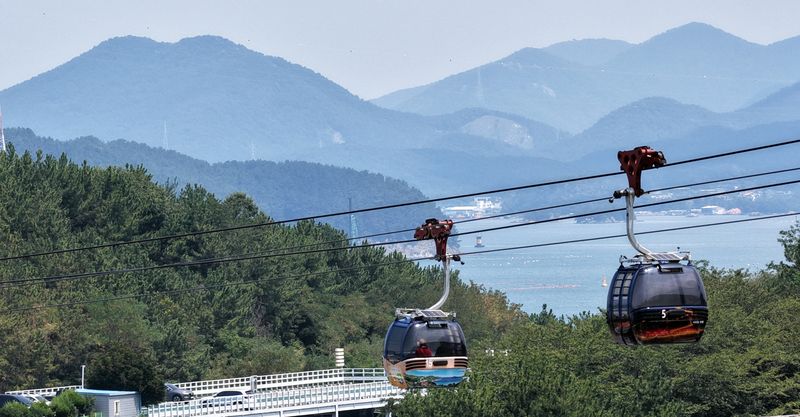
[Financial News] Licensing and safety-management standards for track-based facilities, including cable cars and monorails, will be significantly strengthened.
The Ministry of Land, Infrastructure and Transport (MOLIT) announced on the 17th that the revised Enforcement Decree of the Act on Track Transportation and the Enforcement Rule of the Act on Track Transportation will take effect on the 18th.
The revised enforcement decree and enforcement rule are follow-up measures to the Act on Track Transportation, which was revised in March. To strengthen the public nature of track transportation businesses, the amended Act requires operators to obtain re-licensing within a period of no more than 20 years. It also allows authorities to attach conditions related to promoting public welfare when issuing or renewing licenses. Previously, once a license was granted, operators could effectively run track transportation businesses indefinitely. The amended Act also requires operators to establish and implement safety-management plans and provides a legal basis for ordering corrective measures in cases of violations.
First, the validity period for a track transportation business license will be set at no more than 20 years. To obtain re-licensing, operators must apply to a local government, such as a city, county, or district office, from two years before the expiration of the validity period until the day one year before its expiration. When issuing or renewing a license, the local government will determine an appropriate validity period after reviewing the operator’s stated purpose and type of business, operating method, service plan, financing method, and annual passenger capacity.
The safety-management system will also be strengthened. Track transportation operators must establish safety-management plans covering inspection and maintenance schedules, personnel operations, and emergency manuals. Any changes or supplements to the plans must be submitted within 30 days. Local governments will review the adequacy of the plans and may order supplementation, improvement, or corrective measures if they are insufficient. Operators that fail to establish a safety-management plan or comply with a corrective order may face administrative sanctions, including business suspensions of 10, 30, or 60 days, or cancellation of their licenses or approvals, depending on the number of violations. When issuing or renewing licenses, local governments will also consider safety inspection results, user safety, and the adequacy of operating performance in determining the validity period.
In addition, local governments will require operators to submit plans concerning environmental conservation and the promotion of public welfare when deciding whether to issue or renew licenses and determining their validity periods. The measure is intended to strengthen the public nature of track transportation businesses.
A MOLIT official said, "Until now, track-based facilities have been left largely to operators’ discretion after the initial business license was issued, making management and supervision difficult." The official added, "We expect the revisions to the track transportation laws and regulations to strengthen the safety, environmental performance, and contribution to public welfare of track transportation businesses, thereby improving the effectiveness of management and supervision."
[email protected] Jung Kyung-soo Reporter