Digital-Asset Institutionalization Delayed... Could a Drop in Naver’s Share Price Be a Buying Opportunity?
- Input
- 2026-09-17 09:00:21
- Updated
- 2026-09-17 09:00:21
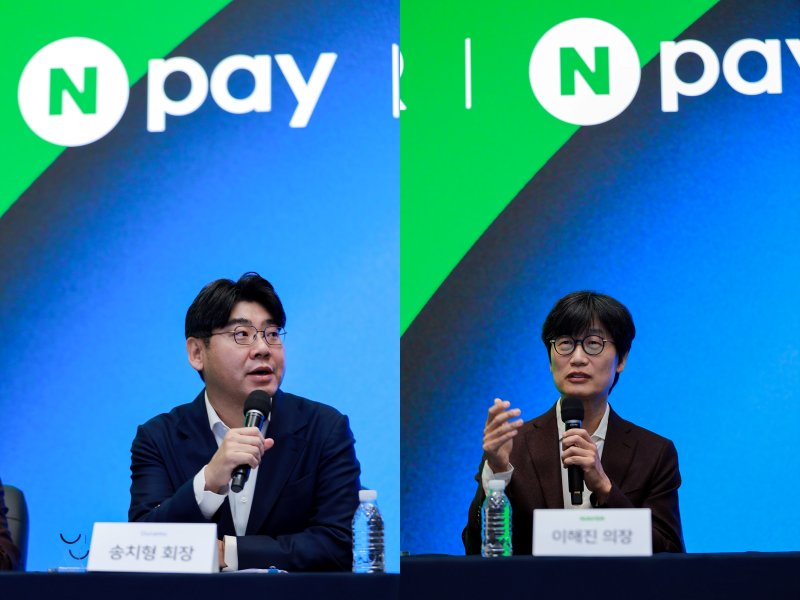
[Financial News] Although the introduction of digital-asset regulations has been delayed in South Korea and abroad, analysts have advised investors to use a share-price correction as a buying opportunity.
Jung Hae-chang, a researcher at Daishin Securities, said on the 17th of Naver Corporation, listed as NAVER, "We believe the current share price does not reflect expectations for the expansion of the stablecoin business and the business combination with Dunamu," adding, "This is a time to apply an investment strategy that takes into account downside pressure caused by delays in making the business visible." He maintained a “Buy” rating and a target price of 320,000 won. Naver’s previous closing price was 201,500 won.
On the 15th, the United States Senate failed to advance the Digital Asset Market Clarity Act, which would establish a clearer regulatory framework for digital assets. After a procedural vote in the Senate failed, it has become effectively impossible for the act to pass before the November midterm elections.
In South Korea, the introduction of legislation has also been delayed as momentum behind the second phase of digital-asset legislation, which was pursued earlier this year, has weakened.
Against this backdrop, Daishin Securities explained that it is difficult to rule out an additional delay in the business combination between NAVER Financial and Dunamu.
Jung Hae-chang explained, "The scheduled date for the stock exchange and transfer was pushed back from the initially disclosed date of June 30 to December 31, but if the legislative delay becomes a reality, it is difficult to rule out a further postponement," adding, "We need to pay attention to the possibility of additional uncertainty arising from the political burden on lawmakers and licensing authorities."
The analysis is based on the fact that the Digital Asset Framework Act could provide the basis and justification for approval by financial authorities, while approval of the business combination by the Korea Fair Trade Commission and approval or notification concerning major shareholders by financial authorities are required.
Jung added, "However, the passage of the bill itself has not been specified as an essential prerequisite, and a vote on a U.S. bill will not automatically delay the schedule for domestic legislation or the combination transaction," adding, "It would be reasonable to respond by lowering the level of expectations."
In addition, even if the business combination is approved, Naver’s stablecoin business must be designed and carried out in line with the direction of government policy.
He explained, "Delays in institutional reform will reduce expectations for early commercialization," adding, "Unless the structure for issuing and processing payments with a won-denominated stablecoin is finalized, it will inevitably be necessary to reflect uncertainty in the timing of monetization."
Another burden is that, as expectations for the digital-asset market’s expansion weaken, Dunamu’s market valuation could fall compared with the time when the transaction was assessed.
Jung explained that although regulatory adoption by policymakers in South Korea and abroad has been delayed, the overall direction toward institutionalizing digital assets and stablecoins has not changed.
Jung emphasized, "We believe that the current share price does not meaningfully reflect market expectations for the expansion of the stablecoin business and the business combination with Dunamu," adding, "If a delay in the combination becomes a reality and the share price undergoes an excessive correction relative to Naver’s core business and the value of its existing assets, investors could consider using short-term share-price volatility as a buying opportunity."
[email protected] Han Young-jun Reporter