PCL’s Fleet to Expand from 5 to 14 Vessels, Raising Earnings Power to a New Level
- Input
- 2026-09-17 08:11:46
- Updated
- 2026-09-17 08:11:46
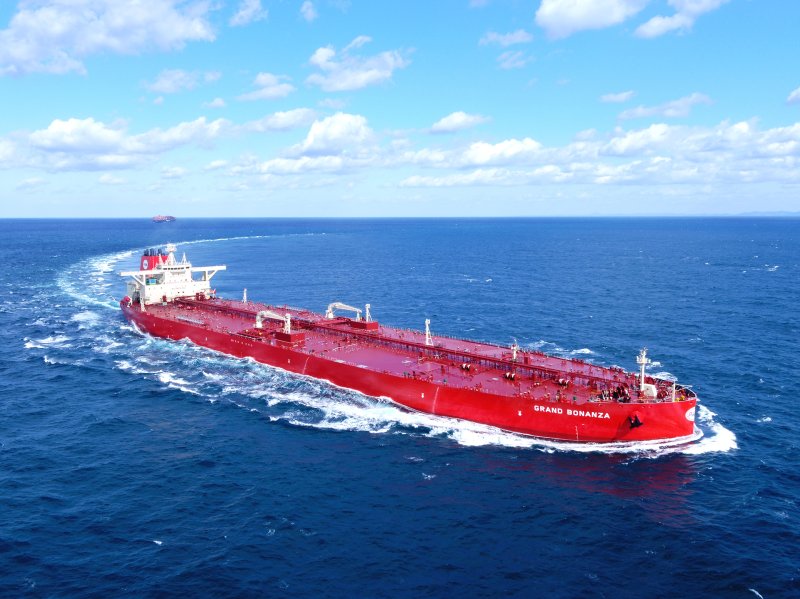
[Financial News] PCL has entered a phase in which its earnings power is set to rise to a new level, expanding the share of energy transportation through tankers and LNG carriers while maintaining its bulk-centered business structure.
On the 17th, Seung Yoon Yang, a researcher at Eugene Investment & Securities, assessed that PCL had secured both the stability of its bulk-centered operations and growth potential from expanding energy transportation. Yang said the company’s earnings power would rise to a new level as VLCCs and LNG carriers began making a full contribution to earnings. He added that once the easing of capital expenditure pressure becomes visible, higher dividends and a valuation reassessment could occur together.
Eugene Investment & Securities projected PCL’s 2026 annual revenue at KRW 6.9474 trillion and operating profit at KRW 700.4 billion. These figures represent year-on-year increases of 27.9% and 42.4%, respectively. Even if freight rates normalize as Middle East risks ease, the brokerage expects PCL’s improved earnings level to continue, supported by its expanded VLCC fleet and the stable earnings contribution from LNG carriers.
PCL is reshaping its business portfolio by expanding the share of energy transportation from its traditional bulk carrier-centered operations. While bulk carriers are sensitive to market fluctuations, long-term contract volumes provide a floor for earnings. The company is also shifting toward a structure in which tankers and LNG carriers improve profitability through a combination of long-term charter contracts and expanded spot cargo volumes.
The key asset is the VLCC fleet. PCL’s VLCC fleet will grow from five vessels at the end of the second quarter of 2026 to 14 vessels in 2027. In addition to 10 vessels acquired from SK Shipping, one vessel under an existing long-term contract with S-OIL Corporation, and one TC-Out vessel, two newly built VLCCs will enter the spot market in the second half of 2027. Eugene Investment & Securities estimated that these two newbuilds alone would add approximately KRW 30 billion to annual operating profit in 2027. Operating profit from the tanker segment is expected to increase 20% to KRW 192.8 billion.
The international crude oil logistics environment is also favorable. As supply disruptions originating in the Middle East continue, crude oil sourcing from the United States, Africa, and other distant regions is increasing, which is expected to boost ton-miles. The brokerage also expects VLCC freight rates to remain strong, as sanctions on the shadow fleet limit effective vessel capacity. Since deliveries of VLCCs currently on order are concentrated from 2029 onward, supply and demand are expected to remain tight through 2028.
LNG carriers have established themselves as a stable source of cash generation. PCL’s fleet of 13 LNG carriers is expected to generate approximately KRW 160 billion in annual operating profit through 2028, based on long-term charter contracts. The operating margin is also expected to remain above 40%. Unlike the bulk business, LNG carriers are relatively less affected by market fluctuations, making them a key pillar of earnings stability.
PCL’s core bulk business also remains solid. Of its 81 owned bulk carriers, 41 are deployed under long-term contracts, giving the company the earnings capacity to generate approximately US$100 million in annual operating profit regardless of market conditions. The remaining 40 vessels marketed by the company have a break-even point at a Baltic Dry Index (BDI) level of 1,200 to 1,300 points. Given that the current BDI stands at around 3,561 points, high profitability is expected.
[email protected] Kang Gwi-gui Reporter