‘Hawkish’ Warsh Raises U.S. Rates for First Time in Three Years, Heightening Tensions With Trump
- Input
- 2026-09-17 06:57:10
- Updated
- 2026-09-17 06:57:10
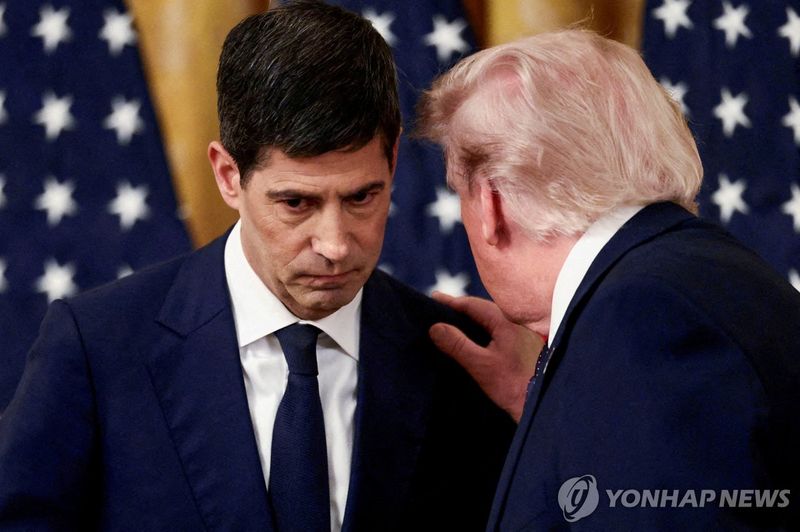
[Financial News] By raising interest rates, Federal Reserve Chair Kevin Warsh has heightened the possibility of a clash over monetary policy with President Donald Trump, who nominated him to lead the Fed.
The rate hike came at a sensitive time, just about seven weeks before the November United States midterm elections, and could impose a significant political burden on the Republican Party.
Higher interest rates can increase household borrowing costs for mortgages, auto loans and credit cards, adding to voters’ cost-of-living burden, which has already grown because of high inflation.
Even days before the FOMC meeting, President Trump did not hesitate to argue, “Regardless of what Fed officials say, we should have the lowest interest rates in the world.”
Nevertheless, Warsh ultimately raised rates as markets had expected, prioritizing price stability over President Trump’s calls for rate cuts.
Warsh also referred to the Fed’s independence during a news conference that day.
Asked about President Trump’s remark that he would cut trade ties with certain countries if the Fed did not lower interest rates, he replied, “Part of Fed independence is staying in our lane,” adding, “Independence is a two-way street.”
His comments were interpreted as reaffirming the principle that the Fed and the administration should not encroach on each other’s policy areas, as well as the Fed’s independence in making monetary policy decisions.
However, he drew a line when asked about the political message or direct implications of the rate hike.
Asked what message he would send to President Trump, who has called for rate cuts, he said, “I have nothing to say.”
Meanwhile, stocks fell and U.S. Treasury yields rose as the Fed’s rate hike and Warsh’s remarks were interpreted as hawkish, favoring monetary tightening.
On the New York Stock Exchange that day, the Dow Jones Industrial Average (DJIA) fell 631.21 points, or 1.21%, from the previous session to close at 51,461.90.
The Standard & Poor’s 500 Index (S&P 500 Index) fell 33.92 points, or 0.45%, to 7,551.81, while the NASDAQ Composite Index slipped 3.15 points, or 0.01%, to finish at 25,978.42.
The yield on 10-year Treasury notes climbed back above 5%, while the yield on two-year notes, which is sensitive to monetary policy, also rose sharply.
[email protected] Lee Seok-woo, International Affairs Specialist Reporter