Tension That Did Not End After the Armistice: "We Watched the North Around the Clock"
- Input
- 2026-09-21 20:33:21
- Updated
- 2026-09-21 20:33:21
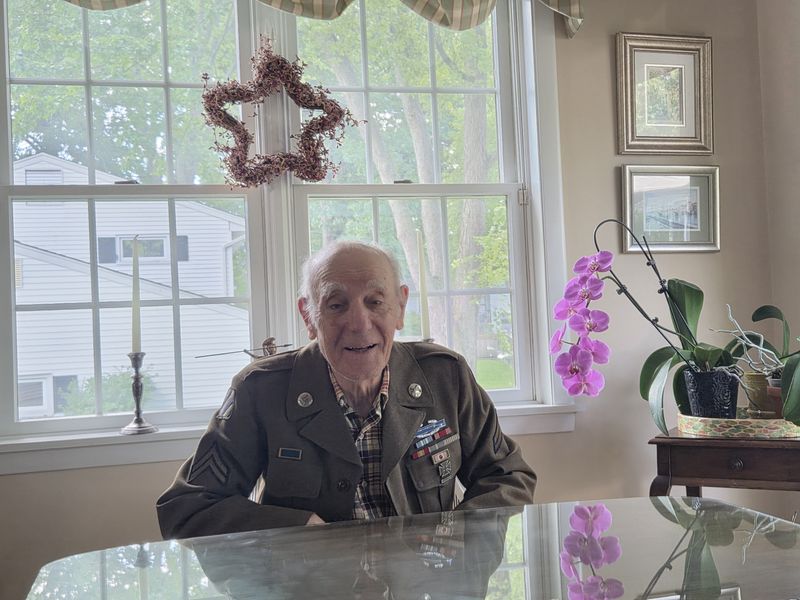
When I met 93-year-old Savas at his New Jersey home several days ago, his memories had become hazy in places, as might be expected after 72 years. When asked about specific locations or dates, he would think for a while before saying, "I don't remember." Yet he appeared physically healthy for his age. Above all, his pride in having served as a U.S. soldier in Korea did not seem to have faded over the years.
During the interview, when the conversation turned to the uniform he wore while serving in Korea, Savas rose from his seat. He went down to the basement storage room, found the uniform he had worn more than 70 years ago, and brought it back upstairs. It was not a garment he had merely kept in storage. In front of the reporter, he put it on himself. The 93-year-old veteran once again donned the uniform worn by the young man he had been in his 20s. Although much had become difficult for him to remember, the time he spent in Korea still seemed to remain at the center of his life.
When they went on patrol, the soldiers on duty used passwords to identify one another. A brief description of the circumstances remains in the service records kept by Savas's family.
"He remembers the patrol using only passwords for identification with his buddies. The enemy was just over the line." (He remembers using passwords to identify himself with his fellow soldiers while on patrol. The enemy was just over the line.)
Savas drew out his memories from 72 years ago one by one.
"It was just after the fighting ended. They stopped, and we stopped. But we were very careful because they would sometimes try to cross over."
A moment later, he summed up his feelings at the time in a single sentence.
"I remember that we were afraid."
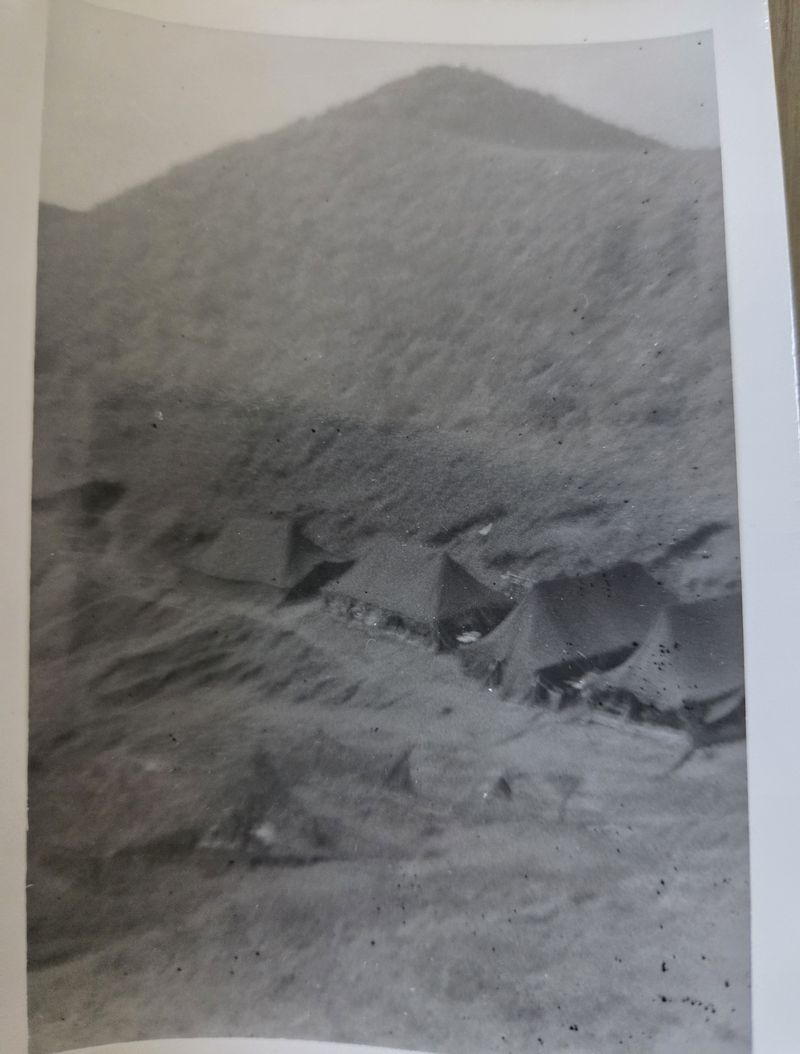
Arrived in Korea in June 1954; tension continued after the armistice
According to records kept by his family, Savas arrived in Korea in June 1954, about 11 months after the Korean Armistice Agreement was signed on July 27, 1953.
The records state that he was assigned to the U.S. Army 3rd Infantry Division's "Can Do Regiment." A review of records related to the U.S. Army and the 3rd Infantry Division shows that "Can Do" referred to the 15th Infantry Regiment. The regiment fought under the 3rd Infantry Division during the Korean War and, shortly before the armistice, was also deployed to the Battle of Outpost Harry, a strategic stronghold in the Cheorwon area.
The Korean Peninsula did not immediately return to peacetime after the Korean Armistice Agreement was signed. Under the agreement, the DMZ was established around the Military Demarcation Line, extending 2 kilometers on each side and measuring 4 kilometers in total width. Military vigilance continued in the surrounding area.
Official U.S. military unit histories also provide a picture of the situation at the time. A history of the United Nations Command Security Battalion–Joint Security Area (UNCSB-JSA), released by the Eighth United States Army (EUSA), records that by the end of 1954, guarding the Joint Security Area around Panmunjom and conducting counter-infiltration patrols in the operational area had become part of the unit's mission.
Records of Savas's 3rd Infantry Division also remain. Among materials held by the U.S. National Archives and Records Administration (NARA) and collected by the Institute for Military History, Ministry of National Defense, is an operations journal from the 3rd Infantry Division's G-2 section covering May 3 to May 24, 1954. The 15th Infantry Regiment remained in Korea until the end of that year, and the relevant unit history records that the regiment returned to the United States in December 1954.
Savas remembers serving in Korea for about seven months.
"I was afraid when I was told I was going to Korea. I didn't know where I would be sent, and we remained afraid the whole time."
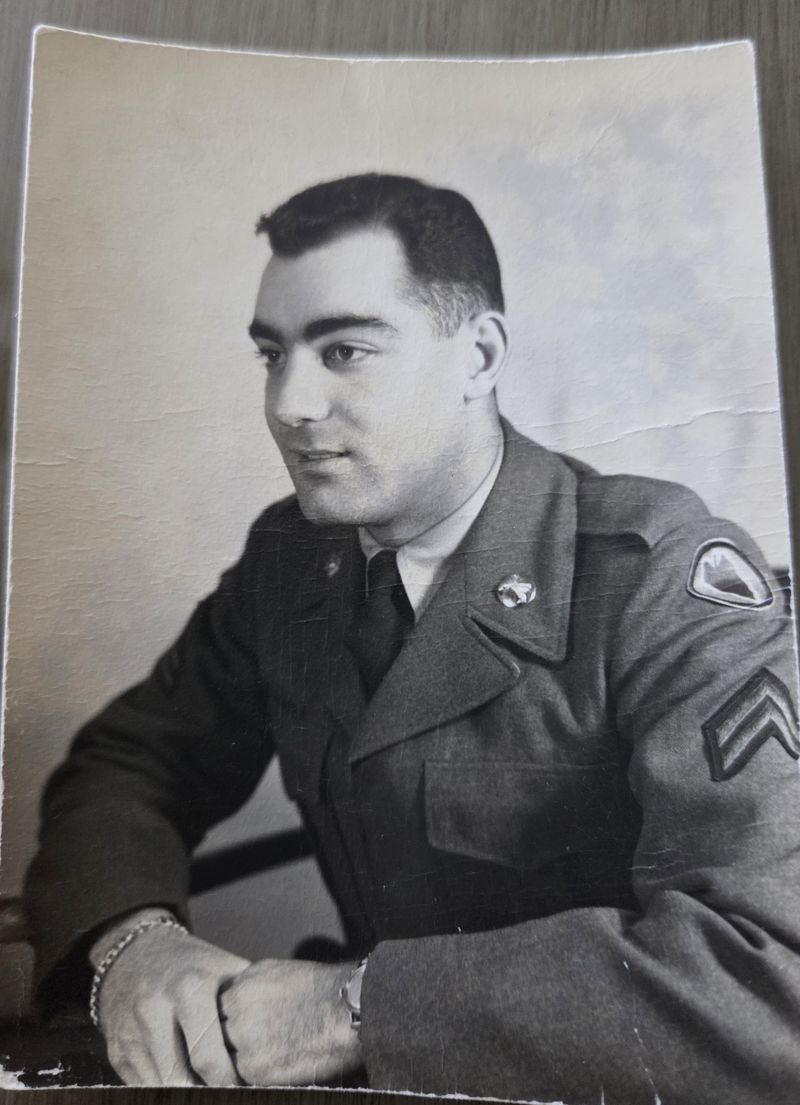
"We watched them around the clock... We never moved alone"
Savas was responsible for patrolling and standing guard in the DMZ area. There was no distinction between day and night.
"It was 24 hours a day. Sometimes it was at night, and sometimes it was during the day."
When asked how many days a week he was on duty, he replied, "We had to be there all week." He also said there were no days off. He searched his memory for details about the shifts.
"Along the DMZ line, I think we worked for six hours and rested for six hours."
He never moved alone.
"We were never alone. Whatever we did, there always had to be two or three of us together."
The "passwords" mentioned in the family records were also used amid this tension. The soldiers used passwords to identify one another and determine whether someone they encountered on patrol was a friendly soldier.
"They watched us, and we watched them."
North Korean troops were on the other side of the line. Savas said he had never spoken with them.
"They didn't talk to us. We didn't talk to them either. We were very careful not to get involved with them."
When asked whether he had exchanged fire directly with North Korean troops, he said, "I did not." But he could not let his guard down.
"Something was always happening. We had to watch them. It was 24 hours a day. We had to be very careful."
One statement captured the situation at the time most succinctly.
"They watched us, and we watched them (They watch us, and we watch them)."
He said it was difficult to distinguish North Korean troops from South Korean troops by their appearance alone.
"They looked just like South Koreans. Only their uniforms were different. But they were also Korean people, just like us."
When asked whether he could have told whether someone was from South or North Korea without a uniform, he replied, "I couldn't tell."
"The days were hot, and the nights were cold"
Another memory of life in the DMZ remains in the records kept by his family.
"The days were hot and the nights were cold." (The days were hot and the nights were cold.)
What remained especially vivid for Savas was the cold of winter.
"Winter was very difficult. It was extremely cold. We didn't have much clothing to protect us from the cold."
Asked whether he had had thick winter clothing, he replied, "No."
"We had our uniforms, and that was all."
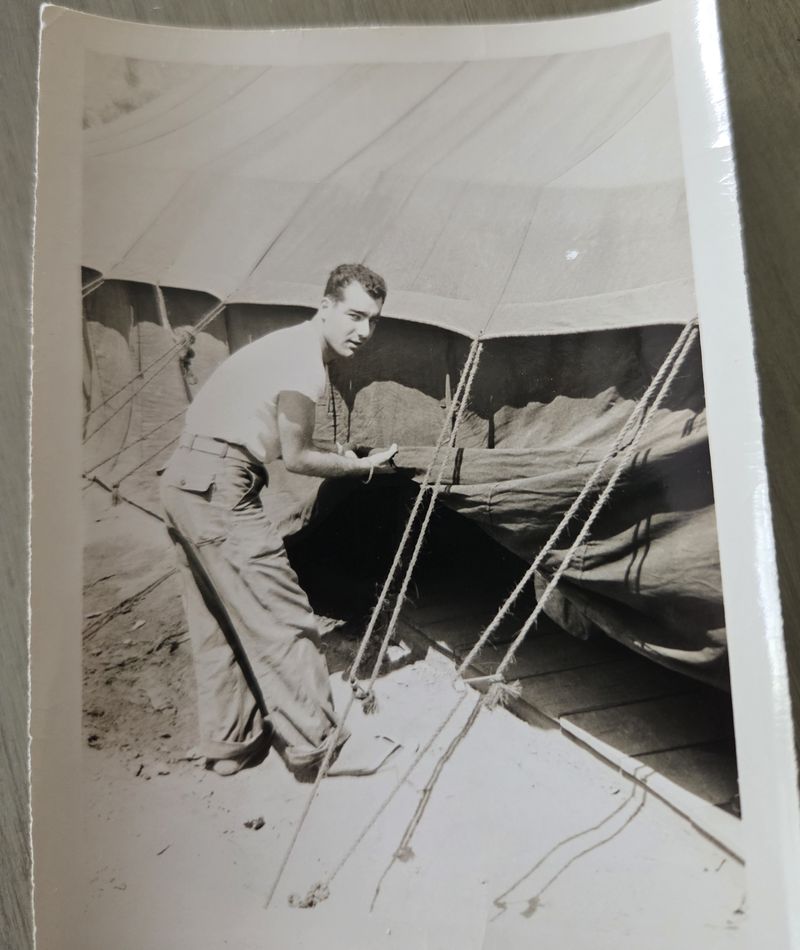
"Korean people were very kind to us"
Amid the tense and precarious guard duty, the Korean people remained a warm memory.
"Korean people were very, very kind to us. We never had any problems."
Local residents greeted the U.S. soldiers when they saw them, and some could speak a little English. Savas particularly clearly remembered how warmly the ROK Armed Forces welcomed the U.S. troops.
"They liked us. They liked the U.S. soldiers. The South Korean soldiers, in particular, treated us very well."
Savas remembered that the ROK Armed Forces were stationed in a separate unit but carried out missions alongside the U.S. troops in the DMZ area.
During the interview, I asked several times exactly where he had been stationed. Savas thought for a long while before finally shaking his head.
"I don't remember."
He continued, sounding as though he was sorry.
"I wish I could be more helpful and tell you more. I know what happened, but I can't remember everything now."
His memories had clearly been affected by the passage of time. To some questions he answered, "Maybe," while to others he candidly said, "I can't remember."
When asked whether he had ever fired a gun in Korea, he said, "No." He then repeated the same thought.
"I was lucky. I was lucky. I was very lucky."
Finally, I asked what he hoped today's younger generation would remember about the Korean War.
"They need to know what happened there. Many people died there. Many Americans died, too."
Then he said again:
"But I was lucky."
The war had fallen silent 11 months before Savas set foot in Korea. But in 1954, peace was not yet an everyday reality on the Korean Peninsula's front line. Savas and his fellow soldiers identified one another using passwords and moved in groups of two or three while watching the area beyond the line day and night.
After 72 years, place names, dates, and the names of fellow soldiers had faded from his memory. But the uniform he wore at the time remained in the basement storage room, and the 93-year-old veteran brought it out and put it on again.
He then spoke of the two things he remembered for certain.
"I remember that we were afraid."
"But I am certain that I was there."
[email protected] Lee Byung-chul, correspondent Reporter