U.S. Diesel Prices Top $8 in California—Will Food Inflation Follow?
- Input
- 2026-09-17 03:46:08
- Updated
- 2026-09-17 03:46:08
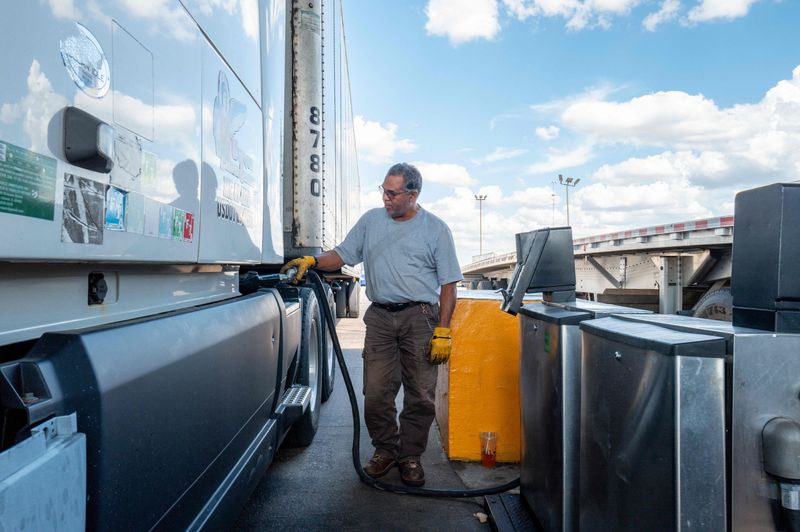
Transportation companies, which serve as the arteries of the U.S. economy, are crying out over soaring diesel prices. Diesel, whose national average price surpassed $6 per gallon early on, has topped $8 in California. One transportation company executive complained that the situation seemed straight out of a science-fiction novel.
With diesel prices surging ahead of the fall harvest of crops such as wheat and corn, analysts say agricultural prices are also bound to rise as higher costs are passed through.
Transportation Industry: “Record-Level Price Volatility”
According to CNBC on the 16th (local time), transportation companies vented their anger over soaring fuel prices at a conference hosted by Wall Street investment bank Morgan Stanley the previous day.
Brad Delco, chief financial officer of trucking company J.B. Hunt, said, “We are experiencing the most rapid and abnormal fuel-cost volatility in history.” He forecast that the company’s net profit in the third quarter would decline by 5% to 10% from the previous quarter because of rising fuel costs.
Shocked by the pessimistic outlook, J.B. Hunt shares plunged more than 13% during the session, marking their steepest drop since the company’s 1983 initial public offering.
California Surpasses $8
According to the American Automobile Association (AAA), diesel—the key fuel for trucks and freight trains—hit a record high of around $6.31 per gallon that day.
Patrick De Haan, head of petroleum analysis at fuel-price tracking company GasBuddy, said upward pressure on diesel prices would intensify over the next several days. De Haan forecast that the national average diesel price would exceed $6.50 over the next two days, while prices in the Midwest, including Michigan, Ohio, and Illinois, were expected to reach $7 within days.
According to AAA, the average diesel price in California has already surpassed $8 per gallon. It soared by nearly 20% in the past month alone.
Diesel prices have surged after suffering a supply shock when U.S. President Donald Trump began the Iran war on February 28, rising to a level 70% higher than a year earlier.
U.S. Economy Faces Rising Logistics Costs
The Dow Jones Transportation Average, which comprises transportation stocks, fell more than 2% during the session.
Ed Elkins, chief commercial officer of rail operator Norfolk Southern, said, “We are talking about diesel in the $6 range now, but in some places it has entered the $8 range.” He added, “$8 diesel prices seem like a situation straight out of science fiction.”
Elkins warned that rising costs for logistics companies, the backbone of the U.S. economy, could have a major impact on the economy.
According to the Bureau of Transportation Statistics (BTS) under the U.S. Department of Transportation, the transportation services sector accounted for $1.9 trillion of U.S. gross domestic product (GDP) last year. That represented more than 6% of GDP.
Food Prices Also Set to Rise During the Fall Harvest
Elkins said higher transportation costs could also weaken consumer spending.
U.S. retail sales in August rose 1.2% from the previous month despite energy inflation. Excluding spending on automobiles and at gas stations, retail sales reached their highest level in more than a year. Nevertheless, the outlook remains bleak.
Food prices, above all, are expected to face upward pressure. If food prices, which have already risen sharply, climb further, consumers will have no choice but to cut spending elsewhere.
Jacob Aikin-Phillips, head of consumer and retail-sales research at Melius Research, expressed concern that record-high diesel prices would increase farmers’ cost burden, particularly as they coincide with the fall harvest season.
Economists warn that restaurant and grocery prices in the United States could soar as a result.
However, Aikin-Phillips forecast that, for the time being, farmers, transportation companies, and retailers would absorb the shock of higher fuel costs, preventing it from translating into higher consumer prices.
[email protected] Song Kyung-jae Reporter