[Editorial] Mega-Special Zone Blocked by the 52-Hour Workweek: Resolve the Issue Through Tripartite Dialogue
- Input
- 2026-09-16 18:52:57
- Updated
- 2026-09-16 18:52:57
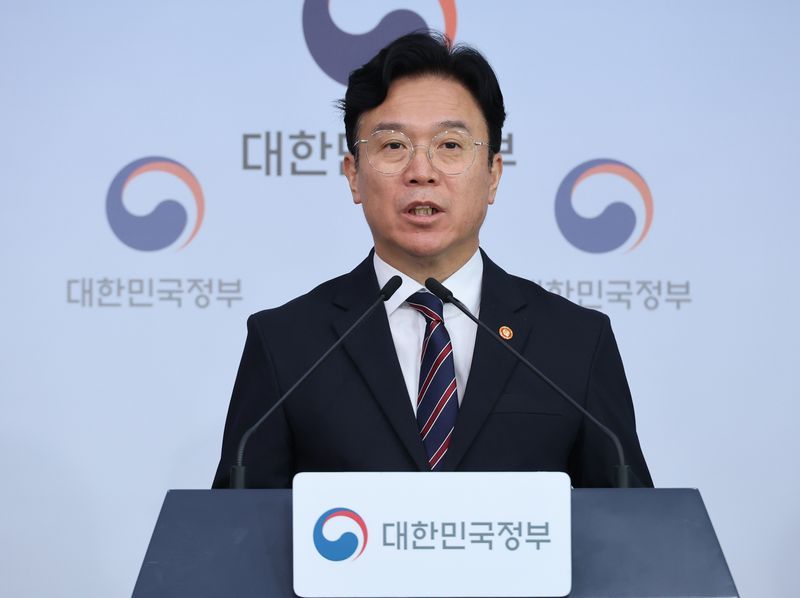
Kim Young-hoon, minister of the Ministry of Employment and Labor, said on the 15th, "There is bound to be a difference of opinion between companies requesting exceptions and workers raising concerns," and proposed tripartite dialogue. Since the Korean Confederation of Trade Unions (KCTU), one of the two major labor federations, is not participating in the existing tripartite dialogue body, the Economic, Social and Labor Council (ESLC), the proposal calls for creating a separate forum for social dialogue. Kim identified the following as urgent topics for discussion: a white-collar exemption that would remove the 52-hour weekly work cap for high-income and research-and-development (R&D) workers and exclude overtime, night-work and holiday-work allowances; and the “2+2” fixed-term employment rule, which would extend the current two-year limit on fixed-term employment by an additional two years with the worker’s consent.
It is unusual for the government to put forward such an agenda. The initiative is significant because tripartite social dialogue is being pursued separately from the ESLC for the first time in six years, since the response to COVID-19. As Kim said, "The mega-special zone concerns the nation’s future and is a project that must succeed." It is not an easy issue, but it is one that all stakeholders must tackle together. The KCTU, which has not yet expressed its intention to participate, should also join actively.
The three major mega-projects are national priorities so urgent that every second counts. Their success will depend on the continuity of highly concentrated, short-term R&D and infrastructure development. Above all, the labor movement must recognize that rigidly maintaining the current 52-hour workweek system could leave the country behind its competitors in the race for speed. To ensure that flexible working hours within the mega-special zone do not lead to a broader retreat in labor rights, the exception should be designed as a narrowly targeted measure necessary to secure technological sovereignty.
The government must devise sophisticated measures concerning labor flexibility to prevent conflict between labor and management. It is important to ensure that flexible working hours do not turn into unpaid overtime or labor exploitation. Robust safeguards are needed, including mandatory consecutive rest periods, adequate compensation for excessive overtime, and limiting the policy’s application to R&D-related workers and others in clearly defined categories.
The exceptions under the Mega-special zone law should be pursued swiftly, but this is also an opportunity to discuss broader reform of the Labor Standards Act. As Lee So-young, a nominee for minister of the Ministry of SMEs and Startups, noted, rigid time-based regulations and punishment-centered rules, including imprisonment for violations, should be reconsidered in knowledge-work environments where performance is assessed by outcomes rather than hours worked. The purpose of reducing working hours—to protect workers’ health and prevent deaths from overwork—must be maintained, while the system should be improved to reflect the characteristics of different industries and jobs.
The government must present a reasonable compromise that properly reflects changes in how people work while remaining acceptable to both labor and management. The two sides must also overcome confrontation and reach a compromise for the future of the national industry. The country must not miss the golden window in the global technology war by remaining trapped in a rigid 52-hour workweek system. We hope this social dialogue will establish a milestone for a mature labor market in which workers’ quality of life and national industrial competitiveness advance together.