[Editorial] Korea Needs a Bold ‘Korean IRA’ to Keep Companies at Home
- Input
- 2026-09-16 18:52:39
- Updated
- 2026-09-16 18:52:39
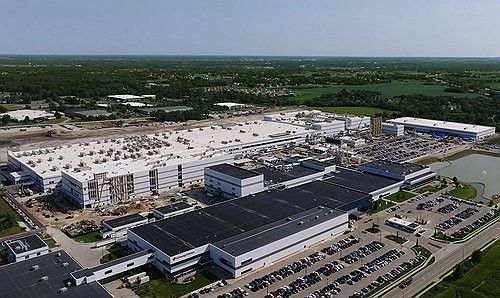
There are several reasons Korean companies are moving abroad. Domestic labor costs began rising long ago, prompting many companies to relocate to China and Southeast Asia in search of cheaper labor. Rising labor costs are not the only factor; increasingly militant labor unions have also driven companies overseas. Second, export-oriented companies voluntarily build factories and sell products in destination markets to reduce their tariff burdens. In some cases, as with the United States, companies build factories abroad under pressure exerted through diplomatic means.
It has long been a concern that manufacturers are leaving Korea for various reasons, hollowing out domestic manufacturing. Like the United States, the Korean government has consistently pursued policies to encourage companies that moved overseas to return, or reshore, but the results have been disappointing. In June, the Act on Assistance to Korean Offshore Enterprises in Repatriation was promulgated. A domestic production tax credit, which will reduce taxes based on the amount produced domestically in six areas—including solar power generation, secondary batteries, semiconductors, and artificial-intelligence robot components—is scheduled to take effect next year, but its impact remains uncertain.
Bold incentives are needed to bring companies back from overseas or prevent them from leaving in the first place. The insufficient return of companies can be interpreted as meaning that the benefits provided by the government have not been adequate. Against this backdrop, the forum is significant because it seeks, at the National Assembly level, to explore ways not only to help overseas companies return but also to support those that remain in Korea.
Labor costs are also rising in China and Southeast Asia, while labor and environmental issues are becoming more prominent, making business conditions less favorable than before. This is the time to turn these changes to Korea’s advantage with groundbreaking policies that bring companies back home. If the conditions are right, companies would presumably prefer to operate factories in Korea.
Tailored support for returning companies—including tax benefits and land provision—is only the starting point. Above all, the government must ease the labor-cost burden facing manufacturers and devise measures to secure skilled workers. Building smart factories and using robots could also help.
Even if textile companies return, it will be difficult for them to continue operating in the same industries in Korea. The government must also help companies move beyond traditional industries and find new growth engines. It should consider measures to reduce the burden of research and development costs through tax credits and other means. The biggest obstacle remains the increase in labor-related burdens resulting from the implementation of the Yellow Envelope Act. The prospect of facing pressure from labor unions could discourage companies from returning. Although the law has already taken effect, its problems—including a sharp increase in labor-management disputes—have become apparent, so supplementary measures must be prepared promptly.