Intel CEO: "Memory Prices Have Soared Five to Seven Times and Will Become Even More Scarce Next Year"
- Input
- 2026-09-16 15:38:24
- Updated
- 2026-09-16 15:38:24
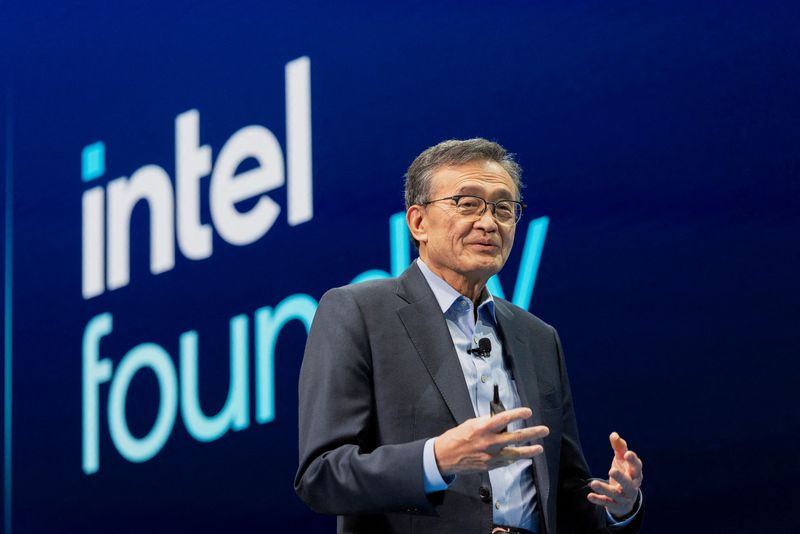
[Financial News] Intel CEO Lip-Bu Tan predicted that the shortage of memory semiconductors and the surge in prices will worsen next year as artificial intelligence (AI) adoption expands.
Tan made the remarks during a conversation on stage at the InfraAI Global Summit held on the 15th local time at the convention center in Santa Clara, California.
He said, "Early last year, I said memory would become a bottleneck. Many people did not realize it at the time, but I turned out to be right," adding, "The situation will worsen next year."
Tan noted, "Memory production capacity is extremely limited, and prices have risen enormously. As you know, they have gone up five, six, and seven times."
He said companies are facing severe cost pressures from the surge in memory prices, with memory accounting for as much as 70% to 80% of the total cost of low-end smartphones and laptops in some cases.
The forecast is seen as reinforcing expectations that domestic memory semiconductor companies such as Samsung Electronics and SK hynix will continue to lead the AI market next year, supported by strong memory demand.
Power, optical technology, and thermal management emerge as key future technologies facing bottlenecks
Beyond memory, Tan identified power, optical technology, and thermal management as key future technology areas that could face bottlenecks.
Tan also disclosed the results of Intel's sweeping restructuring efforts since he took office.
He said, "We reduced the workforce from more than 100,000 when I took office to about 78,000," adding, "We also sharply cut the organizational hierarchy from 10 to 12 layers to four or five, improving efficiency and accountability."
He also expressed a strong commitment to rebuilding Intel Foundry.
He explained that the plan is to exceed performance targets while keeping expectations low at first, and to prove the foundry's capabilities with quarterly results.
He said Intel plans to focus its capabilities on advanced packaging, which is part of back-end processing. He added that the recent recruitment of Executive Vice President Lee Suk-hee, a former Intel employee and former head of SK hynix, would help strengthen the company's competitiveness.
Meanwhile, regarding the debate in Silicon Valley over calls to slow the pace of AI development, Tan said, "Some degree of moderation is a natural phenomenon, and I am not overreacting to it."
However, he added, "There is tremendous enthusiasm for AI in Silicon Valley, but when you go to other parts of the United States, there is a very strong anti-AI sentiment." He continued, "We should build a positive narrative, but we must clearly explain the negative aspects to the public."
[email protected] International Affairs Specialist Lee Seok-woo Reporter