“Shortage of Trial Prosecutors” Pointed Out; Kim Seung-won Says “Will Actively Consider It”—Will Trial Prosecutors Increase Upon His Appointment?
- Input
- 2026-09-16 15:36:03
- Updated
- 2026-09-16 15:36:03
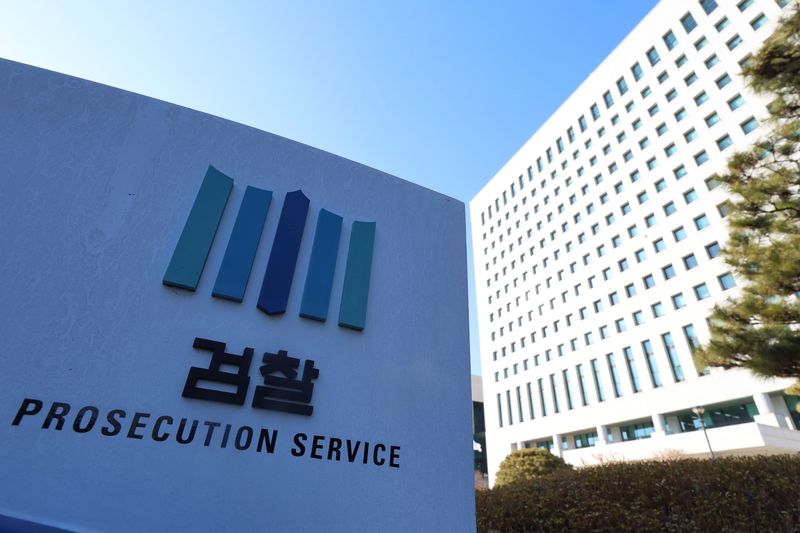
[Financial News] Attention is focused on whether Kim Seung-won, nominee for Minister of Justice, will actually pursue an increase in the number of trial prosecutors after the launch of the Public Prosecution Office. The proposal is based on the need for more personnel to maintain prosecutions and prove guilt during trials. However, prosecutors on the front lines say there are also too few prosecutors to decide whether to indict or not indict cases referred by investigative agencies and to request supplementary investigations. They argue that simply transferring existing personnel to trial divisions would be difficult.
According to legal circles on the 16th, Kim Seung-won said at a National Assembly of the Republic of Korea confirmation hearing the previous day that “I feel there is an absolute shortage of personnel needed to maintain prosecutions under the new criminal justice system.” In response to questions from Seo Young-kyo and other Democratic Party of Korea lawmakers about whether he intended to increase staffing in trial divisions, he answered, “Yes.” He also said he would “actively consider” a proposal to reassess the appropriate number of prosecutors in line with the abolition of investigative functions.
The nominee’s side, however, stressed that it has not yet reached the stage of preparing a specific increase in staffing or deployment plan. The hearing preparation team explained, “As a nominee, this is not an issue for which he can review a specific plan,” adding, “The intention is to carefully examine the organizational structure of the Public Prosecution Office in the future and consider measures to ensure that the principles of separating investigations and indictments and the new criminal justice system become firmly established.”
The Ministry of Justice also acknowledges the shortage of trial prosecutors. As of last year, there were 581 criminal trial divisions and 300 trial prosecutors. Trial prosecutors must appear in court four to five days a week while preparing to review evidence records and examine witnesses. The Ministry of Justice says that one prosecutor currently handles approximately two trial divisions and that at least 281 additional prosecutors would be needed to assign one prosecutor to each division.
Prosecutors on the front lines generally agree that trial staffing needs to be strengthened. One prosecutor said, “Junior prosecutors are attending trials four to five days a week, leaving them with insufficient time to properly review case records.” A lawyer who previously served as a deputy chief prosecutor also said, “The number of cases requiring supplementation during trial has increased compared with the past,” adding, “There is a need to increase the number of trial prosecutors.”
The question is where the personnel will come from. Although direct and supplementary investigations will be abolished with the transition to the Public Prosecution Office, reviewing records of referred and non-referred cases, deciding whether to indict, reviewing warrants, and requesting supplementary investigations will remain. Prosecutors will also have to interview people involved in cases and hear expert opinions through the newly introduced fact-finding process. Even the Ministry of Justice’s own workload assessment estimated that only about 80 prosecutors could be reduced after taking into account the decline in direct-investigation duties.
A prosecutor with more than 10 years of experience said, “Even if investigative authority disappears, the work of verifying facts and requesting supplementary investigations will not disappear,” adding, “With unresolved cases piling up, it will not be easy to take personnel handling referred cases and send them to trial divisions.” The lawyer who previously served as a deputy chief prosecutor likewise said, “For complex cases, reviewing the records and drafting a request for supplementary investigation alone requires considerable time,” adding, “Increasing the number of trial prosecutors is necessary, but it is realistically difficult to do so immediately by taking personnel away from criminal divisions.”
Ultimately, as the authorized number of prosecutors is recalculated after the launch of the Public Prosecution Office, the key issue is expected to be how many personnel will be allocated to “strengthening trials” and to “processing referred cases,” respectively. The current authorized number of prosecutors is 2,292, and the government plans to reassess the appropriate staffing level after reviewing the actual workload following the launch of the Public Prosecution Office and external workload assessments.
[email protected] Choi Eun-sol Reporter