Influenza Outbreak Begins Earlier Than Usual; Vaccination Schedule Moved Up to September 21
- Input
- 2026-09-16 14:50:17
- Updated
- 2026-09-16 14:50:17
[Financial News] With an influenza epidemic advisory issued on September 11, earlier than usual, the Korea Disease Control and Prevention Agency (KDCA) has moved to bring forward the start of the national immunization program for children and older adults.
The KDCA announced on September 16 that it would move up the start of the national influenza vaccination program for children and older adults for the 2026–2027 season in response to the earlier-than-usual influenza outbreak.
The schedule was adjusted to address the earlier spread of the outbreak and the risk of hospitalization and severe illness among high-risk older adults.
As of the 36th week of 2026, influenza activity was relatively high and rising rapidly among school-age children and infants and young children. Among people aged 65 and older, they accounted for a high proportion of hospitalized patients, at 60.0%. In the 36th week, the influenza-like illness rate was highest among children aged 7–12, at 75.1, followed by those aged 1–6 at 49.8, 13–18 at 31.3, infants under 1 at 24.0, adults aged 19–49 at 23.5, those aged 50–64 at 11.8, and people aged 65 and older at 8.8.
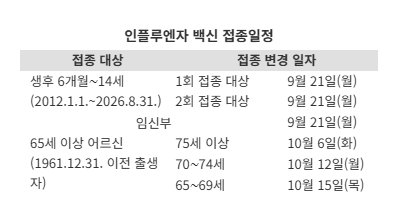
Accordingly, vaccination for children who need only one dose will begin on September 21, one week earlier than the original date of September 28. All children aged 6 months to 14 years can receive the vaccine starting September 21, regardless of the number of doses required.
For older adults, vaccination will begin on October 6 for those aged 75 and older, October 12 for those aged 70–74, and October 15 for those aged 65–69. The dates have been moved up by three to six days from the original schedule. However, high-risk groups, including people with weakened immune systems, may receive the vaccine from October 6 after consulting a medical professional, regardless of the age-based schedule. Nursing hospitals and nursing facilities, where many older adults live and which are vulnerable to group infections, will begin vaccinations as soon as vaccines are supplied.
The KDCA has secured approximately 12.33 million doses of influenza vaccine for people eligible for the 2026–2027 national immunization program, including those aged 65 and older, children aged 6 months to 14 years, and pregnant women.
Meanwhile, the vaccine strains recommended by the World Health Organization (WHO) for the 2026–2027 Northern Hemisphere influenza season have all changed from the previous season, including the type A H1N1 and H3N2 strains and the type B Victoria lineage. Production yields fell as manufacturers optimized the cultivation and production processes for the new strains, reducing total domestic production and imports by approximately 4 million doses from the previous season. To stabilize supply, the KDCA consulted with manufacturers and importers and secured an additional approximately 370,000 doses for use in private-sector vaccinations rather than the national immunization program. However, private-sector supply conditions are also not as ample as in previous years.
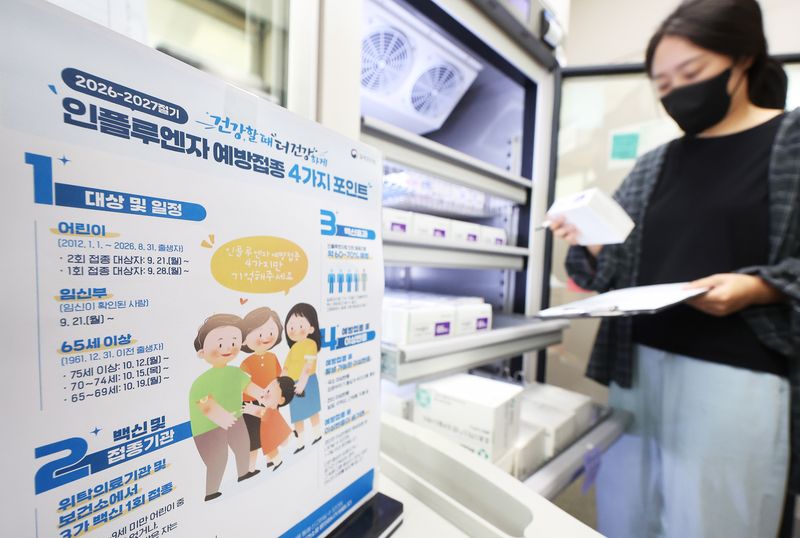
In addition, the WHO supplied the type B reference standard needed for vaccine quality testing about a month later than in the previous season, disrupting domestic production and supply schedules. The KDCA consulted with the Ministry of Food and Drug Safety and moved up the shipment approval schedule by approximately two weeks from the original plan. However, it said it remains difficult to supply vaccines with sufficient lead time before the national immunization program begins.
The KDCA holds weekly meetings with manufacturers and importers, distribution associations, and medical professionals to monitor vaccine supply and demand. It plans to maintain stable supplies through additional production and imports.
Vaccination is the most effective way to prevent influenza. It is particularly important for high-risk groups, including people aged 65 and older.
People can receive influenza vaccinations under the national immunization program at nearby designated medical institutions and public health centers, regardless of their registered address. There are approximately 23,000 designated medical institutions nationwide. Nearby facilities can be found through local public health centers or the Vaccination Helper website. Because the vaccination schedule has been adjusted, people are advised to check in advance whether vaccines are available through their local public health center or the Vaccination Helper website before visiting a medical institution.
To verify eligibility, people should bring identification when visiting a vaccination site. Children should bring documents such as a resident registration certificate or National Health Insurance card, while pregnant women should bring documents such as a maternal health record. After vaccination, they should remain at the site for 20–30 minutes to monitor for adverse reactions, then return home and get sufficient rest.
As influenza activity has begun rapidly this season, it is important to follow respiratory infection prevention measures in addition to getting vaccinated, including washing hands, practicing cough etiquette, wearing masks, and ventilating indoor spaces regularly. High-risk groups, particularly people aged 65 and older and those with weakened immune systems, should visit a medical institution promptly for diagnosis and treatment if they develop a fever or respiratory symptoms.
Im Seung-kwan, commissioner of the KDCA, said, "In response to the early issuance of the epidemic advisory, we reviewed vaccine supply conditions and available quantities and adjusted the schedule after incorporating feedback from experts and people working in the field." He added, "We will closely monitor vaccine supply conditions and vaccination trends and work closely with relevant agencies and the medical community to ensure that the vaccination program proceeds without disruption."
He continued, "As influenza vaccinations will begin sequentially by eligibility group from September 21, people aged 65 and older, pregnant women, and children should receive their vaccinations according to the schedule for their group." He also urged people to "follow respiratory infection prevention measures even before their vaccination date, such as washing their hands, covering their mouth and nose with their sleeve when coughing or sneezing, and wearing a mask when visiting crowded places."
Measures to Prevent Influenza and Other Respiratory Infections
* Get vaccinated
- Eligible people should get vaccinated according to the schedule
* Make proper handwashing a daily habit
- Wash your hands with soap under running water for at least 30 seconds
- After going outside, before and after meals, after blowing your nose or coughing or sneezing, and after using the toilet
* Practice cough etiquette
- Cover your mouth and nose with a tissue or your sleeve when coughing
- Always wash your hands properly after coughing
- Wear a mask when experiencing respiratory symptoms
- Throw used tissues or masks into a trash can immediately
* Do not touch your eyes, nose, or mouth with unwashed hands
* Ventilate indoor spaces frequently
* If you have a fever or respiratory symptoms, visit a medical institution and receive appropriate medical care
[email protected] Medical Specialist Jeong Myeong-jin Reporter