Constitutional Complaint: "Suspension of Indictment for Special Theft Against Person with Developmental Disabilities Who Shared 1,500 Won 'Melona' Is Unconstitutional"
- Input
- 2026-09-16 16:21:23
- Updated
- 2026-09-16 16:21:23
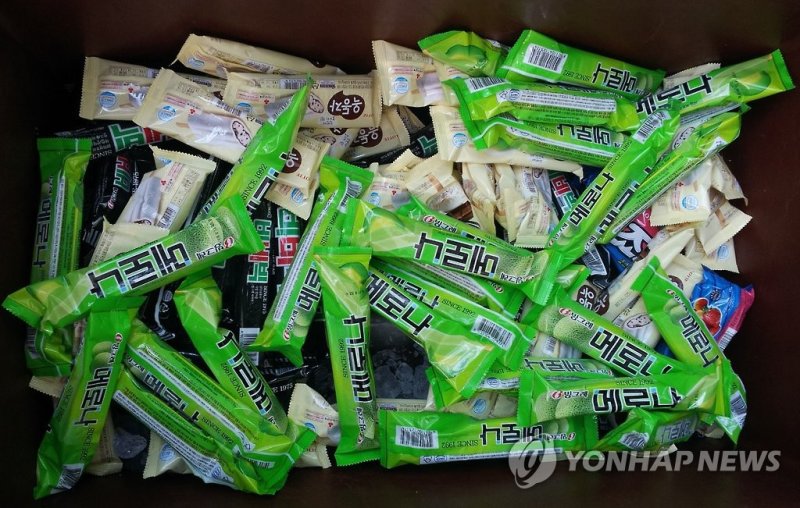
[Financial News] A person with a severe developmental disability who received a suspended indictment on charges of special theft for sharing a convenience store ice cream with a friend without paying for it has filed a petition with the Constitutional Court of Korea to overturn the decision.
According to The Dong-A Ilbo on the 16th, the legal team representing Mr. A, a person with a developmental disability in his 30s, recently filed a constitutional petition requesting the cancellation of the prosecution's decision to suspend indictment against him for special theft. In the petition, Mr. A's team argued that his rights to equality and the pursuit of happiness were violated because he was not guaranteed procedural rights during the investigation process.
Special larceny is a crime committed when a person steals another's property while possessing a weapon or acting jointly with two or more people. Mr. A's side pointed out that since the conspiracy itself, which is a prerequisite for special larceny, was not established, a 'no charges' ruling should have been issued from the beginning.
Previously, B, a classmate of A from a special school, was investigated on charges of taking a 1,500-won ice cream from a freezer in front of a convenience store in Busanjin District, Busan, last June and sharing it without paying.
At the time, it was reported that Mr. A presented a welfare card indicating a Grade 2 intellectual disability during the police investigation. Mr. A's family compensated the store owner with 100,000 won, and the store owner also stated that they did not wish for punishment.
However, the police charged the two individuals with aggravated theft and referred them to the prosecution, which issued a suspended indictment instead of bringing them to trial. The decision not to indict stated that while the alleged facts were acknowledged, factors such as the fact that they were first-time offenders, their admission of guilt and remorse, and the small amount of damage were taken into consideration.
Mr. A's side maintains that they cannot accept the suspension of indictment, as it is premised on the admission of the alleged facts. According to his family, Mr. A's intelligence quotient (IQ) was around 50 in a psychological evaluation conducted by a medical institution, and his cognitive ability was assessed as being at the level of a 7-year-old or younger. Mr. A's side argues that it is unfair for the prosecution to issue a suspension of indictment without sufficiently verifying Mr. A's communication and statement abilities.
It was also confirmed that procedures specified in relevant laws were not followed during the investigation. The Act on Guarantee of Rights of and Support for Persons with Developmental Disabilities, enacted in 2015, stipulates that each police station must designate a dedicated police officer to handle the investigation unless there are special circumstances.
However, in this case, the dedicated police officer was assigned only to B, who accompanied A, and A did not receive such protection.
For this reason, the family is also raising strong doubts about the credibility of the suspect interrogation report written by the police. The report records that when the police asked about conspiracy, Mr. A replied, "We stole it together because we wanted to eat it together."
In response, the family countered that Mr. A speaks only fragmentarily, making it impossible for him to construct complete sentences in the form written in the statement.
[email protected] Seong Min-seo Reporter