“Energy Drinks Are No Longer Just for Exam Takers”: Zero-Sugar and Functional Products Gain Popularity Among Middle-Aged Consumers
- Input
- 2026-09-17 14:09:51
- Updated
- 2026-09-17 14:09:51
[Financial News] The primary consumer base for energy drinks is changing. Once mainly consumed by exam takers for their intense sweetness and high caffeine content, the drinks are now being used more frequently during exercise and everyday work, expanding their appeal to people in their 40s and 50s through zero-sugar, low-calorie and natural-caffeine products.
According to Embrain Trend Monitor on the 17th, domestic energy drink purchases rose 14.7% from the previous year between April last year and March this year. By age group, consumers in their 40s posted the largest increase, with purchases rising 21.7%. They were followed by people in their 20s at 19.1%, those in their 50s at 14.6% and those in their 30s at 9.2%. Consumers in their 40s and 50s, rather than those in their 20s and 30s, drove growth in the energy drink market.
While the broader domestic food and beverage market remains sluggish, the energy drink market continues to grow on its own. Energy drinks, once consumed by exam takers who stayed up all night with the help of high caffeine and intense sweetness, are expanding their consumer base by emphasizing low sugar and low calories. The range of choices is also widening, from products with reduced sugar and calories to those combining plant-based or natural caffeine with ingredients such as vitamins and taurine. The increase in consumers in their 40s and 50s seeking these drinks to fight drowsiness during work or boost alertness before exercise has been a major factor.
Among distribution channels, consumption has increased particularly sharply at convenience stores. Energy drink sales at convenience stores jumped 26.1% from the previous year.
In response, companies are targeting consumers with more specialized products. Coca-Cola Korea launched the Monster Energy Ultra series, a sugar-free and low-sugar lineup aimed at fitness enthusiasts and people on diets. The products reduce sugar while providing sufficient alertness-boosting effects before exercise. Red Bull, a competitor of Monster, has also expanded its low-sugar and sugar-free lineup.
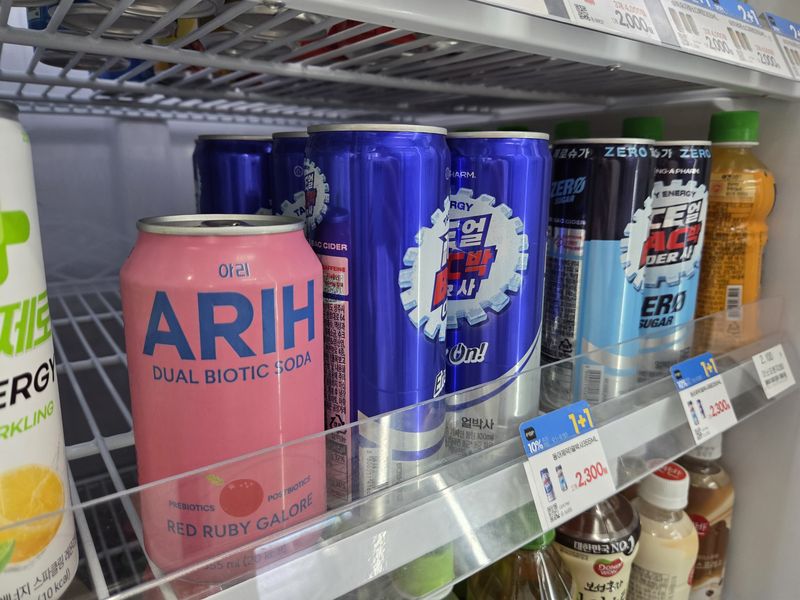
Lotte Chilsung Beverage introduced Hot6 Glow this year, a lighter option than its existing energy drinks. It uses plant-based caffeine to reduce the caffeine content and is designed with zero sugar and zero calories. The company has continued expanding its zero-sugar range, recently adding Hot6 The King Frozen Blue Zero. Paldo and hy’s global brand ARIH, developed in collaboration with BTS, positions its Postbiotic Energy Drink around “balanced energy replenishment” rather than intense stimulation. It contains zero sugar and zero calories and uses no artificial colors, flavors or sweeteners.
The industry expects the market to grow further as the traditional purposes of energy drink consumption, such as exercise and parties, continue to diversify in South Korea. An industry official explained, “As when Red Bull first appeared, the original purpose of consuming energy drinks was to boost alertness before exercise or to stay up all night and enjoy parties. In South Korea, they had an especially strong image as drinks for exam takers, but consumption is now increasingly aligned with their original purpose.”
[email protected] Park Kyung-ho Reporter