KREB to Help Redevelopment and Reconstruction Projects from the ‘First Step’... Expanding Support for Residents’ Decision-Making
- Input
- 2026-09-16 14:43:14
- Updated
- 2026-09-16 14:43:14
[Financial News] Redevelopment and reconstruction projects are hardest to get off the ground. Many lose momentum early on because they are uncertain whether the project is viable or meets legal requirements. The Korea Real Estate Board will significantly expand its resident decision-making support program this year to reduce such uncertainty in the early stages.
KREB, together with the Ministry of Land, Infrastructure and Transport (MOLIT), will fully implement this year the resident decision-making support program, also known as a preliminary feasibility review, introduced last year. The program follows up on the housing supply expansion plan announced in September last year and is intended to reduce uncertainty by having the public sector become involved from the earliest stage of an urban improvement project.
In the early stages of an urban improvement project, it is necessary to determine whether the project meets the planning requirements under relevant laws and ordinances and whether it is financially viable. However, residents often find it difficult to make these judgments on their own because they require expertise and substantial costs. The procedures are also complex, leaving many projects unable to clear the first hurdle. When initial momentum weakens, projects may languish for years or be abandoned altogether.
When an urban improvement project stalls at an early stage, the supply of housing in urban areas is delayed accordingly. The aim is for the public sector to assist with the initial assessment and help projects get off to a stable start.
KREB is expanding its public support functions in the early stages of urban improvement projects to reduce this uncertainty. It first reviews the planning requirements under relevant laws and ordinances and conducts a preliminary feasibility review to help residents make informed decisions. The process estimates the project’s scale through preliminary architectural planning, surveys the market values of existing and post-project assets, and estimates project costs to assess the financial balance.
The program turns feasibility assessments that residents once made largely by intuition into concrete figures. A preliminary feasibility review is a key step in helping residents make a rational early decision on whether to continue or abandon a project. KREB also operates Visiting Urban Improvement Project Information Sessions, which explain procedures and systems in accessible terms and visit residents directly. It additionally supports preliminary reviews to help local governments determine whether to initiate planning procedures.
Introduced for the first time last year, the program supported 27 areas in 12 local governments and received a positive response from residents. It went beyond simple consultations, leading to follow-up procedures such as collecting consent forms for project planning, forming project promotion committees, and drafting improvement plans. The program was credited with helping revitalize projects at the planning stage. In some areas that had hesitated because of unclear feasibility, consulting prompted renewed activity.
This year, KREB will increase the number of supported areas and continue monitoring progress in each region after support ends. Rather than ending with a single consultation, it plans to follow through to ensure that residents’ decisions lead to actual planning procedures.
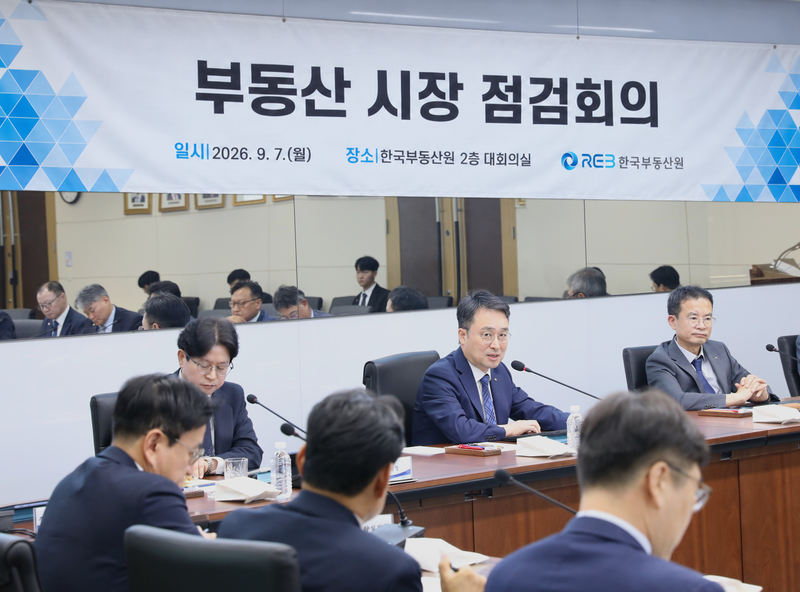
The program is consistent with KREB’s recent emphasis on execution. At a real estate market review meeting on the 7th, KREB President Lee Heon-wook called for bottlenecks in urban improvement projects to be removed, saying, "As the government has established systems and tools to expand housing supply, what matters now is ensuring that they lead to actual supply on the ground."
The meeting also discussed targeted support for small-scale complexes with fewer than 500 households, as well as measures to mediate in advance disputes over construction costs and conflicts between residents’ associations and contractors, which are major causes of delays. The moves align with the government’s Measures for the Rapid Supply of Housing, announced on the 13th of last month to expand housing supply in the Seoul metropolitan area.
In July, KREB adopted “real estate policy infrastructure institution” as its new vision and established the Housing Supply Support Division. It has expanded its role from an institution focused on market statistics and management to one that supports the government’s housing supply policies on the ground.
Going forward, KREB plans to establish a policy support system that moves from market data analysis to monitoring supply at individual project sites, identifying causes of delays, mediating conflicts, and supporting improvements to government systems. The resident decision-making support program is a representative example of this transition in practice.
A KREB official said, "To expand housing supply in urban areas, it is important to support residents so they can make rational decisions on whether to proceed with a project in its early stages." The official added, "We will continue expanding public support functions in the early stages of urban improvement projects, including resident decision-making support, reviews of planning requirements, and on-site information sessions, to help establish the foundation for housing supply in urban areas."
[email protected] Jung Kyung-soo Reporter