Housing Prices Swallow Even an 800 Trillion-Won Budget... Real Estate Becomes a ‘Black Hole’ in the Regular National Assembly Session
- Input
- 2026-09-16 13:44:54
- Updated
- 2026-09-16 13:44:54
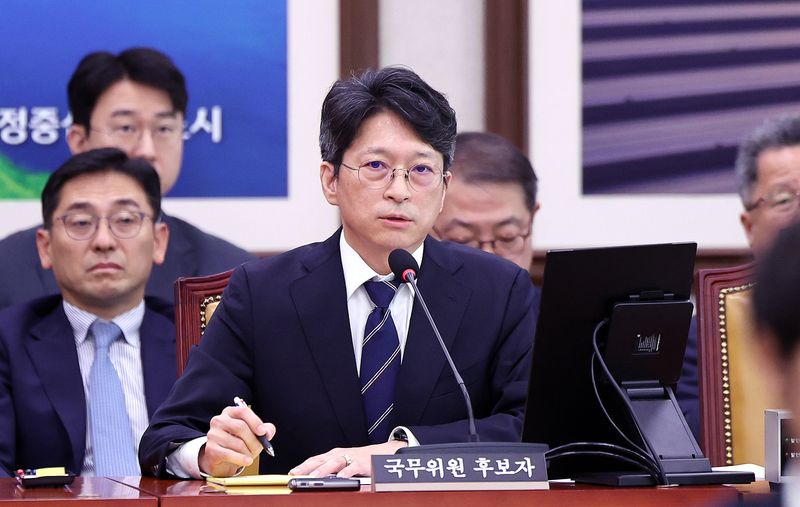
[Financial News] Real estate is emerging as a ‘black hole’ at the regular National Assembly session, where major economic issues are piling up, including next year’s budget of more than 800 trillion won and support for artificial intelligence (AI) and advanced industries. At the confirmation hearing for the minister of the Ministry of Land, Infrastructure and Transport on the 16th, housing supply and taxation took center stage. The ruling party also called for increasing annual housing-related spending from about 4 trillion won to 10 trillion to 20 trillion won.
Hong Ji-sun, nominee for minister of the Ministry of Land, Infrastructure and Transport, drew a line at using real estate taxation directly to stabilize housing prices during a confirmation hearing before the National Assembly’s Land, Infrastructure and Transport Committee. “The intention is not to control housing prices through taxes,” Hong said. He also argued that housing policy should be pursued consistently over the medium to long term, citing insufficient move-in volumes caused by a slowdown in housing starts over the past three to four years.
The focus was on supply. Hong emphasized, “We will swiftly promote housing supply by mobilizing all public- and private-sector capabilities until people feel that the market has sufficient housing in the locations they want.” He plans to use his experience working in local government to resolve bottlenecks in the field, such as delays in permits and approvals, and improve the implementation of supply policies.
The ruling party proposed addressing housing problems through fiscal spending. Kim Min-seok, leader of the Democratic Party of Korea, appeared on the party’s official YouTube channel, Minti07, that day and said current annual housing-related spending of about 4 trillion won was “far too small.” “In reality, we need to sharply increase investment to around 10 trillion to 20 trillion won,” he said.
When Kim Jinai, chairwoman of the Presidential Commission on Architecture Policy, proposed creating a separate Future Housing Fund, saying that the housing sector had been left out of the Future Response Fund, Kim Min-seok replied, “I think it would be good to reflect it in the Future Response Fund and other programs as well.” He added, “There is gradually growing consensus within the party, so we intend to discuss it.” He also reaffirmed the need to establish a National Housing Policy Commission that would address taxation, finance, and supply together.
Since the regular National Assembly session began, the real estate debate has continued to expand. At the confirmation hearing the previous day for Lee Hyeong-il, nominee for deputy prime minister and minister of the Ministry of Economy and Finance, lawmakers clashed over alleged gap investment related to his past home purchase. Real estate thus became a major issue for two consecutive days during confirmation reviews for the heads of economic and housing policy.
At an interpellation session on economic affairs on the 11th, the special deduction for long-term holding was a major topic. Koo Yun-cheol, deputy prime minister and minister of the Ministry of Economy and Finance, emphasized, “We intend to change the system so that it rewards residence, not ownership.” He added, “If we provide incentives for ownership, we cannot move toward a housing market centered on residence.” Park Soo-min of the People Power Party countered, “The home one wants to buy and the home one wants to live in can be different, so why punish people?”
Real estate issues also cross the boundaries of standing committees. Housing supply falls under the Land, Infrastructure and Transport Committee; financial regulations, including lending rules, fall under the National Policy Committee; and taxation, including capital-gains and property-holding taxes, falls under the Strategy and Finance Committee. With housing-related fiscal spending and the Future Response Fund also entering the discussion, the issue is directly linked to budget deliberations.
The scale of fiscal spending on housing could become a new issue in future budget deliberations, particularly after Kim Min-seok proposed increasing housing-related spending to two to five times its current level. Whether to include housing in the Future Response Fund could also lead to debates over the fund’s purpose and fiscal soundness. The ruling and opposition parties are expected to continue clashing over how much fiscal support to provide for housing supply and how taxation and financial regulations should be revised.
[email protected] Kim Kyung-min Reporter