U.S. Intel CEO: "Memory Semiconductor Shortage to Be More Severe Next Year"
- Input
- 2026-09-16 13:02:41
- Updated
- 2026-09-16 13:02:41
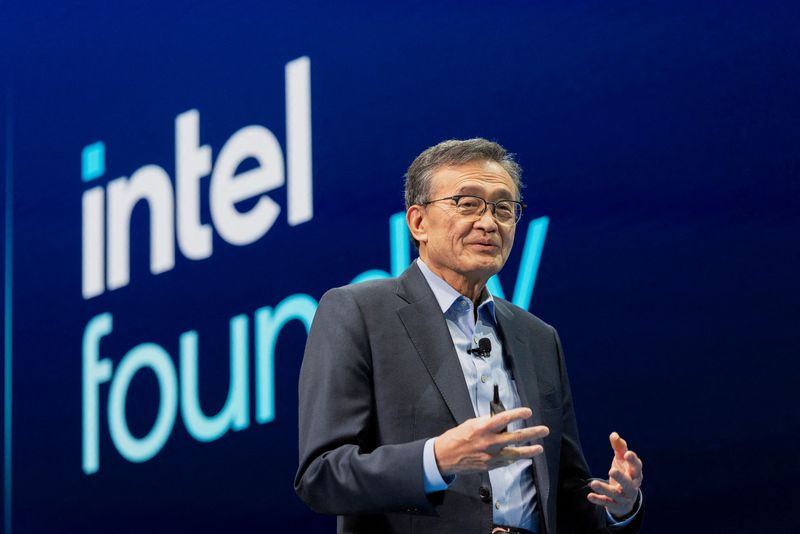
[Financial News] Intel CEO Lip-Bu Tan pointed out the shortage of memory semiconductors caused by the artificial intelligence (AI) craze and predicted that it will worsen next year.
Lip-Bu Tan made this claim during a discussion at the 'InfraAI Global Summit' held at the Santa Clara, California Convention Center on the 15th (local time). He predicted, "Early last year, I said that 'memory would become a bottleneck,' and while many people didn't realize it at the time, I was right in the end," adding that "the situation will worsen next year." Lip-Bu Tan pointed out, "Memory production capacity is very limited, and prices have risen tremendously," noting, "As you know, they have increased five, six, or seven times."
He reported that companies are facing severe cost pressures due to skyrocketing memory prices, with situations occurring where memory costs account for 70 to 80 percent of the total cost of low-end smartphones or laptops.
In an announcement last month, U.S. market research firm Gartner, Inc. projected that global semiconductor revenue this year will reach $1.5552 trillion (approximately 2,126 trillion won), a 92% increase from last year ($809 billion). Gartner, Inc. forecast that revenue will grow to $1.9399 trillion by 2027. Furthermore, it predicted that memory revenue will account for $837.3 billion (approximately 1,144 trillion won) of total semiconductor sales this year, a 280% increase from last year's $220.1 billion. The proportion of memory in total semiconductor revenue this year is expected to reach 54%, approximately double the 27% recorded last year.
The entities absorbing memory semiconductors are AI semiconductor manufacturers such as the U.S. company NVIDIA Corporation. The AI-powered products sold by NVIDIA Corporation combine a proprietary graphics processing unit (GPU) with memory semiconductors made by third parties. Due to rising memory semiconductor prices, NVIDIA Corporation has also decided to increase the prices of its AI server products by at least 15% starting next year.
Meanwhile, regarding Intel's restructuring, Lip-Bu Tan stated, "We reduced the workforce from over 100,000 at the time of taking office to around 78,000," adding, "We drastically reduced the organizational hierarchy from 10 to 12 levels to 4 to 5 levels to increase efficiency and accountability."
[email protected] Park Jong-won Reporter